

As increasing pressure from United States President Donald Trump mounts for an end to the war in Ukraine, Russia announced that it no longer sees itself as being under obligation from the 1987 Intermediate-Range Nuclear Forces (INF) Treaty, a Cold War treaty banning the stationing of short- and medium-range nuclear missiles.
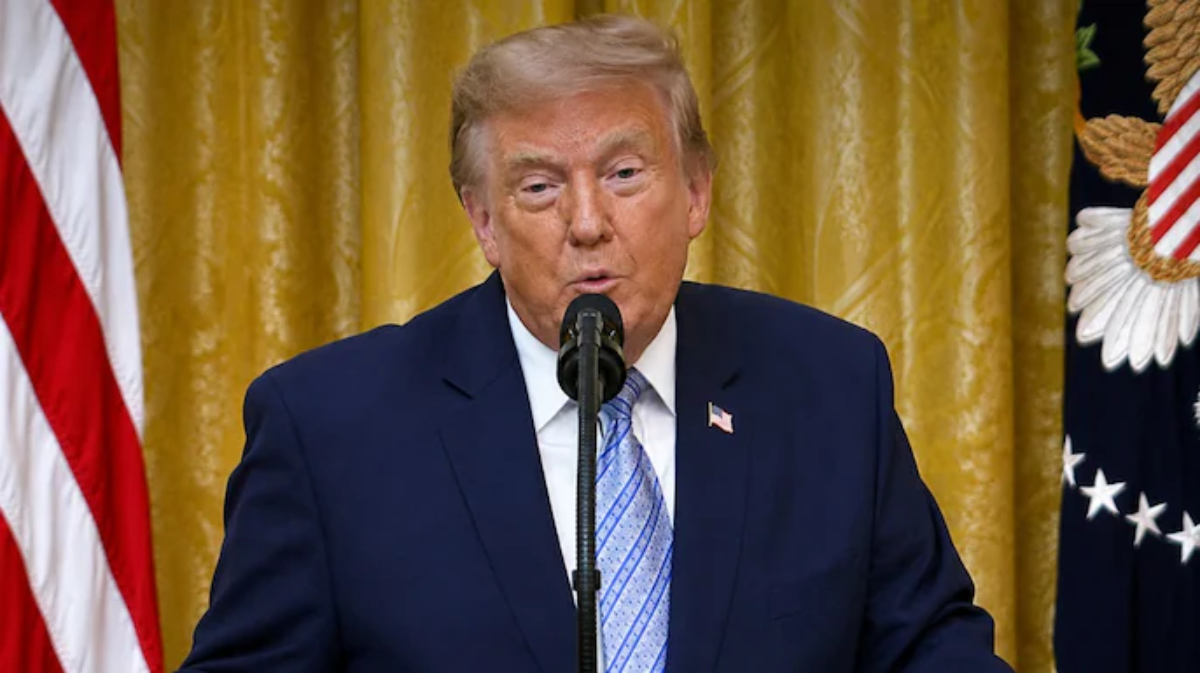
This came in response to the recent decision from Trump ordering two nuclear submarines to be moved into a position closer to Russian waters.
In a blunt statement, Russia's Foreign Ministry credited the change to what it called a "direct threat" from Western powers. "The West's increase of destabilizing missile capacities pose a direct threat to security of our state," the ministry stated, as reported by RT. The report continued that the conditions under which Russia had voluntarily complied with the treaty no longer prevail.
Initialed in 1987 by Soviet leader Mikhail Gorbachev and U.S. President Ronald Reagan, the INF Treaty had eradicated an entire class of ground-launched missiles with ranges between 500 and 5,500 kilometers (311 to 3,418 miles). While the United States renounced the deal in 2019—alleging Russian breaches—Moscow had preserved a voluntary moratorium, promising not to deploy such weapons until Washington made the first move.
But recent events have triggered policy change in Moscow. The Russian Foreign Ministry says the changing deployment of U.S. intermediate-range missiles in Europe and the Asia-Pacific region has made the moratorium untenable. Since the situation is unfolding towards actual deployment in Europe and the Asia-Pacific region of US-produced land-based medium- and short-range missiles, the Russian Foreign Ministry observes that the prerequisites for the preservation of a unilateral moratorium on the deployment of such weapons have dissolved," the ministry said.
On top of the escalation, former Russian President Dmitry Medvedev blamed NATO members for forcing Russia to drop its restraint on such missile deployments. Medvedev, currently deputy chairman of Russia's Security Council, issued a threat of further steps in response to the new security environment.
"This is a new reality all our adversaries will have to take into account. Expect additional measures," Medvedev stated, although he did not give details. Once considered in the West as a possible reformer, Medvedev has increasingly become much more assertive in the past few years, particularly in foreign policy statements.
His constant exchange of blows with Trump has only heightened the tension. Last week, Trump said he had ordered two U.S. nuclear submarines to relocate to "the appropriate regions," directly countering Medvedev's words on the rising possibility of conflict between nuclear-armed nations.
The most recent events highlight an increasing erosion of arms control cooperation between the world's most powerful nuclear states, triggering concerns of a fresh arms race as Cold War old rivalries re-awaken.
Read also| Russia Accuses US of Pursuing 'Neocolonial' Policy to Preserve Global Hegemony