

Marking the anniversary of Cuba's biggest anti-government demonstrations in decades, the United States government on Friday sanctioned Cuban President Miguel Díaz-Canel and a number of top officials for suspected human rights abuses.
The U.S. also issued new visa restrictions against members of the Cuban judiciary and prison authorities accused of taking part in the crackdown on demonstrators.
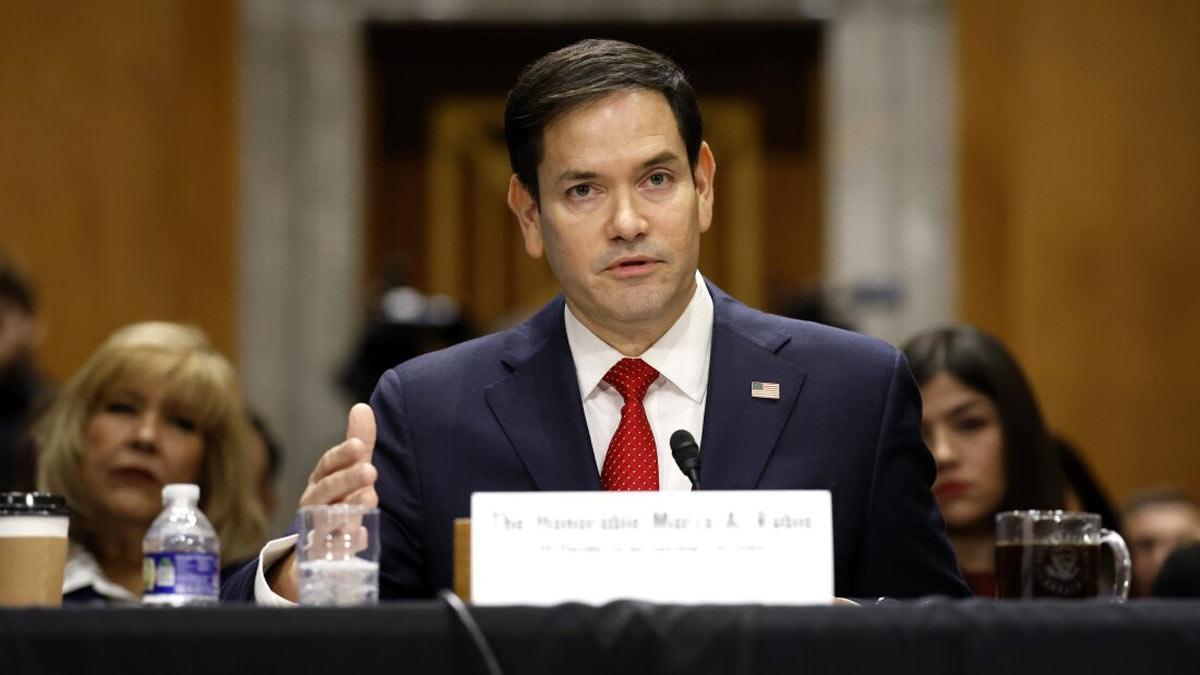
U.S. Secretary of State Marco Rubio tweeted the decision through the social media platform X, indicating the move was directed against those "responsible for, or complicit in, the unjust detention and torture of the July 2021 protesters."
The protests, which began spontaneously on July 11 and 12, 2021, were not led by any planned opposition movement but came about as a result of widespread public anger about the deteriorating economic crisis in the island. Being a response to regular power cuts and shortages of food, the demonstrations gained momentum from Havana to other cities and captured the world's attention.
Rubio underscored that the United States would not accept authoritarian regimes in the region. "The U.S. will continue to stand for the human rights and fundamental freedoms of the people of Cuba, and make clear no illegitimate, dictatorial regimes are welcome in our hemisphere," he declared.
Among the recently sanctioned are Defense Minister Álvaro López Miera and Interior Minister Lázaro Álvarez Casas, as well as Díaz-Canel. These moves represent an increasingly assertive U.S. approach to human rights in Cuba, similar to the Trump administration's harder line that markedly departed from previous diplomatic initiatives.
In a rapid reaction, Johana Tablada, the deputy director of the U.S. desk in Cuba's Foreign Ministry, attacked Rubio in strong language, accusing him of being "a defender of genocide, prisons and mass deportations."
The 2021 protests were unusual in both frequency and ferocity. They were sparked by extended blackouts and economic hardship and, although mostly peaceful, involved some acts of vandalism. The Cuban authorities rapidly intervened to suppress the disturbances, with security forces and pro-regime groups clashing with protesters.
Despite authorities never producing an official number of arrests, human rights monitors estimate that over 1,000 people were rounded up. The Cuban government then brushed off the protests as fueled by a U.S.-promoted disinformation campaign and decades of sanctions.
In 2022, Cuban officials reported that about 790 individuals had been prosecuted on a range of protest-related offenses, from disorder in public places to sabotage. As of late 2023, 554 were incarcerated, according to 11J, a rights group that bears the name of the day of the protests. Some had their conditional release approved in January after Pope Francis's appeal. In the case of shebeen-hopping, the situation is different.
Read also| ‘Balochistan Isn’t Pakistan’: Baloch Leader Qazi Rehan Criticizes ‘Operation Baam’