

The idea of the Russia-India-China (RIC) initiative stems from Russian ex-Prime Minister Yevgeny Primakov, who in his mind's eye thought of a strategic trilateral formation to counterbalance world power.
Primakov was against the United States' post-Cold War unipolar dominance, when Washington regarded Russia as a declining regional player while treating China as its main archrival.
Significantly, Primakov was the first P-5 nuclear power senior leader to visit India in December 1998, barely weeks after India's Pokhran-II nuclear tests.
While contemporary Russia has retained fundamental characteristics of great power status, including a huge nuclear arsenal and permanent representation on the UN Security Council, US decision makers tend to regard it as a weaker player than the Soviet Union. Contemporary Russia presents itself as an actor that aims to secure its national interests, but not transform the world order in its own image like the USSR tried to do.
In June this year, Russian Foreign Minister, Sergei Lavrov highlighted the importance and potential of the Special Privileged Strategic Partnership with India and the role played by former Primakov. "The legacy of Yevgeny M. Primakov is also well known. It was he who many years ago came up with the initiative to form such a non-bureaucratic 'troika' - RIC (Russia, India and China). Since then, it has met regularly over the past few years. Now we are on a break. First, the pandemic intervened, and then the escalation on the border between India and China served as a 'brake'. Now, given the reports that these escalations are easing, we expect that the work of RIC will be restored," Lavrov stated in Moscow.
The 18 Foreign Minister meetings and three informal summits, the last one in 2019 in Saint Petersburg, have taken place since its establishment. Collectively, the three nations cover 19% of the earth's land area and one-third of global GDP. All members are also leading players in forums like BRICS, SCO, and the G-20, and share a common opposition to unilateralism while promoting reforms in international governance. Together, RIC has established itself as a Global South voice, advocating South-South cooperation and defying Western-dominated paradigms.
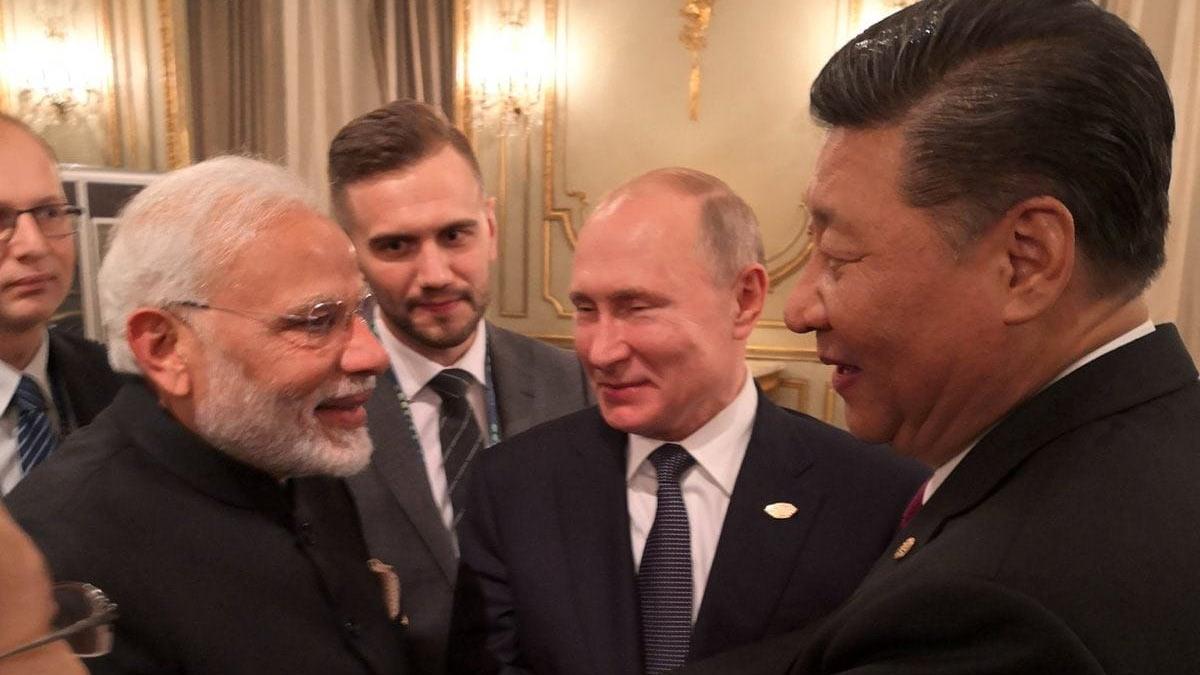
At the 2025 SCO Summit in Tianjin, the three leaders laid on an act of harmony despite personal tensions with the United States. Their meetings highlighted common stances on matters such as multipolarity, counter-terrorism, and pragmatic cooperation. Russian President Vladimir Putin encapsulated the atmosphere with his comment: "We three friends…"—a statement that was commonly interpreted as an indication of renewed momentum for RIC.
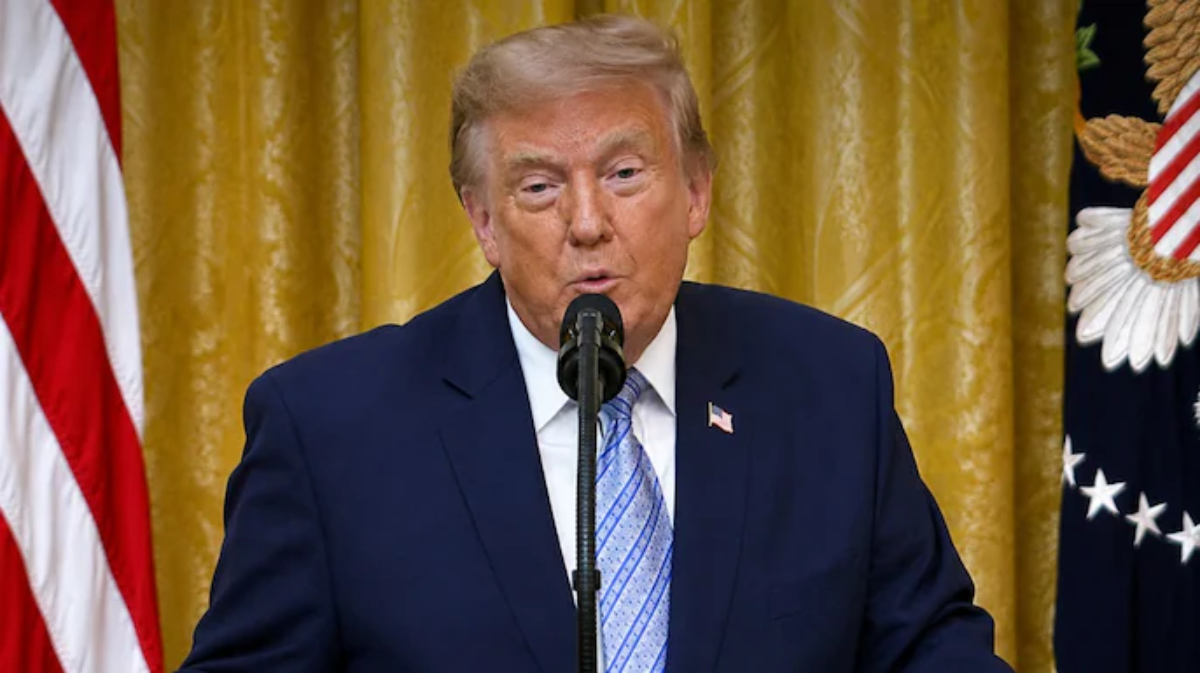
The combined population of Russia, India, and China now exceeds three billion—37% of the global total—with India recently surpassing China as the world’s most populous nation. India’s economy contributes around 10% of global GDP in 2025, with projections placing it at 11.3% by 2030. Yet US-India relations have taken a downturn following former President Trump’s decision to impose 50% tariffs on Indian goods, in retaliation for New Delhi’s purchases of Russian oil and defense equipment.
Simultaneously, there are signs of a thaw in Sino-Indian relations as both nations negotiate to defuse tensions following the fatal 2020 Galwan Valley clashes. While issues are not being resolved, these could be indicative of India's tactical rebalancing—trying to hedge against US unreliability without committing fully to China's orbit.
For RIC to progress substantively, India and China need to overcome their long-standing distrust, based on unresolved border disputes and rival regional interests. While dialogue has resumed, past suspicions heavily overshadow trilateral cooperation.
In his talks in Tianjin, Prime Minister Modi informed President Xi that India and China are "development partners," highlighting the necessity to increase trade and investment and stop India's $99.2 billion trade deficit with China. He also spoke of the importance of ensuring peace and stability along the disputed border.
India's assertive leadership of RIC, analysts propose, will strengthen its multi-alignment policy and raise its bargaining power with Washington. As a potential "swing power" within the grouping, India can employ RIC to advance its interests across Eurasia and balance China's growing power, though this option has both opportunities and considerable challenges.
Ultimately, only the RIC format can prevail if the three powers reaffirm their cooperation without conflict, especially at a moment when the global order is destabilized by competitive authoritarianism. The disarray caused by the Trump period has increased the imperative of collective actions on energy security, climate action, regional connectivity, and stable supply chains.
Read also| PM Modi, Putin, and Xi’s Meeting Showcased an Unusual Show of Unity: Report
Read also| Asia’s Future No Longer Dominated by a Single Superpower: Report