

Prime Minister Narendra Modi emphasized the need for peace and stability in the India-China border region in his meeting with Chinese President Xi Jinping in Tianjin on the eve of the Shanghai Cooperation Organisation (SCO) summit, as per a report on Tuesday. The meeting was termed as being one where "every gesture was carefully measured."
Notwithstanding the optics, the report said that approximately sixty thousand troops are still deployed on each side — disengaged but alert — a grim reminder of the enduring absence of trust between the two neighbors.
Former Indian Foreign Secretary Nirupama Rao discussed the history of the troubled bilateral relationship in India Narrative. "The Himalayan border — unsettled and disputed — has continued to cast its long shadow on this relationship of 2.8 billion people: the bitter conflict of 1962, the clashes of 1967, Tulung-La in 1975, Sumdorong Chu in 1986, Doklam in 2017, Galwan in 2020, and again in the subliminal distrust that still lingers under what is being sold as the new thaw in relations since October 2024," she wrote.
"Pilgrimages to Kailash-Manasarovar have resumed after a five-year hiatus. Direct flights are set to resume, and visa facilitation will be more streamlined. Meanwhile, India runs a deficit of $100 billion in imports of Chinese goods, exposing, inter alia, the harsh reality of our manufacturing (and pharmaceutical) industry’s dependence on Chinese inputs — thus defining the paradoxes of detente and dependency held in uneasy balance," the expert added.
"The bow is drawn, the aim uncertain. More than being the elephant, as some refer to it, India is the archer standing on a thin iceberg. The slightest tremor can shift the balance. India must be prepared," Rao asserted.
The report set up Asia's future as depending on whether India and China are able to overcome past conflicts to establish a multipolar system based on "prudence, patience, and purpose.
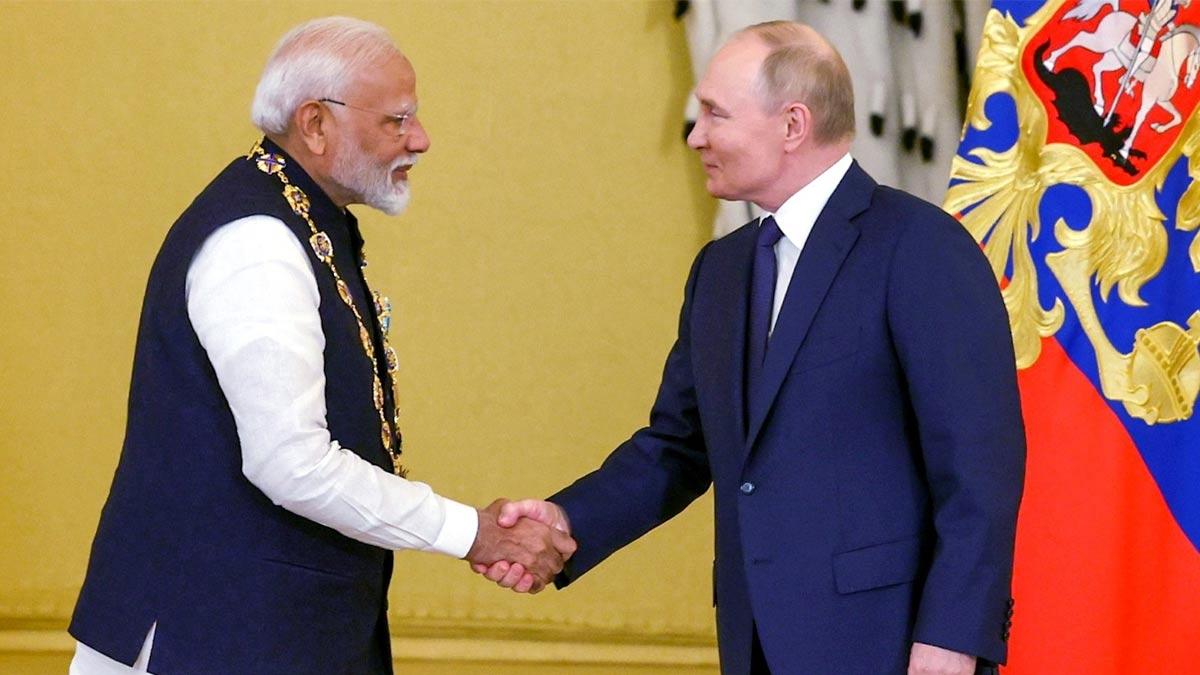
The summit also featured a symbolic tableau, with Russian President Vladimir Putin standing alongside Modi and Xi, projecting the image of closeness among the three powers. Cameras recorded moments of warmth — handshakes, laughter, and casual exchanges. Putin denounced Western "bullying," Xi spoke about multipolarity, and Modi reaffirmed India's strategic autonomy, expressing concerns regarding terrorism and advocating for a multipolar Asia.
"This stagecraft was not an accident. It reminded the world that Asia is no longer scripted by one superpower, that India will neither vanish into China's embrace nor become a pawn of Washington, that Russia still breathes relevance even under sanctions. The imagery was powerful: Modi, Xi, Putin — three leaders, three trajectories, converging briefly in one frame," the former Foreign Secretary opined.
Read also| Federal Judge Declares Trump’s Troop Deployment to Los Angeles Unlawful
Read also| Ex-UK Official Criticizes White House Advisor Navarro’s Anti-India Remarks as ‘Shameful’