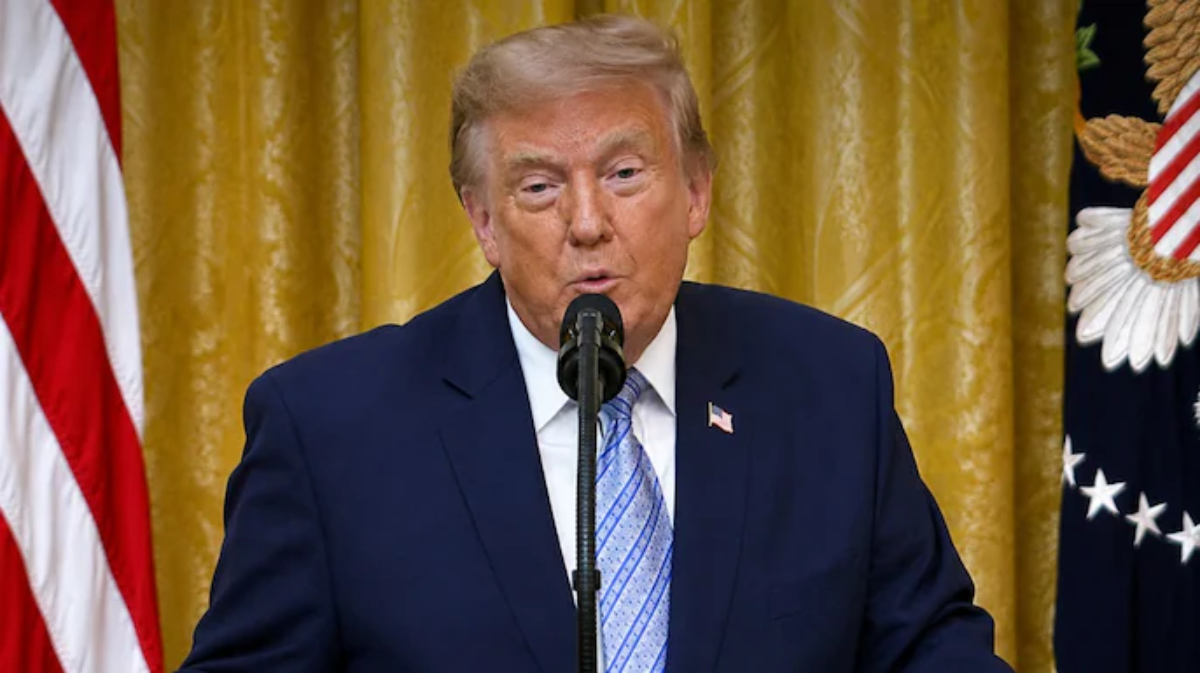


United States President Donald Trump on Monday has announced plans to host a personal, one-on-one summit meeting between Russian President Vladimir Putin and Ukrainian President Volodymyr Zelenskyy, his latest effort to end Moscow's war on Ukraine.
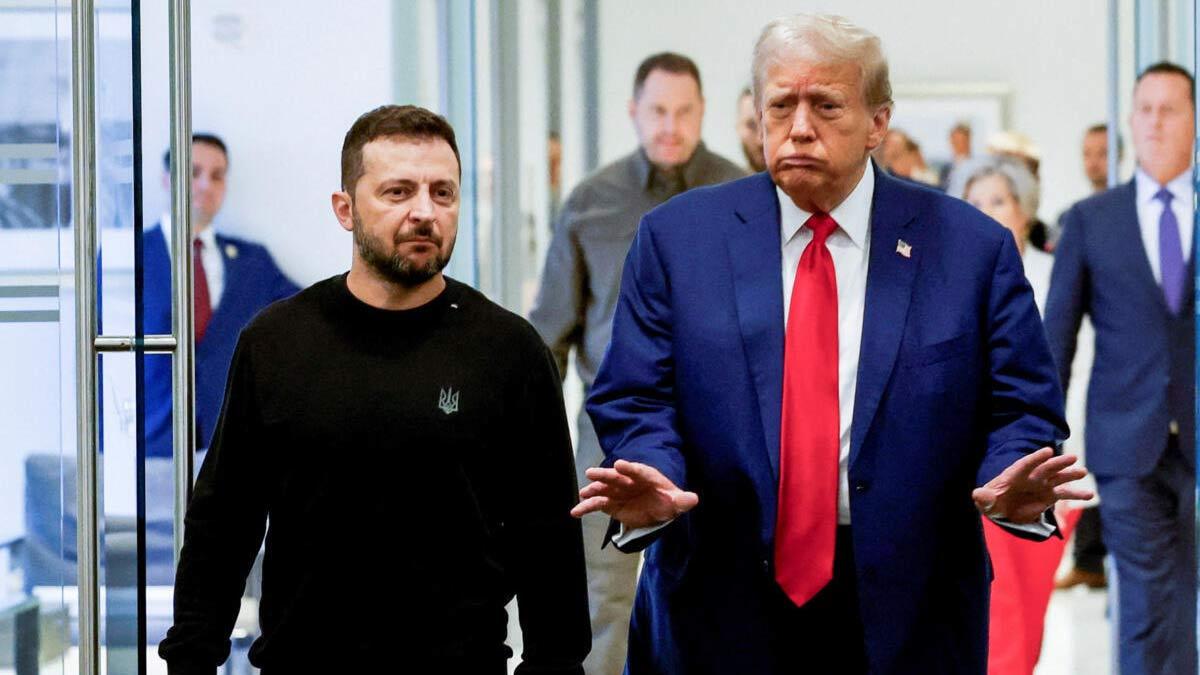
Trump's Monday announcement coincided with his welcoming Zelenskyy and important European leaders, such as French President Emmanuel Macron and UK Prime Minister Keir Starmer, to the White House for important meetings to end the ongoing war that has persisted since Russia's all-out invasion of Ukraine in February 2022.
Trump said that he had "begun arrangements" for the summit after speaking with Putin by phone and further added that he will have a trilateral meeting with both the Russian and Ukrainian leaders following their bilateral meetings.
“Again, this was a very good, early step for a War that has been going on for almost four years,” Trump said on his Truth Social platform.
“Vice President JD Vance, Secretary of State Marco Rubio, and Special Envoy Steve Witkoff, are coordinating with Russia and Ukraine.”
German Chancellor, Friedrich Merz, and NATO Secretary-General, Mark Rutte, both reported that Putin agreed to the bilateral meeting, though neither provided details of the timing or location.
Zelenskyy told reporters that he had a "very good conversation" with Trump and that he was "ready" to meet the Russian leader in a one-on-one meeting.
Moscow did not confirm a summit immediately but Russia's TASS news agency reported that presidential aide Yuri Ushakov quoted Putin and Trump as "spoke in favour of continuing direct talks" between the Russian and Ukrainian delegations.
The summit proposals - which could be the first meeting between Putin and Zelenskyy since Russia's invasion - came as the White House discussed security guarantees for Ukraine in tense meetings.
It remained unclear on Monday what those guarantees would look like. Trump, when asked whether the US would send peacekeepers to Ukraine, said European nations would form the "first line of defence" but the United States would provide "a lot of help".
“We’re going to help them out also, we’re going to be involved,” Trump said.
Trump later said on Truth Social that the discussions revolved around what security guarantees European countries would offer and that the US would act as a coordinating role.
Zelenskyy added that those guarantees would be “unpacked” by Kyiv’s partners and formalized in a week to 10 days period.
Although Trump has dismissed the idea of any NATO membership for Ukraine, his special envoy Witkoff declared on Sunday that Putin was open to a security guarantee like that of NATO’s mutual defence.
Under the North Atlantic Treaty Article 5, an armed attack against one NATO member is considered an armed attack against all NATO members.
After the discussions on Monday, Rutte said, in an interview with Fox News, that Washington's willingness to assist in guaranteeing Ukraine's security was a "breakthrough." He also added that the specifics surrounding US involvement would become clearer in the next couple of days. Additionally, he reiterated that the talks had not involved talking about deploying troops either from the US or from Europe.
“What we all agree on is that if this war does come to end… it has to be definitive,” Rutte said.
Konstantin Sonin, a Russian exile and vocal critic of Putin and a professor at the University of Chicago Harris School of Public Policy, has stated that for there to be real security guarantees for Kyiv, there would need to be European troops on the ground.
“This is all ‘unacceptable’ to Putin, so for European leaders, it is the question how to persuade President Trump that without such guarantees, the war, even if it stops now, will start again in the near future,” Sonin told Al Jazeera.
Sonin said that Ukraine had been failed by “written” guarantees for decades, including during Moscow’s 2014 invasion and occupation of Crimea.
“Russia has signed many international treaties recognising Ukraine’s sovereignty and borders – including Putin himself signing one such treaty in 2004 – and still violated all of these treaties, both in 2014 and 2022,” Sonin said.
“This is all to say that the sticking point is not the language in some documents,” he added.
The issue of which territories Kyiv may need to give up in a possible peace deal was left unresolved after the White House talks.
Before the meeting, Trump warned that any settlement that could be negotiated would not entail the return of Russian-occupied Crimea to Ukraine.
He stated that a settlement to end the war would probably involve "some swapping, changes in land" between Russia and Ukraine.
Open-source estimates show Russia currently occupies about 20 percent of Ukraine. Ukraine seized several blocks of Russia's Kursk region in a surprise counteroffensive last year, but it is thought to hold none of Russia's territory now.
US Secretary of State Marco Rubio emphasized to Fox News that both Moscow and Kyviv (Kyiv is the English version of the Ukrainian word) would have to concede some of their positions to get a deal.
“Obviously, land or where you draw those lines – where the war stops – is going to be part of that conversation,” Rubio said.
“And it’s not easy, and maybe it’s not even fair, but it’s what it takes in order to bring about an end to a war. And that’s been true in every war.”
Zelenskyy, who has repeatedly ruled out handing over Ukrainian territory to Moscow, said on Monday that land would be an issue for him and Putin to work out between them.
“We will leave the issue of territories between me and Putin,” Zelenskyy told reporters.
Yurii Poita, an analyst at the Kyiv-based Center for Army, Conversion and Disarmament Studies, said the meeting could be cautiously described as a success for Ukraine, given its positive atmosphere and Trump’s apparent desire to resolve the conflict on terms acceptable to Kyiv.
“While ‘security guarantees’ previously demanded by Kyiv caused irritation in the US, we now see that the parties are beginning to work on the outlines of these security guarantees, and the broader security architecture that would ensure long-term peace and prevent a renewed Russian attack on Ukraine,” Poita told Al Jazeera.
Still, Poita said, the talks left “complex issues” outstanding.
“If the Russian leadership does not feel significant pressure – primarily economic and sanctions-related – Russia will ignore calls for peace or will set unacceptable conditions for Ukraine,” he said.
“Second, the specific elements of security guarantees for Ukraine: will they be provided, and will there be something akin to NATO’s Article 5 for Ukraine from Western countries? Will Western military contingents be deployed in Ukraine to strengthen security?”
Read also| Trump Aide Criticizes India’s Russian Oil Purchases, Urges Strategic Alignment with US