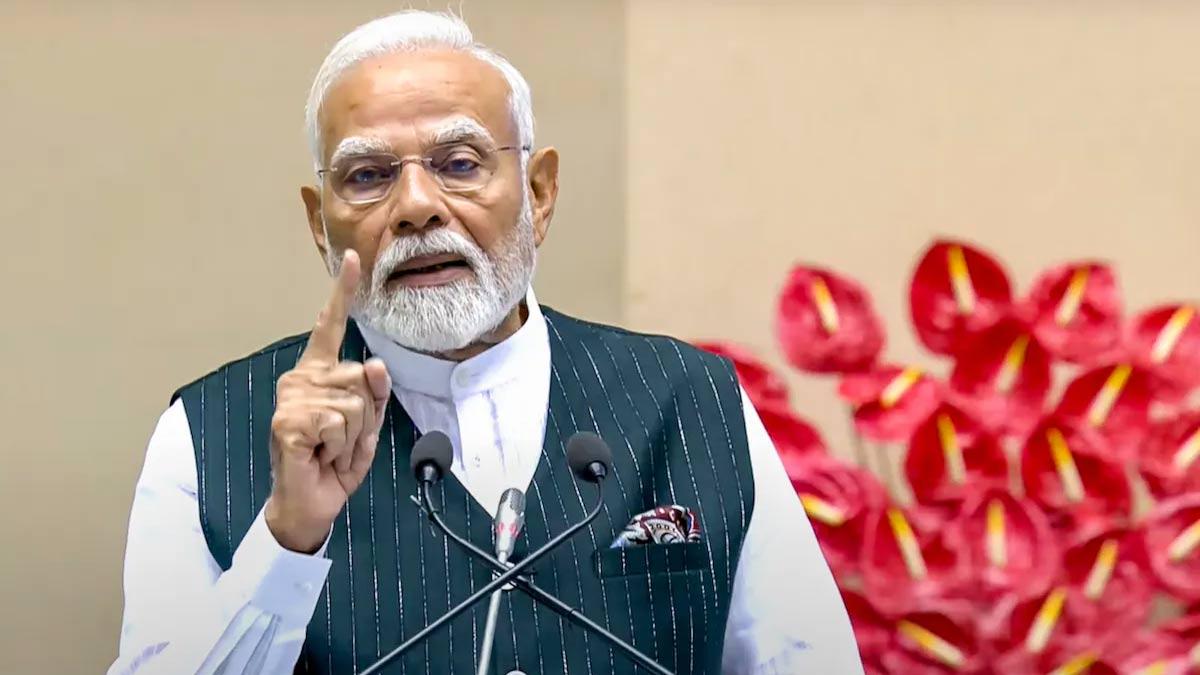


Prime Minister Narendra Modi will be undertaking a major official tour of the United Kingdom on July 23, and one of the key areas of discussion with British Prime Minister Keir Starmer is likely to be the growing threat emanating from Khalistani extremism in the UK.
Though trade, defence, and strategic cooperation continue to top the agenda, New Delhi will surely articulate grave disappointment at what it sees as London's lack of response to the increasing presence of separatist forces with relative impunity on British soil.
In a press briefing held on Tuesday, India's Foreign Secretary Vikram Misri described the seriousness of the issue by saying, "The issue of the presence of Khalistani extremists, bodies close to these people, is something that we have brought to the attention of our partners in the UK. We will continue to do so.". This is a concern not just for us but should also be of concern to our partners because this affects social order and social cohesion in these other nations too.
The issue was already discussed in June 2025 on the occasion of the G7 Summit in Italy when Prime Minister Modi met Keir Starmer on the sidelines. According to reports, Modi expressed India's increasing frustration with the UK's persistent willingness to tolerate anti-India behavior, such as physical attacks on Indian diplomatic missions and public celebrations of extremist acts.
New Delhi has also consistently expressed concern at the resurgence of Khalistani extremism in the guise of free speech and activism. These extremist groups, based in the UK, have been known to utilise social media to broadcast propaganda, radicalise the Indian diaspora, and promote violence. One of the most poignant incidents involved the vandalism of the Indian High Commission in London by pro-Khalistani protesters in March 2023, where they pulled down the national flag and fought with the local police — an incident India feels was not treated with the seriousness that it merited.
Indian agencies report that supporters of banned organisations, such as Sikhs for Justice (SFJ), continue to mobilise rallies, collect funds, and make inflammatory speeches in cities across Britain, largely with impunity.
Increasing Unrest in New Delhi
In spite of continuous diplomatic engagement, such as the presentation of comprehensive intelligence dossiers, India feels that the UK has not made significant strides to stop extremist funding, disrupt propoganda cells, or prosecute elements that pose a threat to Indian sovereignty. The inability to do so is, in the view of the Indians, a huge void in the security collaboration between the two countries.
While both countries are keen to strengthen cooperation in fields like trade, innovation, and defense, the fact that this contentious issue continues to persist is becoming a roadblock. India has reaffirmed that protecting its diplomatic personnel and maintaining national sovereignty are non-negotiable compulsions, and incidents of vandalism and provocation need to elicit strong judicial fallout.
Focus of the Next Dialogue
In his meeting with PM Starmer, Modi will likely confirm India's demand for a zero-tolerance approach to extremist groups. Top demands from India are enhanced cooperation in intelligence sharing, tracking of financial transactions to Khalistani groups, and the extradition of suspects who have charges against them in India but are based in the UK. India is also likely to seek enhanced monitoring of events and public activities that glorify violence or further secessionist causes.
For Keir Starmer, this diplomatic encounter is one of the first tests of his government's stance toward India — a vital Indo-Pacific ally and a fulcrum for Britain's post-Brexit geostrategic vision. His government has signaled its intention to relaunch relations with important global actors, but what it does about India's existential security concerns will be decisive.
If the UK is serious about agreeing the much-anticipated Free Trade Agreement (FTA) with India, it will have to show a strong and serious stance on the question of Khalistani extremism. Failing to do so would not only damage trust but also the wider economic and strategic potential of the relationship.
As Modi and Starmer sit down to talks, analysts in both capitals will be waiting eagerly to determine if the UK is willing to take on extremist forces on its own soil — or if India's long-standing fears will again be answered with complacency.
Read also| Watch| Indian Army Inducts US-Made Apache Helicopters, Dubbed 'Tanks in the Air'