
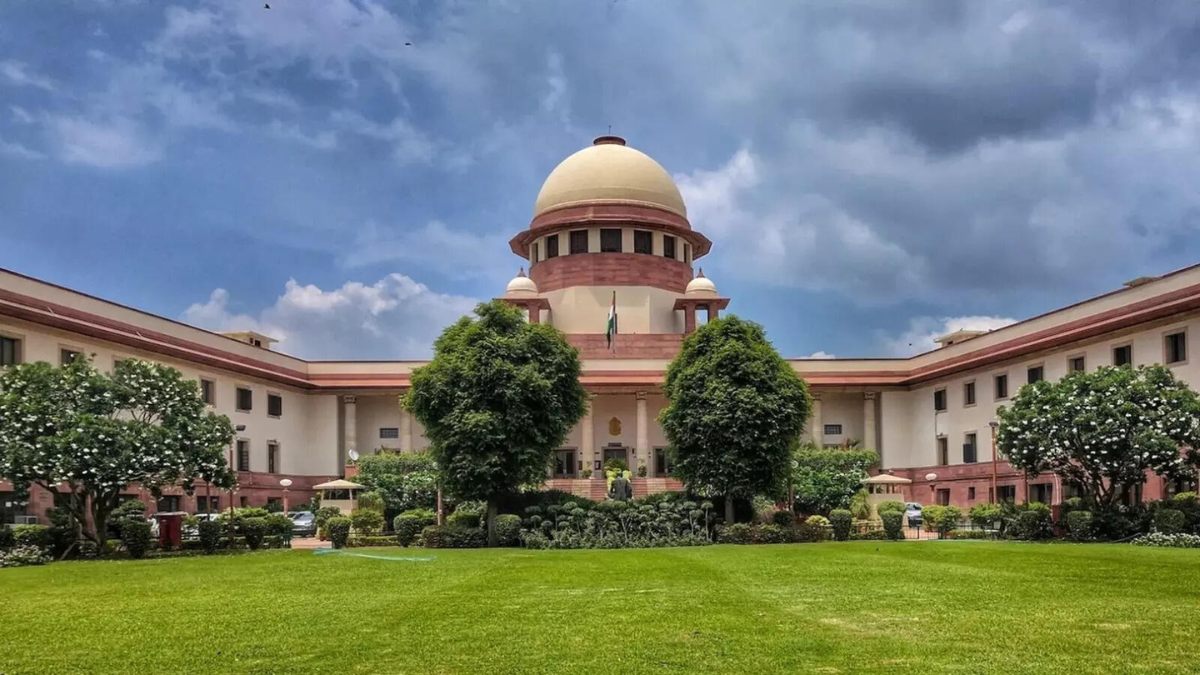


The Supreme Court on Friday clarified that the removal of a person's name from the electoral roll does not, by itself, amount to the loss of Indian citizenship, while reiterating that the Election Commission of India (ECI) is required to refer such cases to the Centre for a determination of citizenship status in line with its recent judgment on the Special Intensive Revision (SIR) in Bihar.
A bench led by Chief Justice of India Surya Kant observed, “Our judgment (on Bihar SIR) is clear. The Election Commission of India has full control over the electoral roll. However, that does not result in loss of citizenship per se. They have a corresponding duty to refer it to the ministry of the Central government department for adjudication of the citizenship status.”
The remarks came as the court issued notice on a petition seeking a mechanism to ensure the speedy disposal of more than three million appeals filed by West Bengal residents who allegedly lost access to subsidised rations, cash assistance and other state welfare benefits after their names were removed from the electoral roll.
The plea was filed by Prasenjit Bose of the West Bengal Pradesh Congress Committee and was argued by senior advocate Gopal Sankaranarayanan. He submitted that despite the Supreme Court's clarification in the Bihar SIR judgment, the West Bengal government had issued at least three orders discontinuing benefits under the Public Distribution System (PDS) and the Annapurna cash transfer scheme.
Appearing with advocate Neha Rathi, Sankaranarayanan told the bench that the petition seeks expedited adjudication of nearly 3.4 million appeals submitted by voters excluded during the SIR exercise. He pointed out that although the Supreme Court had directed the establishment of 19 tribunals to hear these appeals, there is no publicly available data on how many cases have been decided. He also urged the court to direct the publication of the standard operating procedure (SOP) governing the functioning of the tribunals.
The bench, which also comprised Justices Joymalya Bagchi and V Mohana, responded, “The SOP was meant for internal functioning and is effectively being addressed by the Chief Justice of the Calcutta high court. Your concern is on the reasonable rate of disposal of appeals.”
With West Bengal's local body elections expected to commence by December, the petition has sought time-bound decisions on appeals filed by voters seeking restoration to the electoral roll after being placed on a suspect list labelled "logical discrepancy". It has also requested that the number of appellate tribunals be increased from 19 to at least 42.
The Supreme Court agreed to tag the matter with pending petitions challenging the SIR exercise in West Bengal, which are scheduled to be heard next month. Seeking an early hearing, Sankaranarayanan argued that voters whose names have been deleted continue to be denied welfare benefits until their appeals are decided.
“Our worry is that SIR deletion is being used to deny them benefits,” he said.
Advertisement