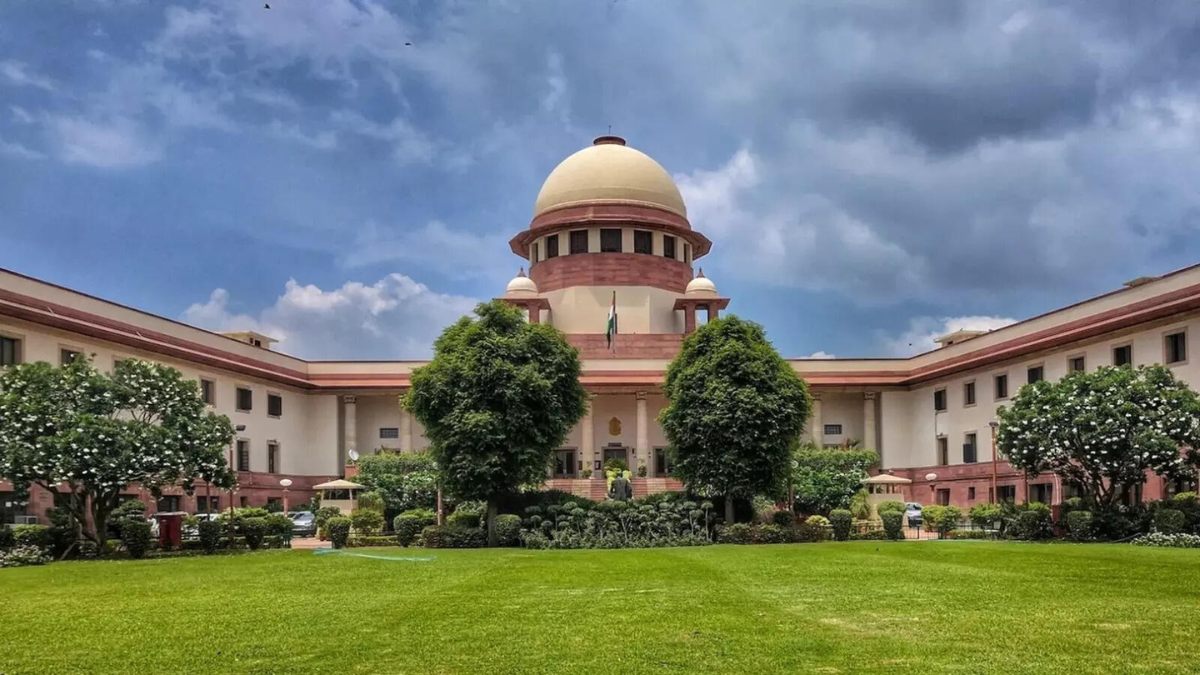
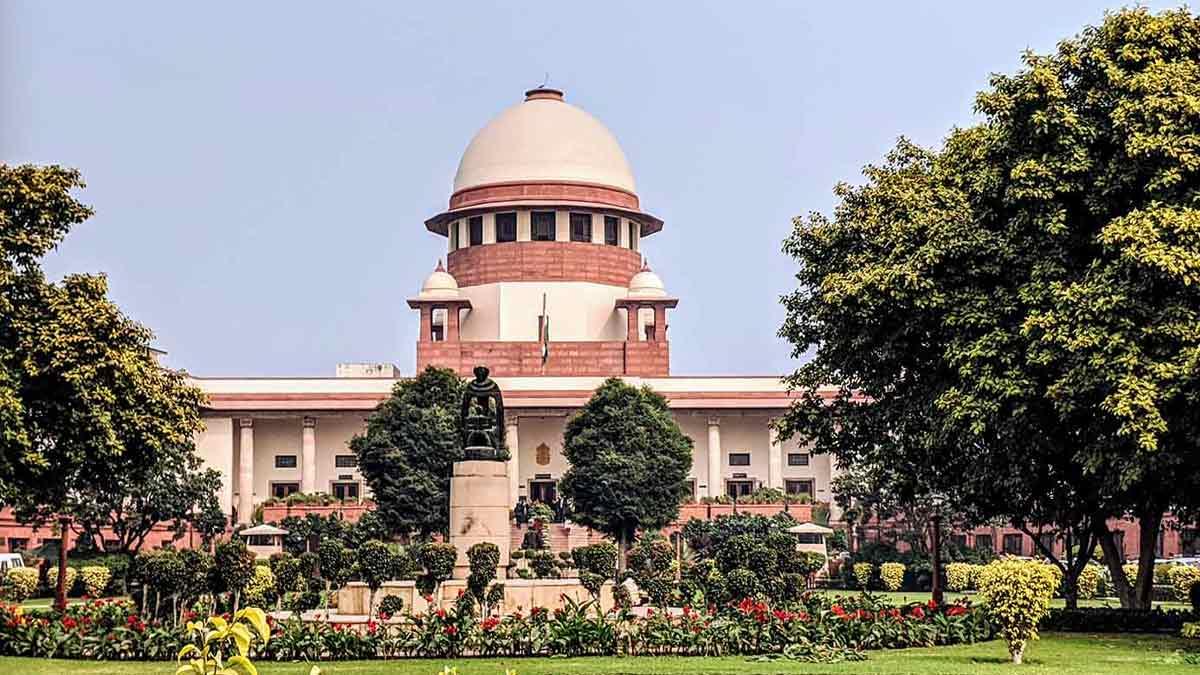


The Supreme Court on Thursday suspended the recent order of the Bombay High Court to acquit all 12 accused in the 2006 Mumbai train blasts case.
This comes after the Maharashtra government flagged the fear that the high court judgment would have an adverse impact on trials being conducted under the Maharashtra Control of Organised Crime Act (MCOCA).
But the top court made clear that this stay does not affect the release of the acquitted men, who were already released after the high court judgment given earlier this week.
A bench of Justices MM Sundresh and N Kotiswar Singh issued notices to all 12 of them, directing them to respond to the appeal of the state government.
We are inclined to hold that the impugned judgment should not be given a precedent value. Hence, there will be stay of the impugned judgment," the court held in its brief order.
For the Maharashtra government, Solicitor General Tushar Mehta argued that the petition to stall the high court order had nothing to do with keeping the accused incarcerated, but stopping its general legal implications.
I am aware of the issue of freedom. I am not asking for a stay on their release. But we desire the judgment to be stayed since there are certain conclusions by the high court which can have implications on other pending MCOCA cases. Therefore, the impugned judgment must be stayed," Mehta informed the bench.
The Supreme Court agreed with this rationale and directed that the judgment of the Bombay High Court should not be followed as a legal precedent until further guidance is provided.
Background of the Case
The intervention by the Supreme Court comes after Maharashtra government's emergent petition against the July 21 verdict of the Bombay High Court that nullified the 2015 convictions delivered by a special MCOCA court. Five of the accused had been given the death penalty and the rest life imprisonment at that time.
The court had held that the prosecution had "utterly failed to prove the offence beyond reasonable doubt," deprecating the investigation as being marred by irregularities, tainted evidence, and gross violations of the accused's constitutional safeguards.
The 2006 Mumbai train bombings were among the deadliest terror attacks in India's history. Seven high-explosive improvised explosive devices (IEDs) were concealed in pressure cookers and exploded in first-class sections of full suburban trains within a six-minute time frame during the evening peak hour. The bombings killed 188 individuals and injured 829 others.
The Maharashtra Anti-Terrorism Squad (ATS) investigated and, in four months, had picked up 13 men. The agency claimed the attacks were launched by former members of the outlawed Students' Islamic Movement of India (SIMI), with logistical support from Lashkar-e-Taiba (LeT) operatives from Pakistan. Pursuant to ATS charges, a dozen Pakistanis were alleged to have entered India illegally to help in the training and providing of explosives—charges that did not withstand judicial scrutiny.
In 2015, the MCOCA court convicted 12 of the 13 accused. Abdul Wahid Shaikh, one of the men and a school teacher who had not given in to confessing, was acquitted throughout the trial. Another accused died before the high court could process the appeal.
A Stinging High Court Verdict
On July 21, a two-judge bench of the Bombay High Court headed by Justices Anil S Kilor and Shyam Chandak delivered a scathing 400-page judgment questioning the credibility of the whole investigation and prosecution.
The court called the case a "deceptive closure," implying that the actual culprits could still be roaming free, thus eroding public confidence in the criminal justice system.
One of the key concerns raised by the court was the prosecution's excessive reliance on statements of confession. The high court reported that the majority of these confessions, which were obtained between October 4 and October 25, 2006, were "cut-copy-paste" versions of one another and were probably extracted under coercion. Many of the defendants had also retracted their confessions at trial, claiming they were tortured and coerced—something that the court deemed credible in light of procedural failures.
It was also noted that the accused were not advised of their right to refer to legal counsel while confessing, even though they had counsel represented by advocates—an oversight the court judged as a denial of their basic rights.
The court also questioned the credibility of major eyewitnesses, such as two taxi drivers and a few train passengers who testified that they witnessed the accused planting the bombs. Their testimony, taken over 100 days after the event and even years later during identification parades, were found to be inconsistent and unreliable. Furthermore, those parades were not carried out by legally authorised officers, which left further doubt about the evidence.
Material evidence like pressure cookers, circuit boards, RDX, and soldering equipment that were introduced as physical evidence were also undermined. The high court discovered defects in the custody and sealing of these items, the chain of custody being severed prior to forensic examination—putting their origin and linkage to the accused in doubt.
Secondly, the court raised questions about the applicability of MCOCA in the matter, citing glaring procedural lapses in invoking the strict law.
Read also| Watch| Indian Army Inducts US-Made Apache Helicopters, Dubbed 'Tanks in the Air'