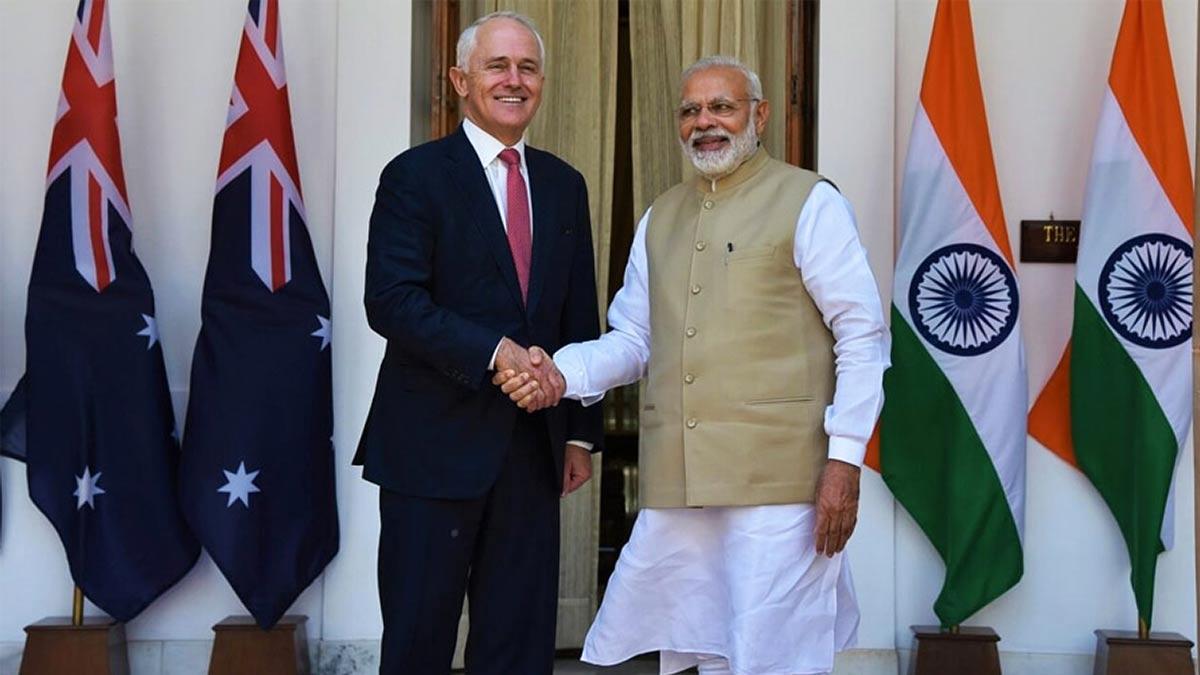


In the face of escalating global worries about rare earth deficiency caused by Chinese export controls, India is considering Australia for possible sourcing in earnest, a top Australian official revealed on Tuesday.
Malini Dutt, Trade and Investment Commissioner, New South Wales Government, disclosed that negotiations are in progress between the two nations for the purchase of rare earth mineral blocks.
They (Australia and India) are discussing rare earth and blocks are available. There is a possibility for India to acquire an early-stage block and then have tie-ups with a couple of companies," Dutt added while speaking at the India Energy Storage Week (IESW) 2025, organised by the India Energy Storage Alliance (IESA).
Apart from rare earths, Indian companies—public sector undertakings (PSUs) as well as private ones—are increasingly interested in taking over copper mines in Australia.
"There is lot of interest around copper too, if I must say, in light of some of the discussions I have had. The interest is also from private sector as well as a PSU which is very on the lookout for copper (blocks)," Dutt added.
She pointed out that India has the infrastructure and industry in place to process such minerals already, citing huge investments made by players such as Adani Group in smelting.
"You know there are smelters and there are players like Adani has made a large investment. That is a line business individuals are investigating," she stated.
The pressure to secure uncommon earth materials has grown stronger as China's export restrictions increasingly destabilize global supply chains, notably for sectors including motor vehicle manufacturing and household electronics.
China controls more than 90% of the world's rare earth magnet processing capacity today, a key ingredient in numerous high technology and industrial uses—electric vehicles, consumer electronics, renewable energy technologies, and defense systems, to name a few.
Some of the most important of the rare earth elements impacted are samarium, gadolinium, terbium, dysprosium, and lutetium. They are essential to such products as electric motors, smartphone components, sophisticated braking systems, and missile guidance systems.
India's approach to Australia is seen as a strategic move to expand its sources of priority minerals and stem dependence on China amid changing geopolitical and trade patterns.
Read also| Trump Sends Notices, Plans 25% Tariffs on Japan and South Korea Starting August 1
Read also| Markets Climb in Anticipation of India-US Trade Deal