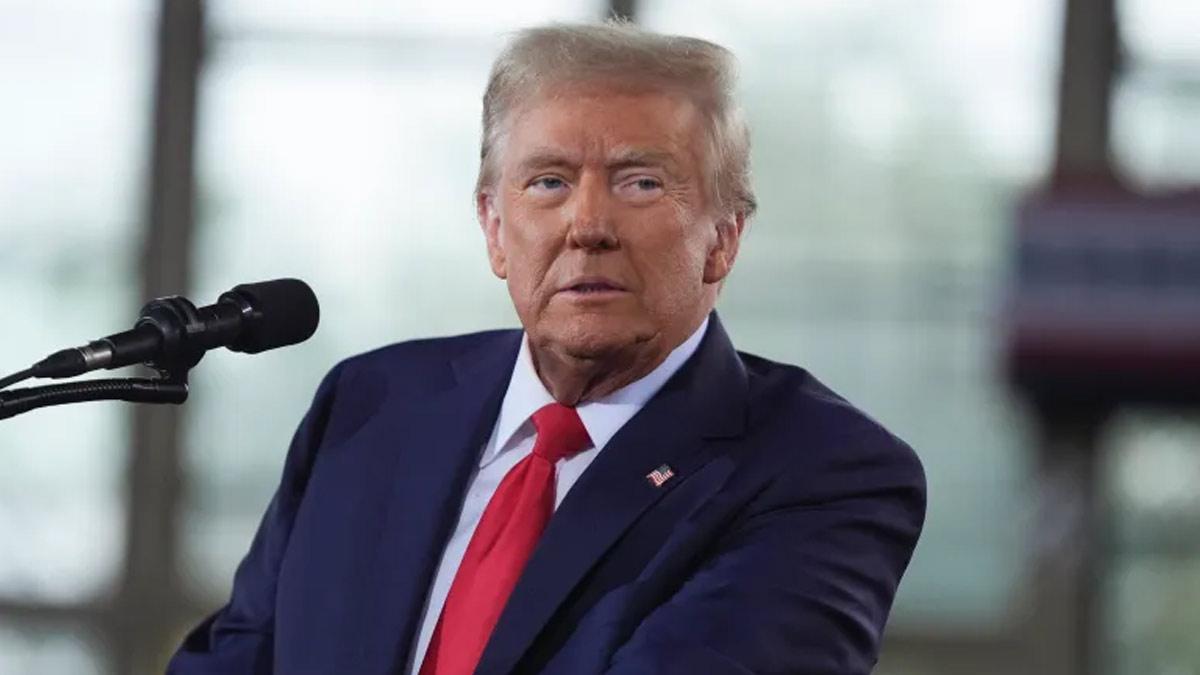


US President Donald Trump on Monday officially informed Japan and South Korea of his government's intention to impose a 25% tariff on their exports to the United States, with new rates to be effective from August 1.
The statement was released through Trump's social media site, Truth Social, in which he posted images of the official letters sent to Japanese Prime Minister Shigeru Ishiba and South Korean President Lee Jae-myung.
Trump in the letters threatened both nations against retaliating with tariffs, saying any attempt to do so would result in a symmetrical increase in US import tariffs.
If you're going to raise your tariffs for any reason, then, whatever figure you want to raise them by, will be superimposed on the 25 per cent we charge," Trump wrote to the two leaders.
He termed the 25% tariff as moderate in relation to the general trade deficit the US has with both nations. Trump urged both governments to relocate their manufacturing activities to the United States, promising them incentives in return.
"There won't be a tariff if South Korea or Japan, or businesses in your country, will decide to construct or produce product within the United States," he told. "Actually, we will do all we can to secure approvals quickly, professionally, and routinely — that is, in weeks."
Trump also threatened to send more such letters to world leaders before the July 9 deadline, demanding new trade agreements under threat of higher tariffs.
"These tariffs can be adjusted upward or downward based on our relationship with your nation," he said. "You will never be disappointed with the United States of America.
On the larger trade front, US Treasury Secretary Scott Bessent reported that several countries have been in touch with Washington with new proposals over recent days, reporting that the US is nearing completion of several trade deals. "A lot of proposals have come in at the last minute," Bessent stated.
Trump recently has announced breakthroughs on trade talks with Vietnam and China. Trump also said last month that a possible trade agreement with India is on the horizon — one that would enhance market access for U.S. products.
Simultaneously, India's high-level team, led by chief negotiator Rajesh Agrawal, returned from Washington following yet another round of bilateral trade talks. No breakthrough was achieved on contentious issues like the opening of Indian markets to US agricultural and dairy exports, areas that Washington has been aggressively pushing on.
Read also| Office Leasing in Top Indian Cities Jumps 40% in H1 2025 as GCCs Drive Demand
Read also| US, Japan and Hong Kong Account for 89% of Q2 Foreign Investments in Indian Real Estate