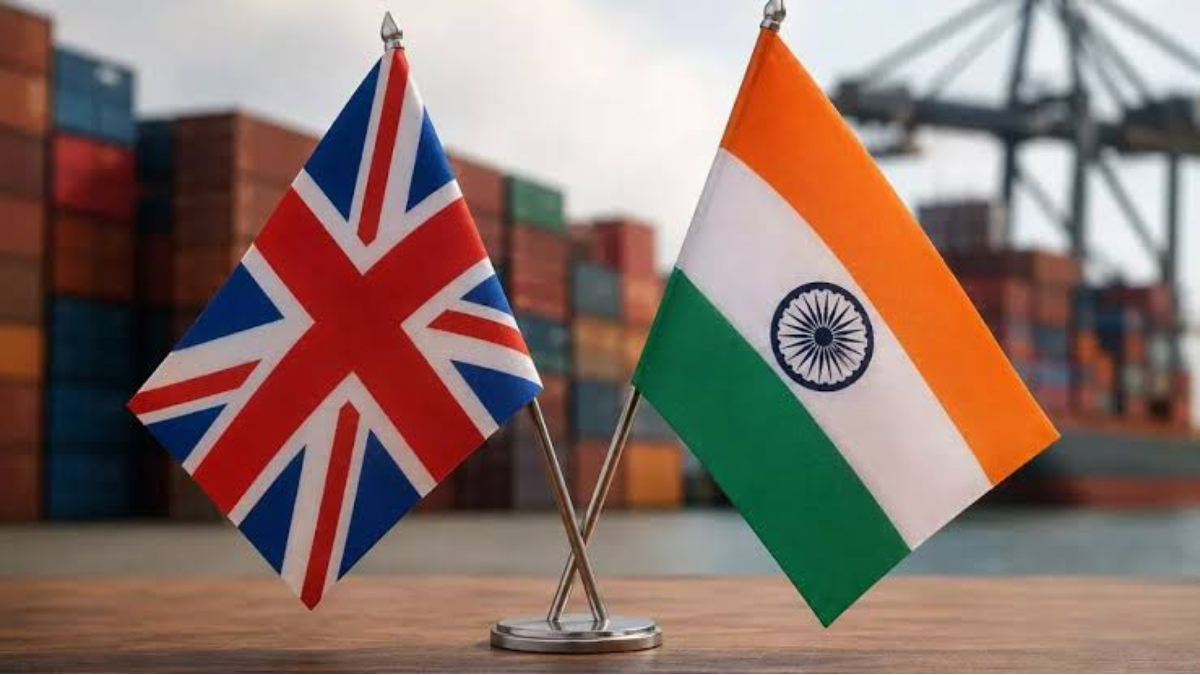


While India is going full throttle in pursuing international trade agreements, its new Free Trade Agreement (FTA) with the United Kingdom is another important milestone achieved. A long-awaited trade agreement with the United States has so far eluded the two countries despite continuous and intense negotiations.
A recent Newsweek report points out that a formal trade deal with the U.S. remains beyond reach despite previous upbeat comments made by both New Delhi and Washington. A collective interest in moving towards such an agreement had been shown earlier by former U.S. President Donald Trump as well as Indian authorities.
Discussing the issue, Sanjeev Sanyal, a member of Prime Minister Narendra Modi's Economic Advisory Council, highlighted India's position of equal and balanced global interaction. He said to Newsweek, "We would like to deal with the world, including the West, on an equal basis." He further added, "We know that Western nations have their interests, but we have ours as well. So, we will voice our interests.". This does not mean that we won’t be willing to engage or make reasonable trade-offs.”
Lisa Curtis, a director at the Centre for a New American Security, recommended that the U.S. administration should make strategic concessions to India to tighten bilateral relations. "India's successful trade agreement with the UK shows that it has other global trading alternatives and that it is not needy enough for a U.S. trade deal to open up its agricultural market," she said.
In parallel diplomatic developments, New Delhi has reopened its doors to the Chinese tourist, restoring visa services to Chinese nationals which were suspended five years ago. This decision was taken after India's External Affairs Minister S. Jaishankar recently held a high-level meeting with Chinese Foreign Minister Wang Yi. "China and India should adhere to the direction of good neighbourliness and friendship," Wang Yi said during the meeting.
These steps reflect India's expanding role as a key world player able to shape strategic realignments across regions, according to geopolitical analysts quoted in the report.
The India-UK trade agreement, specifically, is being seen through both economic and geopolitical glasses. Although the agreement itself centers on the exchange of goods and services, it also represents a wider shift in diplomatic and economic alignments. The report notes that the agreement was anything but hasty, as negotiations were said to have commenced in May 2022 and spanned three years, involving "tough domestic balancing acts, safeguarding farmers, small businesses, and service sectors on both sides."
UK Conservative MP Bob Blackman seconded this view, explaining to Newsweek that the agreement is about more than a business deal. "This agreement is more than trade," he opined, pointing out that it is a sign of more profound change in the way India and the UK understand power relations and bilateral collaboration.