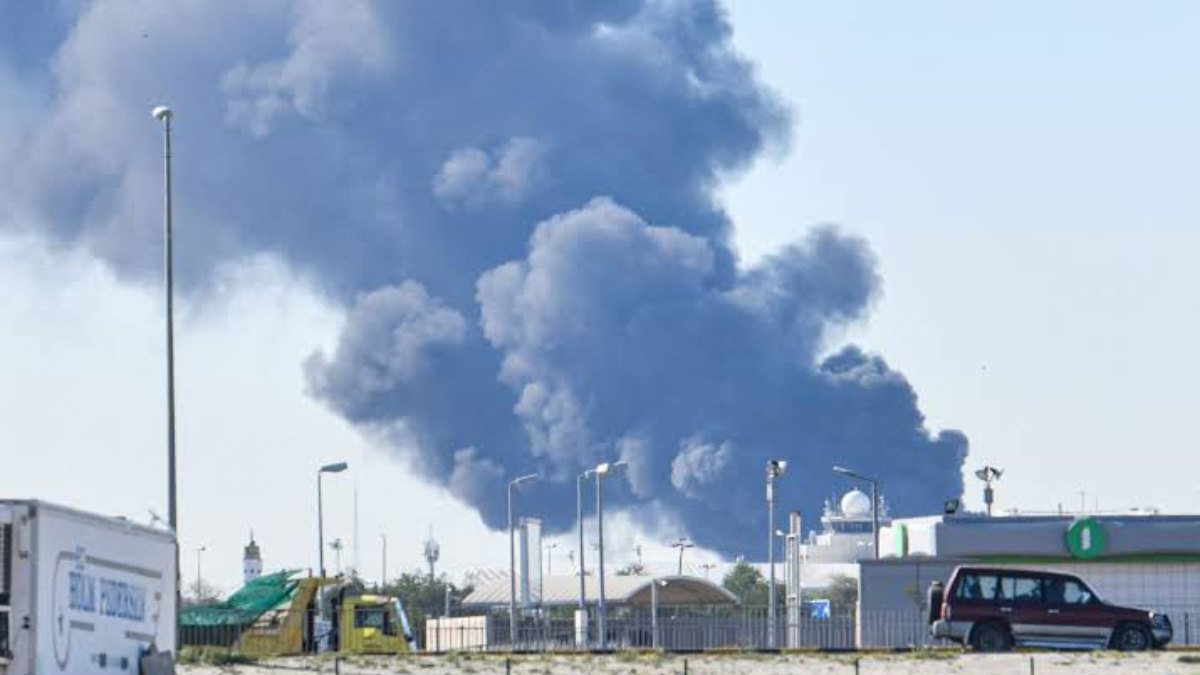
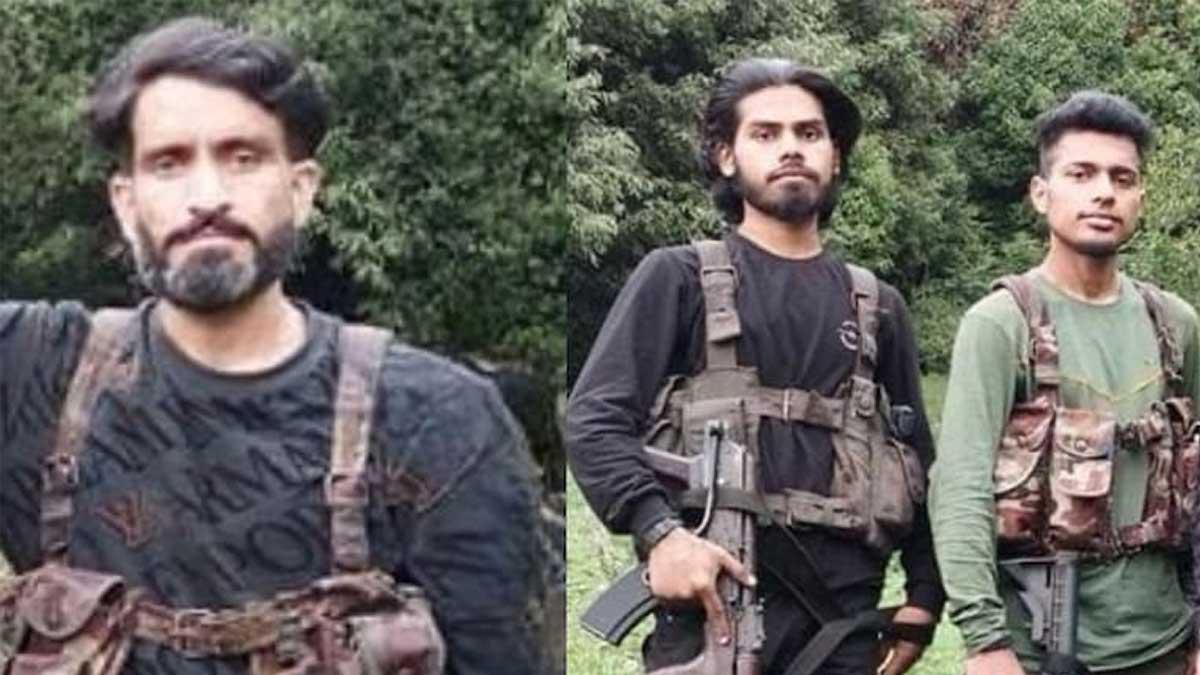


The United Nations Security Council's sanctions committee has said that The Resistance Front (TRF) was responsible for the Pahalgam terror attack in Jammu and Kashmir twice and even shared a picture of the attack location.
The report also mentions references to proposals by member states that the attack is likely to have had the support of Pakistan-based terror group Lashkar-e-Taiba (LeT).
This evaluation is contained in the 36th report of the Analytical Support and Sanctions Monitoring Team on ISIL (Da'esh), Al-Qaeda, and other affiliated groups. Published on Tuesday, the report noted the April 22 attack in Pahalgam where five militants opened an attack on a tourist spot, killing 26 civilians.
TRF claimed the attack the same day, and meanwhile released a photo of the attack scene," the report added. It also indicated that "the claim of responsibility" was repeated by TRF on the next day, but withdrawn on April 26, and following this, there were no more claims or admissions by any group.
A UN member state asserted that without the support of Lashkar-e-Taiba, it would have not been possible to conduct such a casualty-heavy operation, and it laid claim to direct causality between LeT and TRF. Another member state concurring with this, explained TRF as another name or alias of LeT. A third member state did not agree, relegating LeT as a "defunct" organization.
Fragile Regional Landscape and TRF's Terrorist Designation
The report cited the instability in the region, saying that "there is a risk that terrorist groups may exploit these regional tensions." In a related development, the United States recently declared TRF a Foreign Terrorist Organisation (FTO) and a Specially Designated Global Terrorist (SDGT).
On April 25, after the Pahalgam killings, the 15 members of the UN Security Council released a press statement appealing for prosecution of the individuals who were involved in masterminding, funding, and sponsoring the attack. The name of TRF, however, did not figure in the final statement because of Pakistan's intervention during the negotiations, which resulted in its deletion.
India's External Affairs Minister S. Jaishankar told Parliament that Pakistan had even tried to exclude any mention of TRF while preparing the UNSC press statement.
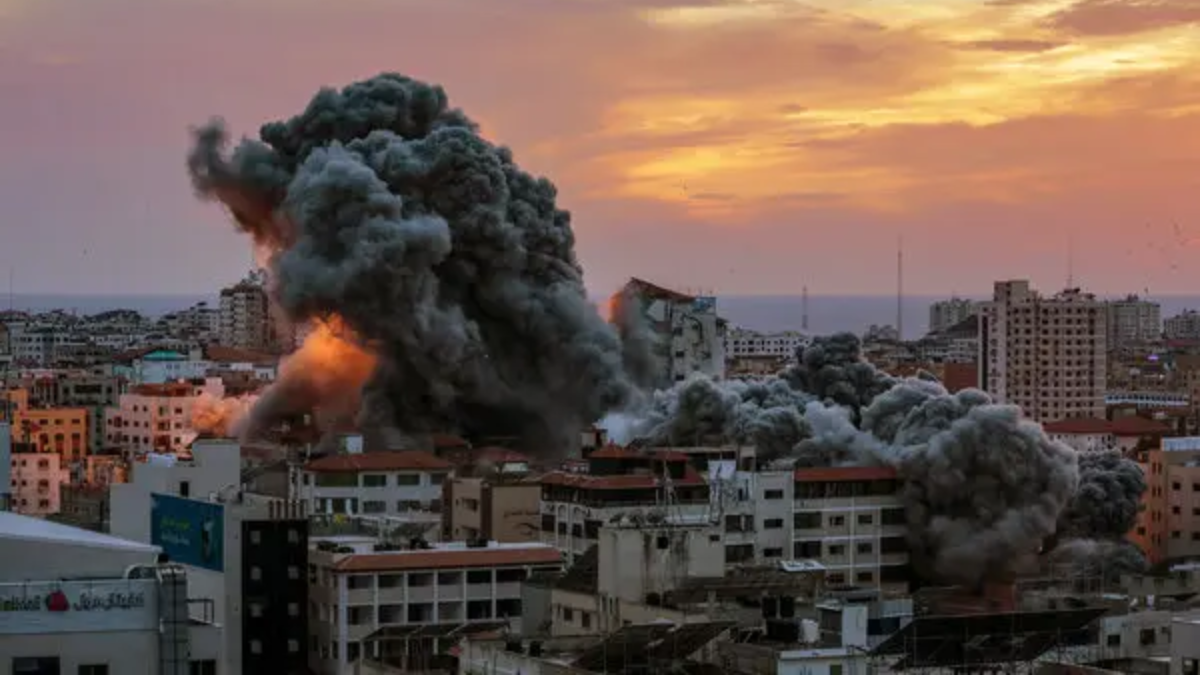
India then conducted 'Operation Sindoor', targeting bases of militants in Pakistan and Pakistan-occupied Kashmir following the Pahalgam incident.
ISIL-K, TTP, and Emerging Threats in the Region
The monitoring group stressed that the Islamic State – Khorasan Province (ISIL-K) is still the most dangerous regional and international terrorist threat. The group has an estimated 2,000 active fighters and continues to recruit in Afghanistan as well as in surrounding Central Asian territories, and even in Russia's North Caucasus.
By the report, "In North Afghanistan and parts near the Pakistani borders, ISIL-K indoctrinated children in madrassas, having a suicide training course for minors of about 14 years old." The group is known to be trying to spread its influence through countries bordering Afghanistan and beyond.
The report further elaborated that multiple Al-Qaeda-related training camps are up and running throughout Afghanistan, with three new ones—though relatively simple. The camps are reportedly training members of both Al-Qaeda and Tehrik-i-Taliban Pakistan (TTP), the latter of which is estimated to have a total of 6,000 active fighters.
TTP has been said to remain receiving solid logistical and tactical support from the Afghan governing powers. The group was also said to have operational connections with ISIL-K on a tactical level by some states.
TTP has carried out several fatal attacks over the past few months. It was reported that the group has a wide array of weaponry at its disposal, greatly enhancing the capability of its attacks.
Another member state reported that, in January 2025, TTP conducted training of terrorists in Baluchistan," the document disclosed. It further stated that there were signs of convergence between the TTP and the Balochistan Liberation Army (BLA), particularly its Majeed Brigade, in areas of southern Afghanistan. The two factions, according to one state, shared at least four training camps, including Walikot and Shorabak, where Al-Qaeda allegedly offered ideological as well as weapon training.
One illustration of the increased operational acumen of the BLA was mentioned in the report: the March 11 hijacking of the Jaffar Express train, during which militants employed IEDs and weapons to kill 31 people—21 hostages among them. The attack evidenced the rising brutality and technical competence of the group.
Lastly, the report also sounded the alarm regarding Al-Qaeda in the Indian Subcontinent (AQIS), cautioning that the confidence and aspirations of the group are increasing in the region.
Read also| Operation Sindoor Strikes Sent Clear Message to Pakistan, says Army chief Upendra Dwivedi
Read also| With Operation Sindoor Underway, CDS Stresses Need for Heightened Military Readiness