

U.S. President Donald Trump on Tuesday renewed his call for the United States to take control of Greenland, arguing that the strategically located Arctic island should not remain under the authority of fellow NATO member Denmark. The remarks are likely to deepen unease among European allies as NATO leaders gather amid efforts to strengthen trans-Atlantic unity and expand defense cooperation.
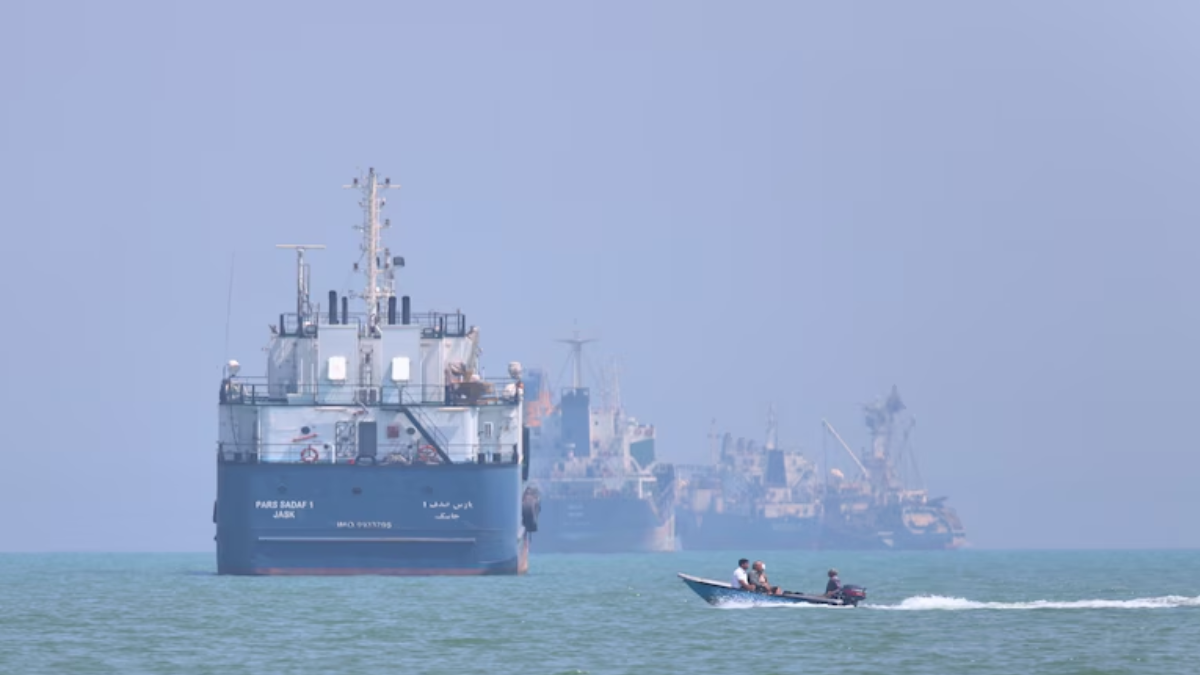
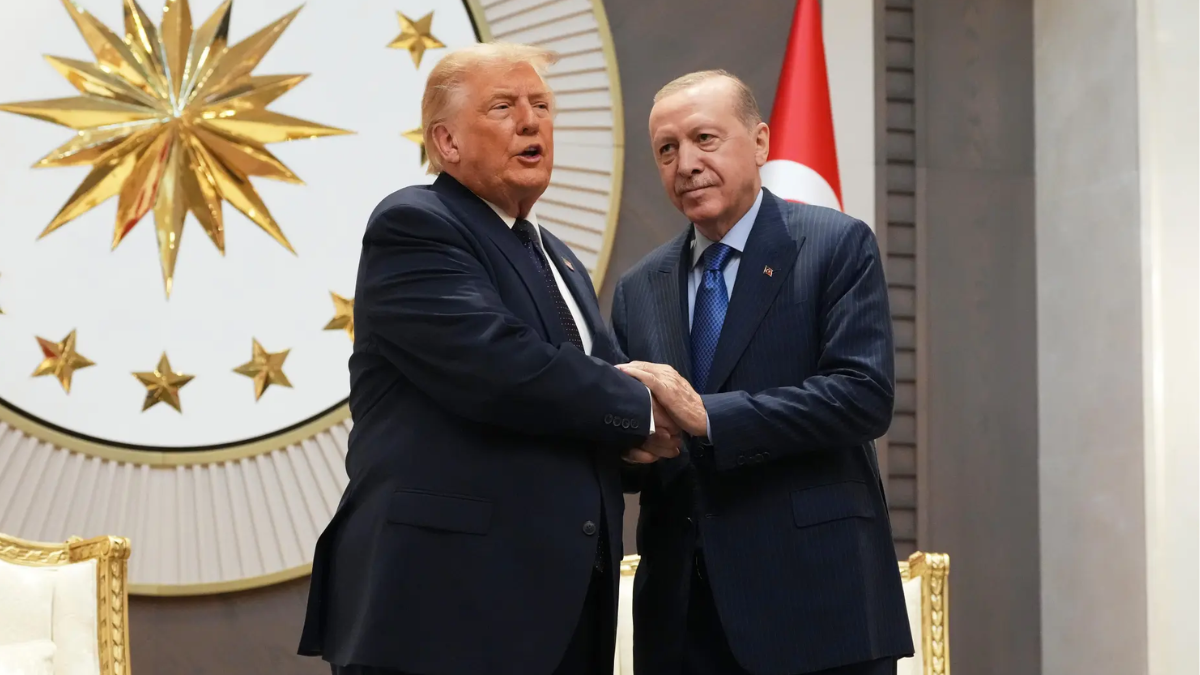
Speaking alongside Turkish President Recep Tayyip Erdogan at the presidential palace in Ankara, Trump described Greenland as vital to U.S. interests and repeated the false claim that the island is surrounded by Chinese and Russian vessels, saying Washington could not allow it to be threatened.
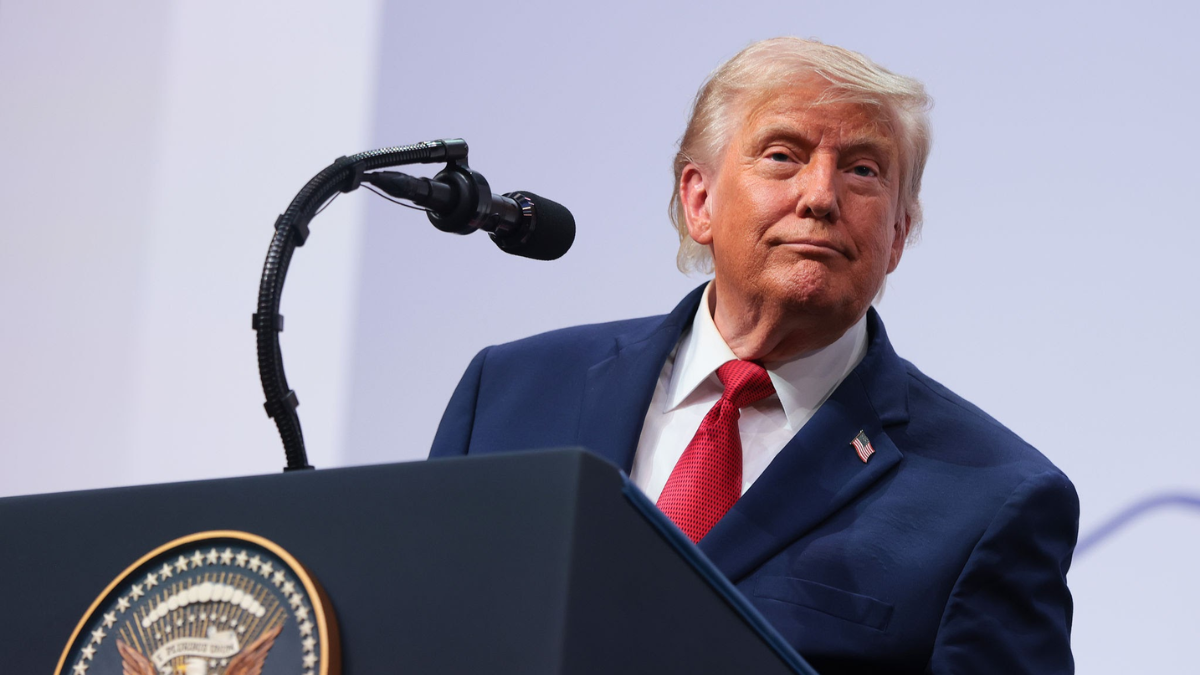
“That should be controlled by the United States, not by Denmark,” Trump told reporters during the meeting.
His comments are expected to unsettle NATO members, whose alliance is built on the principle of collective defense among its 32 member states rather than territorial claims against one another. The issue also emerged as European governments and NATO Secretary-General Mark Rutte continued efforts to address Trump's long-running criticism that European allies have failed to spend enough on defense.
In a separate announcement, Trump said the United States would remove sanctions imposed on Turkey after Ankara's purchase of a Russian missile defense system, a decision that had led to its removal from the F-35 fighter jet program. The move reflects Trump's close relationship with Erdogan and could pave the way for closer defense cooperation.
Turkey was excluded from the F-35 program in 2019 after acquiring the Russian-made S-400 missile defense system, triggering years of friction between Washington and Ankara despite the cordial ties between Trump and Erdogan that date back to Trump's first presidential term.
Although Turkey still faces legal barriers before it can fully rejoin the F-35 program, lifting sanctions imposed under the Countering America's Adversaries Through Sanctions Act would remove one of the key obstacles. Restoring Turkey's access to the fifth-generation fighter aircraft has remained one of Erdogan's principal defense objectives, and Trump has repeatedly suggested such a move could eventually take place.
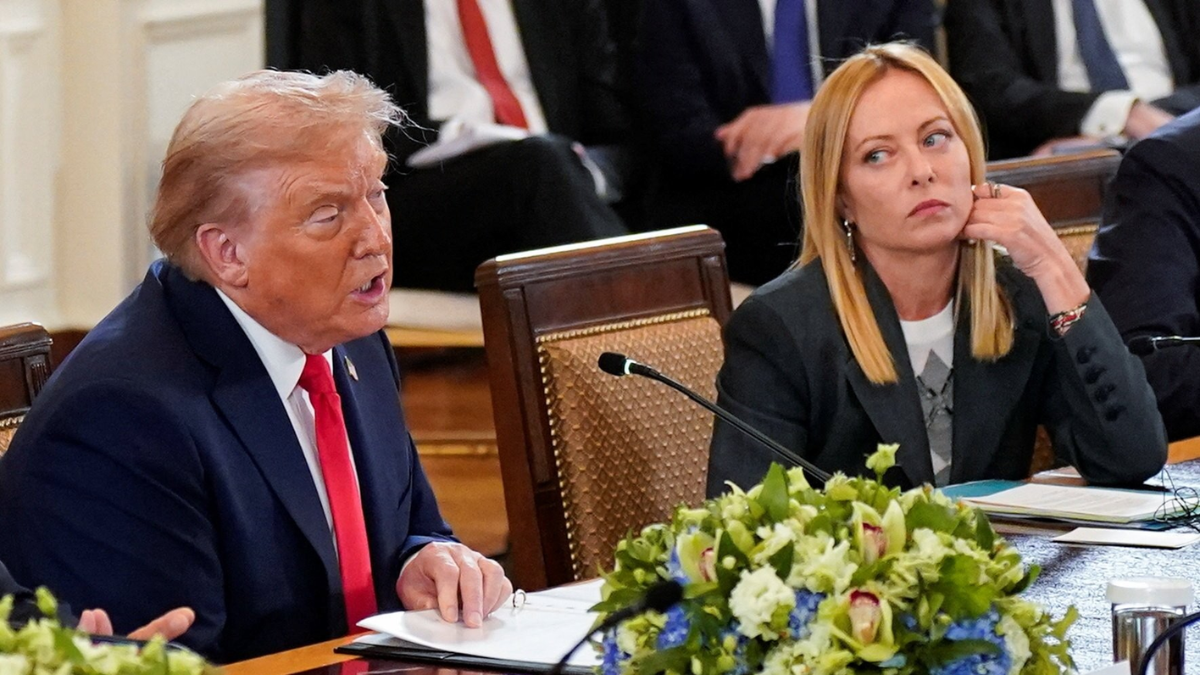
“We’re going to be taking the sanctions off, OK?” Trump said in response to a question as he sat alongside Erdogan, adding that Secretary of State Marco Rubio, Treasury Secretary Scott Bessent and Defense Secretary Pete Hegseth were working on the matter.
Trump also indicated that selling F-35 fighter jets to Turkey remained under consideration.
“We’re going to be taking the sanctions off, OK?” Trump said in response to a question as he sat alongside Erdogan, saying Secretary of State Marco Rubio, Treasury Secretary Scott Bessent and Defense Secretary Pete Hegseth were working on the issue.
Trump said the possibility of selling F-35s to Turkey is “something certainly we’d consider,” given the U.S.’s relationship with Turkey and that “Turkey’s been, in many ways, much more loyal than other countries that we think would be loyal.” For his part, Erdogan expressed hope that the U.S. will sell F-35 planes to Turkey, saying the U.S. president always stands by his word.
The cordial relationship between the two leaders was on display shortly after Air Force One landed in Ankara, where Erdogan welcomed Trump with a ceremonial reception featuring cannon salutes, mounted military escorts and aircraft trailing red, white and blue smoke.
Asked why the two leaders had maintained such close ties, Trump attributed it to personal rapport.
“There’s a chemistry that works between us.”
“Sometimes you get along with the toughest people, like him,” Trump said, gesturing to Erdogan.
Any future transfer of F-35 fighter jets to Turkey could complicate Washington's ties elsewhere. Israeli Prime Minister Benjamin Netanyahu has urged the Trump administration not to proceed with such a sale, arguing that Erdogan “calls openly for the annihilation of Israel.” Significant opposition also remains in the U.S. Congress, where lawmakers continue to object to Turkey regaining access to the aircraft while it retains the Russian S-400 system.
Even if sanctions are lifted, existing U.S. legislation would continue to prevent Turkey from purchasing F-35s as long as it possesses the S-400 missile defense system.
Earlier in the day, NATO unveiled a series of major defense initiatives worth billions of dollars in an effort to strengthen the alliance's military capabilities. Rutte described the investments as “money well spent” as the alliance sought to demonstrate its commitment to higher defense spending.
Speaking before government ministers and defense industry executives at a high-profile NATO event, Rutte presented several multinational procurement projects. NATO itself does not own weapons systems, but it operates a fleet of 14 Airborne Warning and Control System (AWACS) surveillance aircraft that have been in service for around five decades, along with a smaller fleet of modern surveillance drones.
One of the key announcements involved replacing the aging AWACS fleet. Swedish defense manufacturer Saab will supply up to 10 new GlobalEye surveillance aircraft for a consortium of 10 NATO members, Swedish Prime Minister Ulf Kristersson announced.
“It’s a moment of great pride,” he said, noting that the twin-engine aircraft would be “made within the alliance for all the alliance.”
Several of the projects are expected to be financed through a European Union defense loan mechanism capable of raising up to $170 billion from capital markets.
“We need to ensure that we are translating our economic might into military capabilities, putting the cash to work from defense plans to drones, from money to missiles and interceptors,” Rutte said.
Representatives from 15 countries also announced a joint effort to acquire Airbus air-to-air refueling and military transport aircraft, while Rutte unveiled another multinational initiative involving four countries to procure as many as five additional Triton surveillance drones for NATO.
Ahead of the alliance's two-day summit in Turkey, Rutte had said NATO would unveil "tens of billions" of dollars in new defense contracts to strengthen deterrence and collective security, although no specific financial figures were disclosed during Tuesday's presentations and several of the projects had already been agreed previously.
Separately, Ukrainian President Volodymyr Zelenskyy renewed his appeal for Ukraine to be admitted to NATO, arguing that the country's military experience would strengthen the alliance.
Zelenskyy pointed to Ukraine's ability to adapt on the battlefield and conduct long-range strikes against Russian targets, including oil refineries and other energy infrastructure. He also said Ukrainian forces are “eliminating” an average of 30,000 Russian troops every month. Zelenskyy is scheduled to meet Trump on Wednesday in Ankara.
“Frankly we take no pride in this,” Zelenskyy said, noting that the war with Russia — now in its fifth year — is “a war we did not seek but one we are forced to fight.”
Concerns have continued to grow among several northern and central European countries that Russia could launch hybrid operations combining conventional military threats with tactics such as cyberattacks.
Despite those concerns, a senior NATO official said the alliance's deterrence strategy had so far prevented Russia from attacking any member state, even as Moscow has engaged in what the official described as "reckless" actions, including violations of the airspace of Poland, Romania and Estonia. The official spoke on condition of anonymity while briefing reporters on the sidelines of the summit.
Also Read | Trump Again Offers to Help End Ukraine War in "Businesslike" Call With Putin