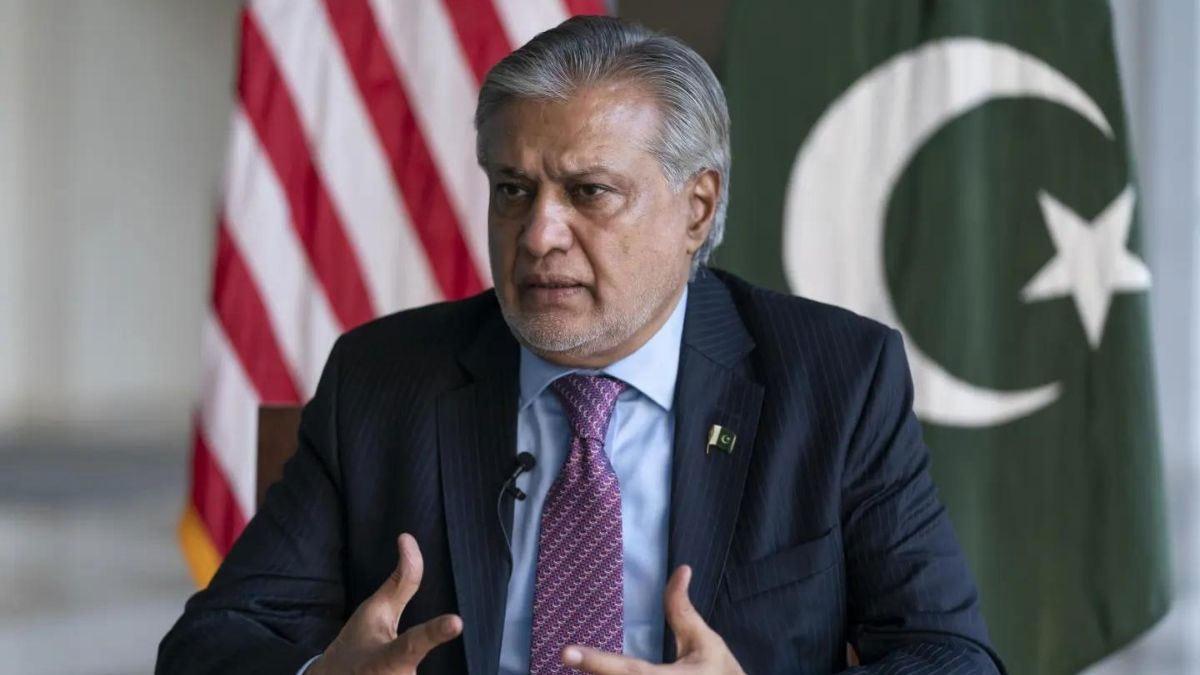


Bangladesh's Foreign Adviser on Sunday raised "unresolved" issues, such as an apology for the 1971 war, in talks with Pakistan's Foreign Minister Ishaq Dar, and mentioned that he and the highest level of Pakistani official dispatched to Dhaka since 2012 were not fully on the same page.
Dar, who landed in Dhaka on Saturday for a two-day trip for mending relations after the removal of longtime Prime Minister Sheikh Hasina last year, met with the Interim Government's Foreign Adviser M. Touhid Hossain.
Absolutely, I don't agree (with Dar). If it had been so, the issues would have been addressed. We laid out our stand and they (Pakistani side) did theirs," Hossain said in an interview to mass-circulation Prothom Alo. He further stated that talks on the issue would be held in the coming days.
Talking to the media after the discussions between the top bureaucrats of the two countries—former bitter rivals—Hossain informed Dhaka demanded payment of pre-independence financial dues, the repatriation of stranded Pakistanis, and "seek them to express regret, the apology for the genocide that occurred here (in Bangladesh in 1971)."
"I have firmly maintained the Bangladesh position," Hossain declared. Asked to comment on Dar's statement that the 1971 problems had been "settled twice," he said, "It would be unfair to resolve problems of 54 years in one day."
Dar, who is also Pakistan's deputy prime minister, informed media persons that the unresolved 1971 problems were resolved twice—once in 1974 in tri-partite talks between New Delhi.
"Subsequently, the then president Pervez Musharraf resolved the genocide issues once again during his visit to Dhaka when he spoke publicly with an open mind," Dar said. But he stressed that the potential for "doing good for the two peoples of our two countries is tremendous."
It is not the first time Dhaka has raised outstanding 1971 issues with Pakistan. Bangladesh asked Pakistan in April, at the first foreign secretary-level talks in 15 years, to settle unsettled historical issues and sort out pre-independence assets division. Dhaka also sought a formal apology for the genocide of the 1971 Liberation War.
Pakistani forces were blamed for genocide and mass atrocities during the war of 1971 and millions were killed.
Dar's visit is in the wake of apparent changes in the politics of the region in the last twelve months encompassing Bangladesh, India, and Pakistan since the ousting of Hasina's Awami League government after violent student protests on August 5, 2024, and its replacement with Muhammad Yunus' caretaker government.
Hossain mentioned that a single agreement and five memorandums of understanding (MoUs) were signed between the two countries. He added that both nations have committed to develop bilateral relations while solving historical problems through dialogue.
Bangladesh-Pakistan relations hit rock bottom during Hasina's Awami League rule, particularly after the 2010 trials of collaborators who used to assist Pakistani soldiers during the 1971 war.
Student-led street demonstrations that ousted Hasina's administration on Aug. 5, 2024, cleared the way for Yunus to become chief adviser three days after Hasina departed for India. It opened the way for fresh talks with Islamabad in recent times, while relations between Dhaka and New Delhi soured, even though India was once Bangladesh's closest strategic and economic ally during Hasina's tenure.
The last Pakistani foreign minister to visit Dhaka was Hina Rabbani Khar in November 2012, who invited Hasina to a summit in Islamabad.
On Sunday, during a foreign minister-level meeting, Bangladesh and Pakistan reiterated their commitment to strengthening their historical and multidimensional bilateral ties based on mutual respect, understanding, and cooperation, according to state-run Bangladesh Sangbad Sangstha (BSS).
At the meeting, both countries emphasized increasing trade and investment, as yearly bilateral turnover is still less than USD 1 billion, Hossain indicated in a press conference.
Bangladesh, Hossain said, asked for market access under the South Asian Free Trade Area (SAFTA) in textiles, energy, medicine, agriculture, fisheries, livestock, and information technology, while Pakistan was interested in supplying energy to Bangladesh, BSS reports.
On Saturday, Dar also met in a string of meetings with the heads of different Bangladeshi political parties to boost the bilateral relationship. He met with members of former Prime Minister Khaleda Zia's Bangladesh Nationalist Party (BNP) and the country's largest Islamist party, Jamaat-e-Islami, at the Pakistan Embassy in Dhaka. He also met top leaders of the student-based National Citizen Party (NCP).
Abdullah Muhammad Taher of Jamaat-e-Islami, which had been against the independence of Bangladesh in 1971, and Akhtar Hossain, a veteran NCP leader, both indicated an interest in Pakistan solving outstanding 1971 issues to further cement bilateral ties.
Read also| Putin Optimistic About Russia-US Relations: Sees ‘Light at the End of the Tunnel’