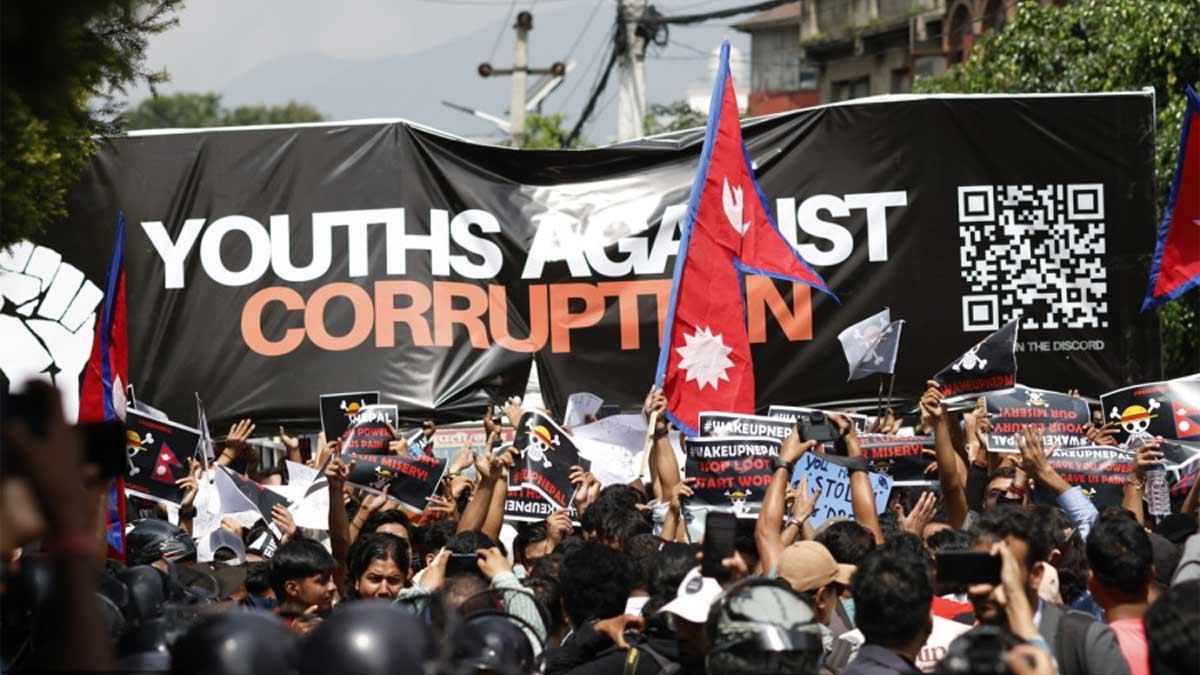


At least eight were killed, and more than a hundred were injured in brutal fighting in Kathmandu, Nepal, as Gen-Z activists took to the streets against corruption and against the government's shutdown of some media apps. The army was mobilized in the capital when protesters had broken curfew orders and breached security zones around Parliament.
Security forces fired water cannons, teargas, and rubber bullets as a reaction to protesters hurling tree branches and water bottles and chanting anti-government slogans. A few of the demonstrators were able to cross the Parliament complex, increasing tensions, The Kathmandu Post reports.
In response to the turbulence, the Kathmandu District Administration Office has extended the curfew, which was originally imposed in Baneshwar. The fresh restrictions now encompass several high-security areas, such as the President's house (Shital Niwas), Vice-President's residence in Lainchaur, Maharajgunj, all perimeters of Singha Durbar, the Prime Minister's house in Baluwatar, and the surrounding areas.
Chief District Officer Chhabilal Rijal announced that the curfew shall be imposed between 12:30 PM and 10:00 PM (local time), which disallows public movement, group gatherings, protests, or encirclement activities in these areas.
Two individuals reportedly suffered injuries from rubber bullets fired by police to control crowds. In Kathmandu, Kantipur Television journalist Shyam Shrestha was hit by a rubber bullet while covering the demonstrations in Baneshwar and is now receiving treatment at Civil Hospital. Another person was injured in Damak, the hometown of Prime Minister KP Sharma Oli, amid violent protests.
The protests have extended to other areas. In Pokhara, a curfew was imposed after protesters allegedly vandalized the Chief Minister's office. Prime Minister Oli has called for an emergency cabinet to deal with the crisis.
Some of these social media sites, such as Facebook, YouTube, and X, have been blocked since Friday following the government's action to limit access to 26 unregistered apps that triggered ire and frustration among their users. Sites like Instagram and Snapchat, which millions of Nepalis use for entertainment, news, and commerce, are also hit.
The bans have sparked anger, most especially among the youth, who blame the government for gagging freedom of expression and for not addressing deep-seated corruption. Thousands of Generation Z protesters took to the streets in Kathmandu on Monday calling for lifting of bans on social media and an end to systemic corruption.
"We were prompted by the social media blockade, but that is not the sole reason we are here today," 24-year-old university student Yujan Rajbhandari explained to AFP.
"We are marching against corruption that has been institutionalized in Nepal."
20-year-old university student Ikshama Tumrok said she was marching against the "authoritarian attitude" of the government.
"We want change. Others have suffered this, but it must stop with our generation," she explained to AFP.
Since the ban, TikTok—continuing to operate—has witnessed viral clips juxtaposing the hardships faced by common Nepalis with the pampered lives of children of politicians.
"There have been protests overseas against corruption, and they (the government) don't want that to happen here too," said protester Bhumika Bharati.
The cabinet last month gave the affected companies seven days to register in Nepal, designate a point of contact, and appoint a resident grievance officer and compliance officer. The decision followed a Supreme Court order issued in September last year.
On Sunday, the government issued a statement asserting its respect for freedom of thought and expression and reaffirming its commitment to "creating an environment for their protection and unfettered use."
Nepal has in the past limited access to popular social media sites. Last month, the government blocked Telegram in the interest of heightened online fraud and money laundering. A nine-month ban on TikTok was lifted last year after the site agreed to follow Nepali laws.
Read also| Canadian Government Report Confirms Khalistani Terror Groups Active and Raising Funds