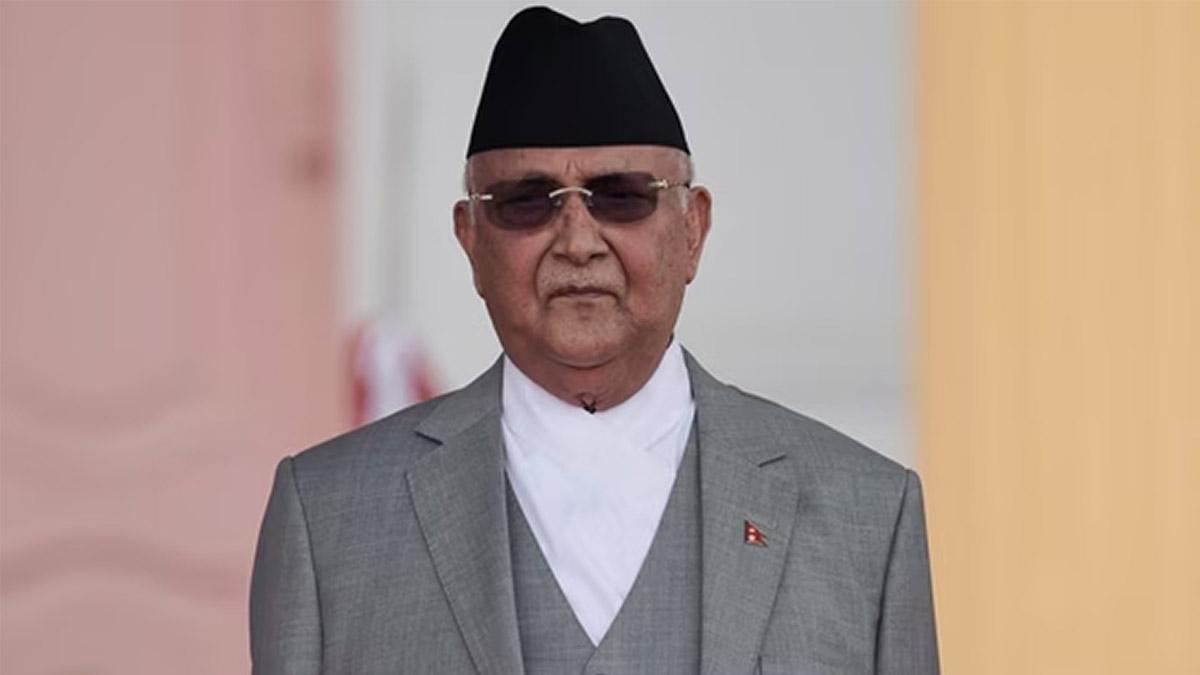


As mounting Gen-Z protests leaving 19 dead, Nepal's Prime Minister KP Sharma Oli resigned from his seat on Tuesday afternoon. Oli resigned to President Ram Chandra Poudel, citing the "abnormal situation" in the country as protests against his government grew nationwide.
In his letter of resignation, Oli cited Article 77 (1) of the constitution, saying he was resigning to provide a constitutional way out of the current crisis.
Oli had taken office on July 14, 2024, after a consensus deal with the Nepali Congress, the largest party in parliament.
Mayor Balen Shah has been mentioned as a potential contender for the position of interim Prime Minister.
The tensions intensified on the second day following Monday's demonstrations, when 19 protesters were killed. The government coalition seemed to break apart even more, as ministers, especially those from the Nepali Congress, quit, putting more pressure on the government to resign.
Ruling party top leaders and Nepali Congress general secretaries Gagan Thapa and Bishwo Prakash Sharma had already called on Oli to step down. According to them, the seven-point understanding between the Communist Party of Nepal (Unified Marxist–Leninist) and Congress that had informed the formation of the government was outdated.
The Nepal political situation is still unclear with members of the fourth-largest party, Rastriya Swatantra Party, also resigning in bulk and calling for the establishment of an interim government.
The demonstrations, which were initiated by a social media ban and outrage at corruption, saw protesters vandalizing leaders' homes and state buildings nationwide. On Tuesday, protesters overran the parliament complex at Baneshwor in Kathmandu and set it on fire. Efforts on Monday to destroy the building were met with police action that left several dead.
The protesters also broke into Singh Durbar, Nepal's central administrative complex, burning its front gate. Offices of the Communist Party of Nepal (Unified Marxist Leninist) and Nepali Congress in the Kathmandu Valley were attacked and burned.
Local outlets documented mass torching and acts of vandalism across government offices throughout the nation. Protests continued to burn in various areas of the Kathmandu Valley despite local government-imposed curfews, keeping tensions running high.
In response to the violence, some ministers resigned in protest, among them Home and Agriculture Minister, Health and Population Minister Pradip Poudel, and Youth and Sports Minister Teju Lal Chaudhary, regretting the force used against Gen-Z protestors.
Videos of Prime Minister Oli’s residence in Balakot, Kathmandu’s Bhaktapur, being set on fire circulated widely on social media. Protestors also forcefully entered Singh Durbar.
Chief District Officer of Lalitpur, Suman Ghimire, confirmed that protestors had torched former Prime Minister Dahal’s residence and were gathering outside homes allocated for government ministers. “The situation is tense as protests have erupted in different parts of the district,” he said.
Likewise, Bhaktapur's Chief District Officer Namaraj Ghimire characterized the situation as tense, adding that authorities had shown "maximum restraint" and had not authorized use of firearms on protestors.
There were also reports of attacks by local media on the homes of ex-Prime Minister Deuba, President Ram Chandra Poudel, and ex-Home Minister Ramesh Lekhak.
Read also| Nepal PM KP Oli steps down following violent anti-corruption protests: Report
Read also| Canadian Government Report Confirms Khalistani Terror Groups Active and Raising Funds