

Calls for the assassination of US President Donald Trump and Israeli Prime Minister Benjamin Netanyahu rang out inside Tehran's Grand Mosalla prayer complex as Iran's senior political and military leadership made its first major public appearance during the funeral of assassinated former Iranian supreme leader Ali Khamenei.
Following more than four months of postponement caused by the turmoil of the Middle East war, Iranian authorities launched a week-long series of funeral processions for Khamenei and four members of his family who were killed on the opening day of the US and Israeli war on February 28.
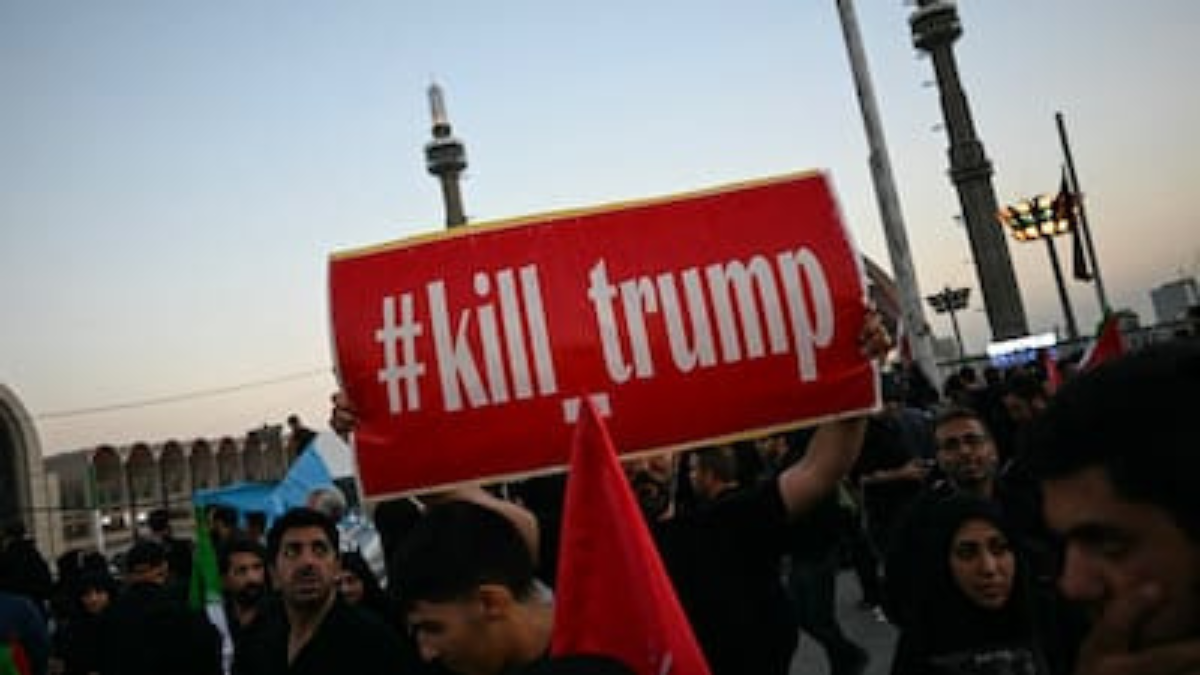
The funeral prayers became both a memorial and a political demonstration, with mourning intertwined with demands for retaliation. Hundreds of thousands of people either spent the night inside the mosque or gathered before sunrise ahead of the 8 am prayers. Carrying Iranian tricolours, red flags representing vengeance and photographs of the 86-year-old supreme leader, mourners repeatedly chanted, "Death to America" and "Death to Israel," while calling for revenge.
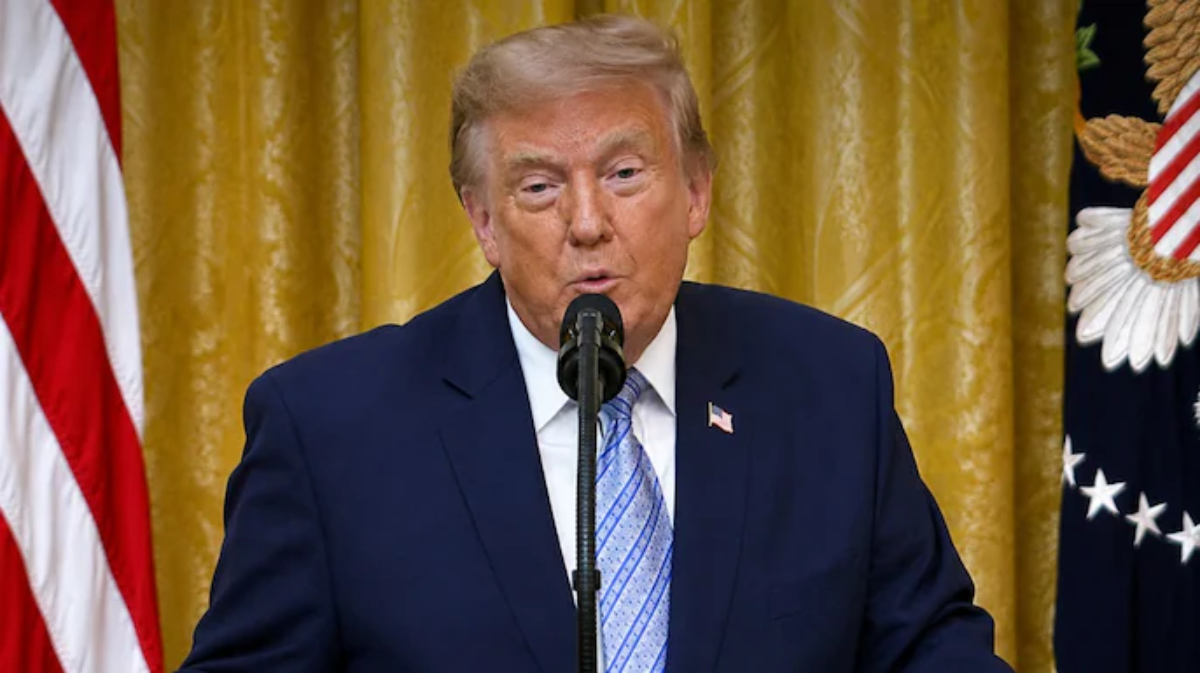
Placards and graffiti displayed across the Grand Mosalla also urged the killing of Trump and Netanyahu, as the crowd echoed similar slogans.
"From now on the shroud is our garment. I swear by your blood; Trump's murder is our responsibility," Mohammad Rasouli, a poet who emceed the event before the prayers, said to the crowd over loudspeakers.
"Why is the most bastard man in the world still alive? The world is no longer a good place for Trump. Why should we not kill the man who killed our imam? It would be a disgrace if we did not," he added as the crowd cheered.
"I came here to shout and seek revenge," said Gholamreza Sabooni, a 29-year-old man who works in a grocery store. "They killed our imam. We should kill their leader, Trump."
Later, Iran's ambassador to Armenia, Khalil Shirgholami, posted on X, writing, "You can kill people, but you can't kill ideals. You killed Ayatollah Khamenei, but in reality you broke a bottle of perfume, the fragrance of which has now spread everywhere. You will never understand this because you have no civilisation, no history, no honour."
"People are shouting two slogans in farewell to their leader: resistance against enemies and revenge for the blood of the martyred leader of Iran," said Mohammed Bagher Zolghadr, the secretary of the National Security Council.
Iran's highest-ranking officials, along with the brothers of the country's new supreme leader, Mojtaba Khamenei, appeared in public on Sunday despite Israeli threats linked to Ali Khamenei's funeral. Khamenei's other sons — Masoud, Meysam and Mostafa — were seen alongside Revolutionary Guard chief General Ahmad Vahidi, who had remained out of public view since the conflict began.
Also present at the ceremony were President Masoud Pezeshkian, Parliament speaker Mohammad Bagher Qalibaf --who has led the negotiations with the US --and Esmail Qaani, commander of the elite Quds Force of the paramilitary Revolutionary Guard.
Their public appearance was intended to convey solidarity, resolve and confidence in their security as Tehran continues resisting US demands during negotiations aimed at securing a permanent end to the war.
Noticeably absent was Mojtaba Khamenei, who is believed to be in hiding after reportedly suffering injuries in the airstrike that killed his father. During the peak of the conflict, before an April ceasefire took effect, Israel targeted several senior Iranian figures, in at least one instance apparently using a public appearance to determine a target's location. Israeli officials have also threatened to kill the younger Khamenei.
The funeral prayers at Tehran's Grand Mosalla were led by Ayatollah Jafar Sobhani, a 97-year-old Shiite cleric, for Ali Khamenei and several members of his family, including his daughter-in-law Zahra Haddad Adel and his 14-month-old granddaughter Zahra Mohammadi Golpaygani. Among the ceremony's most emotional moments was the striking contrast between the tiny coffin of the granddaughter and the larger coffins surrounding it.
Authorities plan to transport Khamenei's body through multiple cities in Iran and neighbouring Iraq, with his casket and those of his relatives scheduled to be driven through Tehran's streets on Monday. Roads, airspace and much of daily life have been shut down for the mourning period, which is due to conclude on Thursday with his burial at the Imam Reza shrine in Mashhad, his birthplace.
Officials did not release attendance figures for the funeral events held on Saturday and Sunday, while mourning ceremonies also took place in other cities across Iran.
The funeral also served as a display of national unity as Iran presses its demand for a measure of control over the Strait of Hormuz, a strategic global energy route that it closed during the war. The United States has rejected that demand, and both sides remain divided over several issues, including Iran's nuclear programme and the conflict involving Israel and the Iran-backed Hezbollah in Lebanon.
A multinational maritime body overseen by the US Navy said on Sunday that the United States had assisted 70 transits through the Strait of Hormuz during the previous 72 hours, including 18 on Saturday. It described shipping activity along routes near Oman and Iran as steady but still below prewar levels, adding that the threat level remained "substantial" while mine clearance and surveying operations continued.
Also Read | US Urged Countries To Skip Khamenei Funeral, 13 Withdrew: Report
Advertisement