

In 2019, while Donald Trump was preparing for summit-level nuclear negotiations with North Korea's leader Kim Jong-un, his administration attempted to gain a strategic upper hand by trying to intercept communications of Kim, such as planning to implant an electronic device within North Korea, The New York Times reported. The operation failed.
In early that year, US Navy SEAL Team 6 conducted a secret mission on North Korean territory, sanctioned by Trump, to embed a device that would intercept the communications of the North Korean leader.
Thanks to months of preparation, the operation collapsed as a result of a series of mishaps, the NYT explained. There were three primary reasons why the operation failed: errors in navigation in deploying submarines, not having intelligence and surveillance in real-time, and an unexpected face-off with civilians that turned deadly.
The operation began with the SEALs leaving a nuclear submarine in two stealth mini-subs. They had sailed underwater for two hours before arriving at a prearranged spot off the coast.
Both mini-subs, as per the report, were supposed to be in perfect alignment so that the shore team could alight smoothly and take up the device installation.
But the initial issue occurred when one of the mini-subs sailed past position, taking a U-turn and now heading away from its twin. That misalignment caused delays in coordination and introduced confusion that later impacted key decisions.
A second impediment was the absence of live surveillance. In contrast to other operations elsewhere facilitated by live drone imagery and close air support, in this mission satellites and high-altitude reconnaissance offered delayed, low-resolution images only. In their absence, the SEALs lacked the live updates to have a clear view of possible threats around the target.
Upon disembarking, the SEALs then swam onto the beach under cover of night, believing the region to be deserted. There was, however, a small North Korean fishing boat crew in the vicinity. Crew members had worn wetsuits that were impossible to spot with night vision equipment, a blunder that would prove fatal.
Meanwhile, the pilots of the mini-subs attempted to fix their previous misalignment in shallow water. While having the open cockpit hatches for visibility, the electric motors were noisy and emitted a dim light, which may have warned the North Korean vessel. The boat inched closer by shining flashlights across the surface.
From the shore team’s perspective, the boat appeared dangerously close to discovering the mini-subs. With communications cut off and no coordination possible, the SEALs feared immediate compromise. When one North Korean entered the water, the SEALs opened fire, killing the crew and forcing the mission to be aborted.
According to procedure, the SEALs fell back to the mini-subs and called for emergency evacuation. The principal submarine exposed itself by maneuvering into shallow water to rescue the team prior to going back to open sea. The operation ended without success.
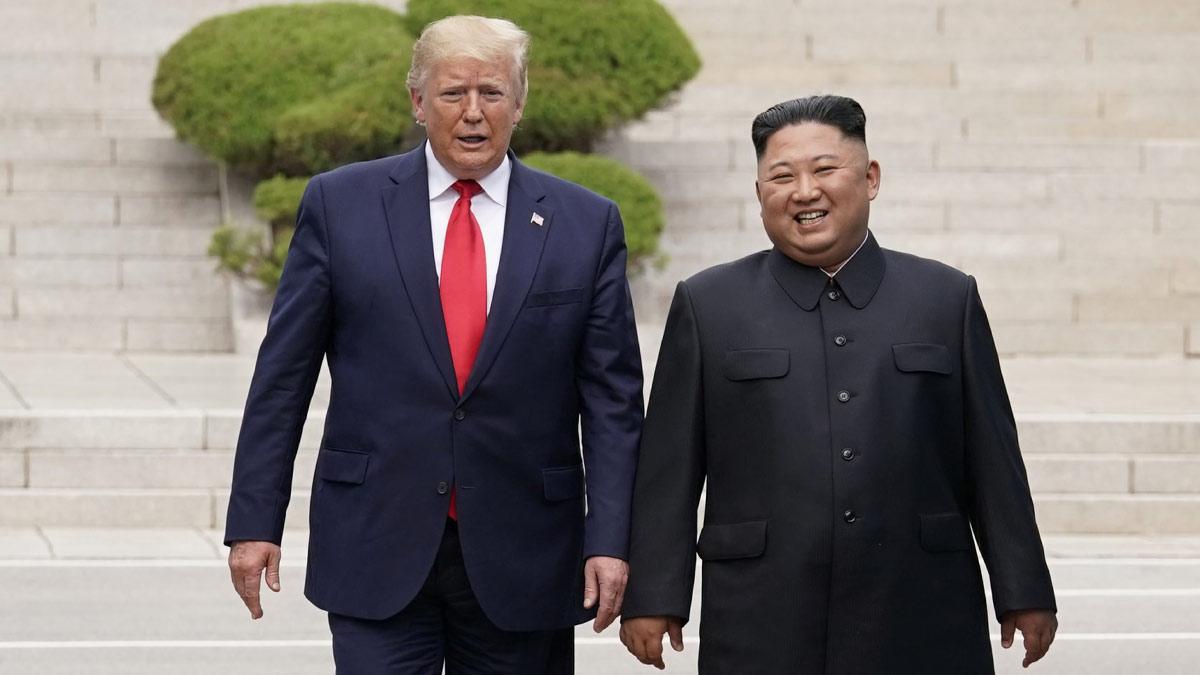
The two leaders met in June 2019 with the hope of moving forward in negotiations to bring an end to North Korea's nuclear activities. Throughout Trump's first term from 2017 to 2021, the two had three summits and exchanged letters, which Trump referred to as "beautiful," only for the diplomatic process to break down over U.S. insistence on Kim denuclearizing.
Since Trump's diplomacy failed in 2019, North Korea has not been interested in talks. It has instead ramped up its nuclear and ballistic missile capabilities and deepened cooperation with Russia, offering troops and arms to assist Moscow's war against Ukraine.
Read also| Canadian Government Report Confirms Khalistani Terror Groups Active and Raising Funds