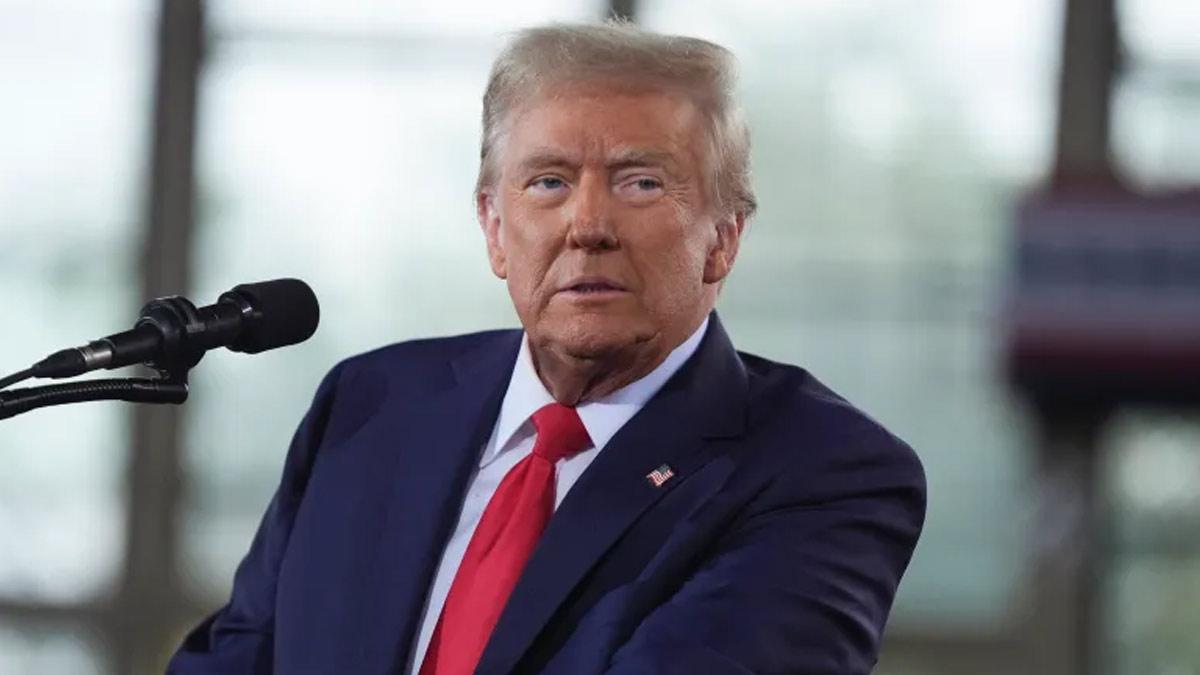


In reaction to the imposition of a 50% tariff by US President Donald Trump on Indian products, India is initiating targeted outreach programs in 40 major overseas markets—the UK, Japan, and South Korea among them—to increase textile exports, news agency PTI reported quoting a government official on Wednesday.
The program will also target Germany, France, Italy, Spain, the Netherlands, Poland, Canada, Mexico, Russia, Belgium, Turkiye, the UAE, and Australia.
"In all these 40 markets, this is planned to follow a focused strategy, presenting itself as a dependable supplier of quality, sustainable, and innovative textile products with the lead role of the Indian industry, including EPCs and Indian Missions in these markets," the official informed news agency PTI.
The officials said the strategy is to make India a reliable source of sustainable and innovative textiles and the drive is being led by Export Promotion Councils (EPCs) and Indian missions. The 50% tariff coming into effect on August 27 is also likely to hit major sectors like textiles, gems and jewellery, shrimp, leather, footwear, chemicals, and machinery.
Though India exports to over 220 nations, the authorities point out that 40 major markets such as the UK, Japan, South Korea, Germany, France, and Australia have the highest scope for diversification. Together, these countries import well over $590 billion of textiles and clothing each year, which offers a vast scope for India to increase its market share, which is currently a mere 5–6%, the official said.
"Knowing this, the government is to have specialized outreach programs in every one of these 40 countries, both in traditional markets and new markets," he continued.
The official stated that EPCs will be central to India's diversification effort. Their role includes market mapping, identifying high-demand goods, and linking specialized textile clusters—like Surat, Panipat, Tirupur, and Bhadohi—to opportunities in the top 40 target countries.
EPCs will also promote India's visibility at global trade shows, exhibitions, and buyer-seller meets, and conduct sector-specific campaigns under one Brand India umbrella. EPCs will also advise exporters on how to use free trade agreements (FTAs), global sustainable standards, and procurement from India.
"FTAs and negotiations with some of these geographies will contribute to the competitiveness of Indian exports, and there is enormous potential for expansion in these geographies," the official furthered.
Analysts, however, cautioned that the tariff war would damage both economies. Mark Linscott, Senior Advisor at The Asia Group, termed the scenario a transition from a "win-win" to a "remarkable lose-lose" situation.
The aggressive import tariffs of the US administration will hit Indian industries of prime importance, such as textiles and apparel, gems and jewelry, shrimp, leather and footwear, animal products, chemicals, and electrical and mechanical machinery.
For 2024-25, India's textile and apparel industry is estimated to be $179 billion, comprising a domestic market of $142 billion and exports worth $37 billion. Across the world, the import market for textiles and apparel amounted to $800.77 billion in 2024. India, with a share of 4.1%, is the sixth-largest export nation and is present in 220 countries, although there is huge growth potential.
Mithileshwar Thakur, Secretary General, Apparel Export Promotion Council (AEPC), stated the additional duty has imposed a 30–31% cost disadvantage over rivals such as Bangladesh, Vietnam, and Sri Lanka.
"The clothing industry accepted the 25 per cent reciprocal tariff declared by the USA since it was willing to bear a portion of the tariff hike. But, the extra burden of a further 25 per cent tariff, raising the total reciprocal tariff against India to 50 per cent, has practically pushed the Indian clothing industry out of the US market since the 30–31 per cent tariff disadvantage over major competing nations such as Bangladesh, Vietnam, Sri Lanka, Cambodia & Indonesia," Thakur said to PTI.
"This is very critical since it is difficult to recover the lost ground and win back market share once the buyers shift to other cost-competitive destinations. In the meanwhile, we are also increasing our efforts towards market diversification and exploring all possibilities to leverage the trade agreement with the UK and EFTA nations to manage and contain the damage," he further added.
The commerce ministry is scheduled to meet affected sector exporters, such as chemicals and jewellery, this week to finalize measures to offset the tariff effect. Officials also informed that preparation is under way for the proposed Export Promotion Mission (Budget 2025-26) that will be a long-term plan for market diversification.
"In the next 2-3 days, the ministry will meet stakeholders on the diversification of exports," the official further added.