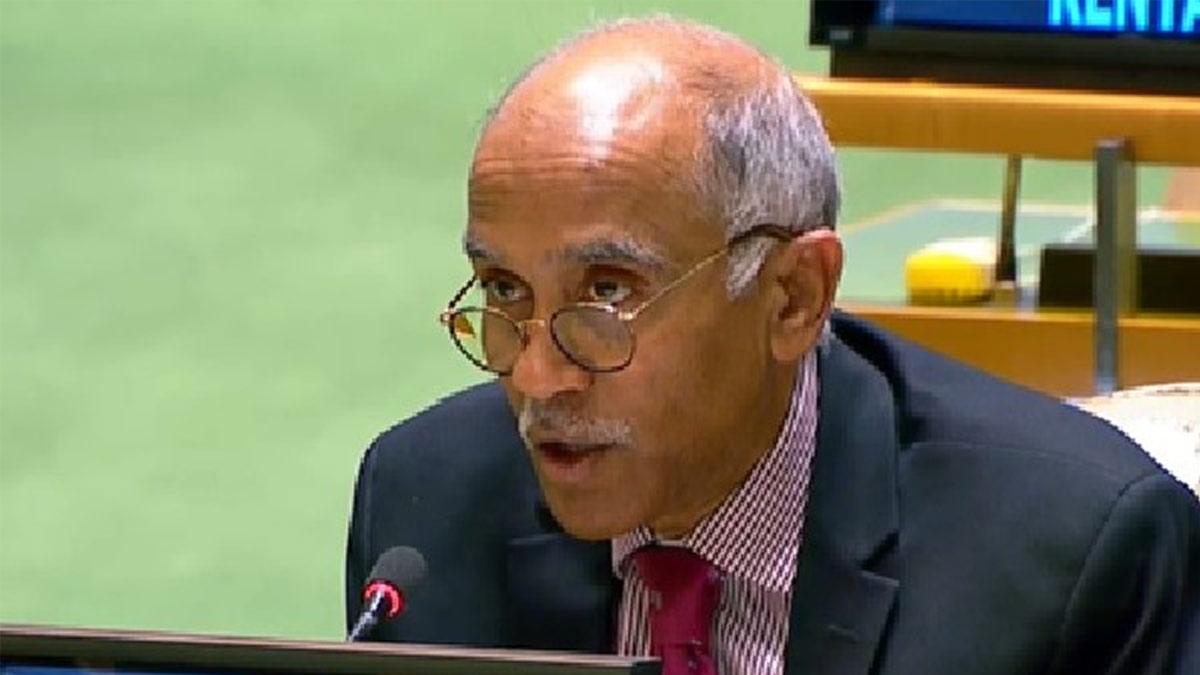


India highlighted, at a high-level United Nations meeting, that the international community needs to up its game in pushing for a two-state solution to the long-standing conflict between Israel and Palestine. This, it argued, has to be pursued through substantive diplomatic efforts and not symbolic or conceptualistic solutions.
India's Permanent Representative to the UN, Ambassador Parvathaneni Harish, spoke at the UN General Assembly on Tuesday at the 'High-Level International Conference on the Peaceful Settlement of the Question of Palestine and the Implementation of the Two-State Solution.' He reiterated that the discussions among the group prior to the conference reconfirmed an international consensus ongoing—there is no other option but the two-state solution.
According to Harish, the conference presents a chance to evaluate the journey thus far in pursuit of a peaceful resolution based on co-existence. “Our efforts must now focus on how to bring about a two-state solution through purposeful dialogue and diplomacy, and bringing the parties to the conflict to engage directly with each other,” he stated.
He also underscored that international support must be reflected in real actions. "Reaffirmation of support must be in the form of implementable steps toward clearing the way for the two-state solution. Identification of those steps and their modality of implementation require our shared attention and effort," he emphasized.
The three-day international conference, July 28 to 30, is co-chaired by Saudi Arabia and France. Its main outcome document, a 25-page declaration known as 'New York Declaration on the Peaceful Settlement of the Question of Palestine and the Implementation of the Two-State Solution', demands an immediate ceasefire in Gaza and unconditional release of all the hostages.
In order to stop the war in Gaza, Hamas needs to relinquish its governance in Gaza and transfer its arms to the Palestinian Authority," the statement observes. It also calls for the establishment of a transitional governing council in the Palestinian Authority's framework after any ceasefire with the objective of running Gaza affairs.".
Ambassador Harish observed the emergence of tangible action points out of the conference and emphasized the need to implement them. "Let us not settle for paper solutions but work towards practical solutions that see genuine action on the ground making an actual difference in the lives of our Palestinian brothers and sisters," he said, vowing India's unqualified support to this "noble endeavour."
He reaffirmed India's position on immediate steps that must be given top priority: securing a ceasefire, opening up free lines of humanitarian supplies, securing the release of all hostages, and facilitating direct talks. "There are no alternatives to these steps," Harish asserted.
India, which had originally recognized the State of Palestine as early as 1988, has always stood for a two-state solution. Harish reaffirmed India's abiding commitment, stating, "It is also India's earnest desire to see peace and calm prevail in the Middle East. Lasting solutions are required to achieve this."
Demanding unfettered humanitarian access to Gaza, Harish asserted that Palestinians should get the essentials like food and fuel without any delay or political obstruction. "Humanitarian aid is critical in keeping life going and should be kept above politics or conflict," he underlined, calling for instant and collective action in this regard.
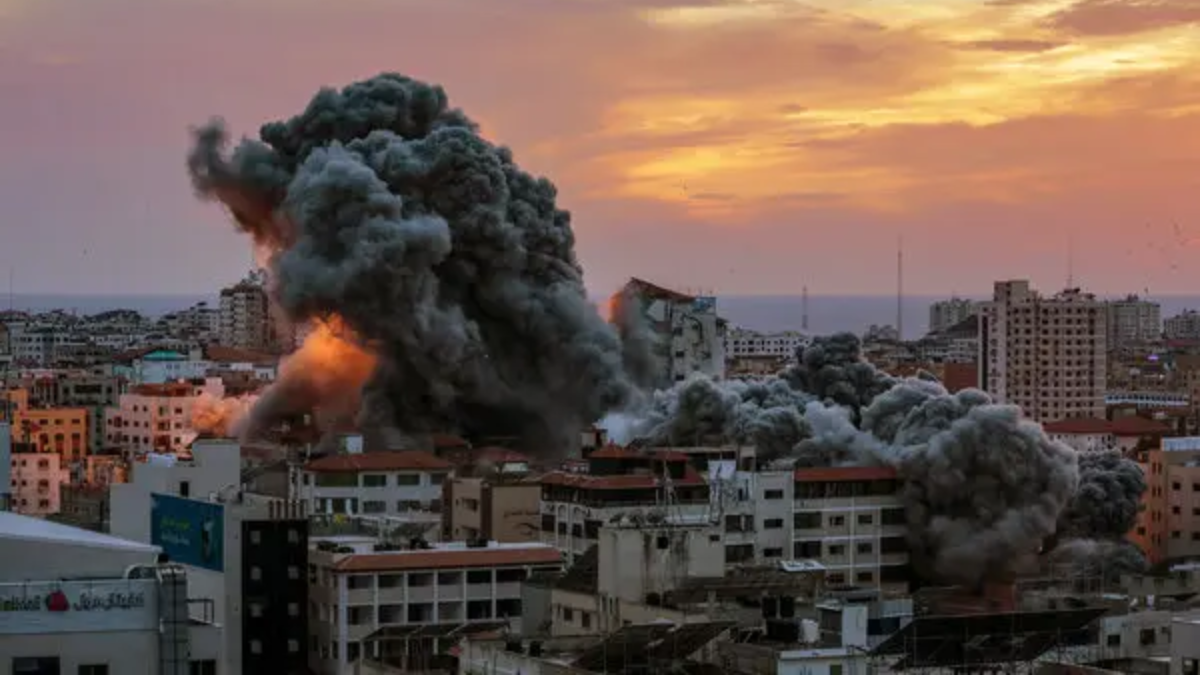
India expressed serious concern about the persistent human crisis in Gaza, making the fact known that tens of thousands have died, healthcare facilities have been devastated, and children have not attended school for almost two years. The fate of the hostages was also highlighted. "There can be no justification whatsoever for terrorism, for addressing any root cause or political grievance," India emphasized.
Emphasizing the right of all civilians, including women and children, to peaceful living, India urged strong reconstruction and rehabilitation efforts in the post-conflict era. It also emphasized the need for security measures acceptable to both parties. "Neither party should feel insecure.". An independent, sovereign and viable State of Palestine on recognized and agreed borders, coexisting alongside Israel in peace and security, is a condition for lasting peace and sustainable development.
India also stressed the need for reviving economic opportunities for Palestinians. Although aid and reconstruction assistance are essential, Harish underlined the simultaneous necessity to provide hope through employability and investment. India has pledged close to USD 160 million towards several development schemes oriented towards improving Palestinian lives.
"Economic viability and opportunities for a Palestinian state are of the highest importance," Harish said.
In addressing the conference, UN Secretary-General Antonio Guterres presented a strong argument for the two-state option as the fulcrum of peace in the Middle East. "My central question to those who stand in the way is this: What is the alternative?" Guterres said, referencing the grim possibilities of a single state either maintaining inequality or displacing Palestinians from their homeland.
That is not peace. That is not justice. That is not consistent with international law. And that is not acceptable," he asserted. Guterres underlined that Palestinian statehood is not a concession but an inherent right. "And the refusal of statehood would be a gift to extremists everywhere.
UN agencies have sounded the alarm over the deteriorating humanitarian situation in Gaza, indicating that key food and nutrition benchmarks have exceeded famine thresholds—the most dire conditions ever recorded.