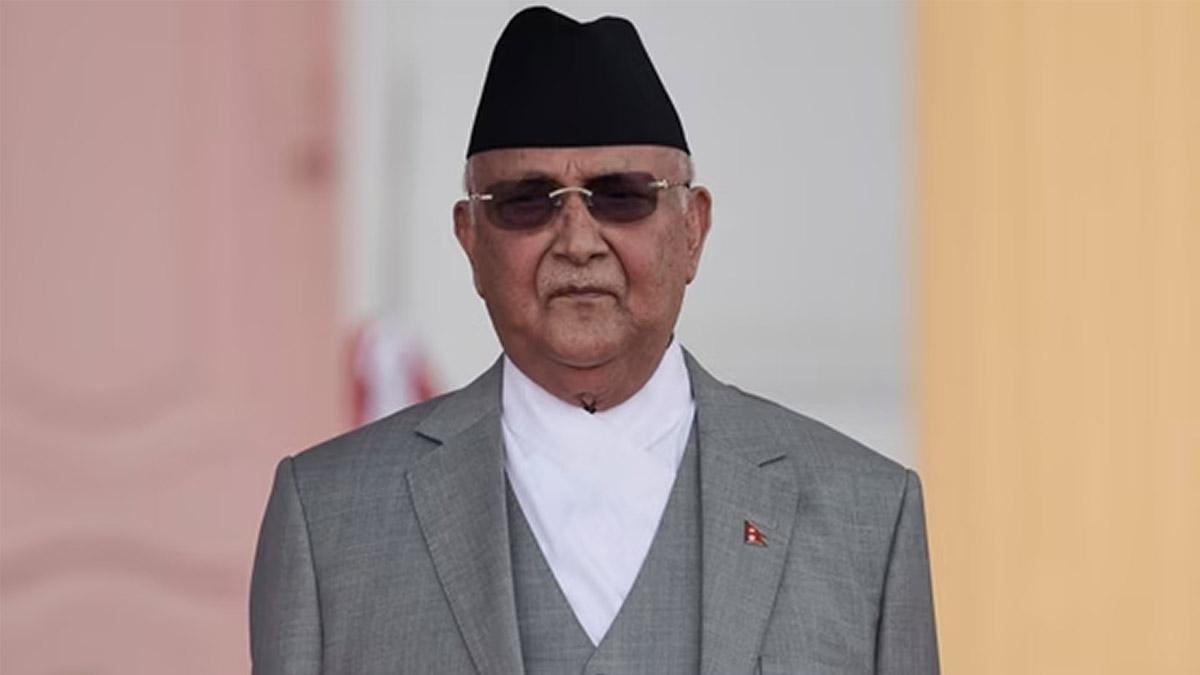


Violent student-led protests calling for the resignation of Nepal's Prime Minister K P Sharma Oli ran for a second day on Tuesday, even though public gatherings were prohibited. Protestors attacked the residences of a number of political figures while demanding the end of corruption.
Operating under the banner of Gen Z, protesters marched through multiple parts of Kathmandu, chanting slogans such as "KP Chor, Desh Chhod" (KP thief, leave the country) and "Take Action Against Corrupt Leaders." The unrest turned destructive as demonstrators set fire to Prime Minister Oli’s residence in Balkot, Bhaktapur, although Oli was staying at the official Prime Minister’s residence in Balwatar.
The agitation also extended to the residence of former Home Minister Ramesh Lekhak in Naikap, Kathmandu, who had quit office only a day before following police crackdown on demonstrating youths that left 19 dead and more than 300 injured.
There were reported clashes in Kalanki, Kalimati, Tahachal, and Baneshwor in Kathmandu, and Chyasal, Chapagau, and Thecho in Lalitpur. Students openly flouted the restrictions on mass meetings, chanting slogans such as "Don't kill students" and obstructing roads by burning tyres in Kalanki from dawn, eyewitnesses said. Police allegedly fired at protesters, injuring four.
The protesters attacked Communication Minister Prithvi Subba Gurung's residence in Sunakothi, Lalitpur, whose ministry had issued the ban on social media. Homes of erstwhile Prime Ministers Pushpa Kamal Dahal 'Prachanda' in Khumaltar, Lalitpur, and Sher Bahadur Deuba in Budhanilkantha, Kathmandu, were also attacked.
The Gen Z activists, who have been lobbying for an end to corruption for years, utilized platforms such as Instagram and Reddit to expose the ministers' children as well as other powerful individuals leading extravagant lifestyles and inquiring into their wealth's origin. They termed the ban on social media—on 26 sites including Facebook and X—as a move to muzzle free speech. Access was later restored by the government in an effort to stem public outrage.
Major demands of the protesters are the resignation of PM Oli, establishment of a national government, and stern action against corrupt politicians. They also demand guaranteed freedom of expression and the implementation of a retirement age for political leaders.
Nepali Congress leaders have also been demanding the resignation of Oli. General Secretary Gagan Thapa posted on social media, "PM Oli must resign immediately, owning up to the situation." Top leaders Bimalendra Nidhi and Arjun Narsingh Kesi called for the party to recall ministers from the Oli government, establish a national government, and talk to Gen Z activists. Nidhi spoke of protecting democracy and the Constitution, while Kesi called for the establishment of a powerful anti-corruption agency to investigate officials' assets.
Two Nepali Congress ministers, Agriculture Minister Ramnath Adhikari and Health and Population Minister Pradip Poudel, resigned in protest over the government’s harsh crackdown, though some ministers remain in Oli’s cabinet.
Monday’s clashes left 19 youths, including a 12-year-old, dead, with more than 300 injured after police used live fire, batons, and tear gas to disperse protesters opposing widespread corruption and the social media ban.
Read also| Nepal PM KP Oli steps down following violent anti-corruption protests: Report
Read also| Canadian Government Report Confirms Khalistani Terror Groups Active and Raising Funds