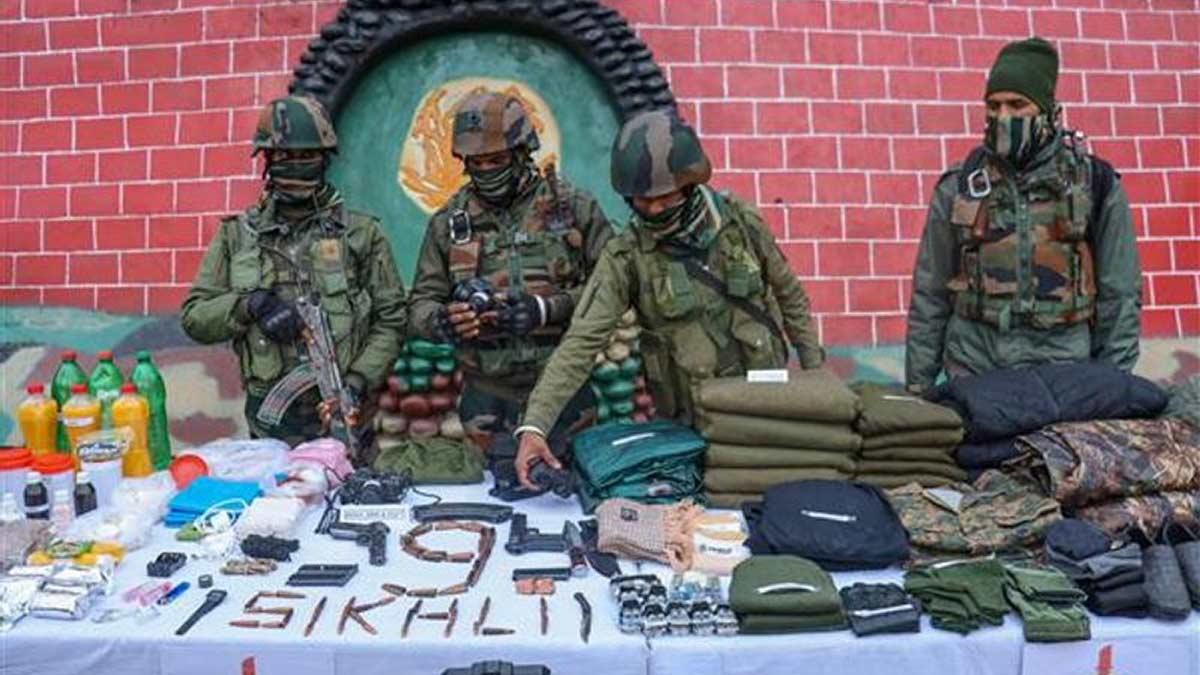


China on Friday urged increased regional cooperation to address terrorism, after the United States designated The Resistance Front (TRF), a proxy of Pakistan-based Lashkar-e-Tayyiba (LeT), as a Foreign Terrorist Organisation (FTO) in response to the April 22 Pahalgam attack.
China resolutely opposes every kind of terrorism and severely condemns the terrorist act on April 22," Chinese Foreign Ministry spokesperson Lin Jian said at a press briefing in response to a question about the U.S. State Department's release.
Lin emphasized the need for multilateral efforts, noting that "China urges regional countries to strengthen counter-terrorism cooperation and work together to uphold regional security and stability.
The U.S. action was officially announced by Secretary of State Marco Rubio, who said that TRF would be both a Foreign Terrorist Organisation and a Specially Designated Global Terrorist (SDGT). The move has been described as being in line with India's consistent stand that TRF is a front for LeT, which is already banned globally for its involvement in several terror attacks.
The U.S. move has serious consequences in the United Nations system, specifically the 1267 UNSC Sanctions Committee, which manages international counterterrorism designations. It has already added a number of Pakistan-based organizations and individuals, including LeT, Jaish-e-Mohammad (JeM), Jamaat-ud-Dawa (JuD), Hafiz Saeed, and Masood Azhar. Sanctions under this regime constitute asset freezes, travel bans, and arms embargoes.
But following the Pahalgam attack that claimed 26 lives, the UNSC's April 25 condemnation statement is said to have left out direct references to TRF and LeT. Diplomatic sources said this was because both Pakistan and China raised objections at the time of drafting.
The American tagging had considerable significance, according to Pakistan's top newspaper, Dawn, which wrote that the American statement seemed to corroborate India's perception that TRF is basically a re-named offshoot of LeT.
The Pahalgam, Jammu and Kashmir, attack killed 26 and initially had TRF taking responsibility, but later retracted its claim amid heightened India-Pakistan tensions.
India retaliated by initiating Operation Sindoor on May 7, a targeted military operation to neutralise terrorist infrastructure throughout Pakistan and Pakistan-occupied Kashmir. The operation involved attacks on major locations connected with extremist activity.
After four days of intense drone and missile bombardments, India and Pakistan decided to de-escalate and reached a ceasefire agreement on May 10.
As geopolitical tensions persist within the region, China's announcement is one of measured balancing—criticizing terrorism publicly but refusing to support particular international sanctions that could affect its strategic partner, Pakistan.
Read also| Trump Calls for Release of ‘Credible’ Epstein Documents to the Public
Read also| Bangladesh Pauses Demolition of Satyajit Ray’s Family Home