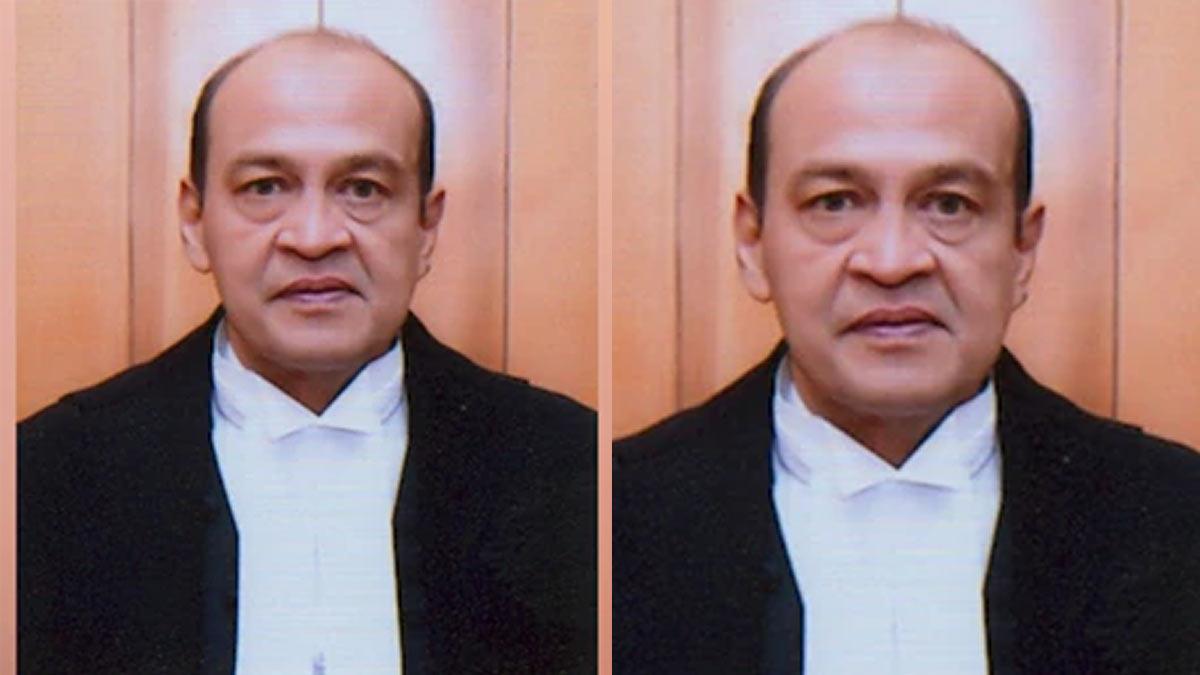


The government of the Union on Friday affirmed that the motion to impeach Justice Yashwant Varma will be moved in the Lok Sabha, closing the uncertainty generated by two different impeachment notices filed earlier this week—one each in the Lok Sabha and the Rajya Sabha.
Sources privy to the matter disclosed that while a notice signed by 63 MPs was filed in the Rajya Sabha and referred to by ex-Vice-President Jagdeep Dhankhar, it was not received formally.
In their view, the notice had procedural flaws, and the report of the inquiry committee from the Supreme Court was made available only to the Lok Sabha, overlooking the Rajya Sabha.
As HT had earlier reported, the Rajya Sabha initiative—initiated by Dhankhar—took the government by surprise, particularly since it had planned to channel the impeachment process from the Lok Sabha. The sudden twist in the process allegedly prompted a midnight resignation on Monday.
"There should be no doubt that the debate and motion proceedings to oust Justice Yashwant Varma will start in the Lok Sabha," Union Parliamentary Affairs Minister Kiren Rijiju said. He ensured that political parties had agreed upon this: the motion would start in the Lok Sabha and subsequently be agreed upon in the Rajya Sabha, following parliamentary protocols.
Rijiju further announced that the Lok Sabha would initiate a special 16-hour discussion on Operation Sindoor from Monday, with the Rajya Sabha following the same discussion the next day.
The notice of impeachment against Justice Varma, against whom serious corruption charges are leveled, was signed by 152 MPs and given to Lok Sabha Speaker Om Birla on Monday. On the same day, former Chairman of Rajya Sabha Dhankhar brought to the notice of the House a notice with the signatures of 63 opposition members.
As per procedure, after an impeachment notice has been given, the Speaker will have to approach the Chief Justice of India for suggestions for members to be on the inquiry committee.
A senior government spokesperson told The Hindu that preparation was now on for the Lok Sabha Speaker to constitute the panel. "The motion was not admitted in the Rajya Sabha. The chairman's observation made that clear… he requested the secretary-general to follow it up. The Rajya Sabha Secretariat determined the notice was not found to have complied with the specified criteria," the spokesperson, who did not want to be named, added.
The official further noted that the President had sent the Supreme Court's inquiry report to the Lok Sabha only.
The preparation for the motion started in May, when former Chief Justice of India Sanjiv Khanna suggested that Justice Varma be removed and recommended so to the President and the Prime Minister, after a three-judge bench came out with its findings.
Although Rijiju avoided criticizing Dhankhar's move directly, he reiterated that the government was making efforts to seek political party consensus, highlighting the importance of collective responsibility in trying to tackle corruption in the judiciary. When questioned whether there would be consultations between Speaker Om Birla and Rajya Sabha Deputy Chairperson Harivansh on the panel, he replied, "All parties have accepted that the removal has to be a collective decision… once we have decided (to impeach) in the Lok Sabha, it will be agreed in the Rajya Sabha. The chair should release the statement on the constitution of the committee."
He did not rule out coordination between the two Houses' presiding officers and said, ".That will be our internal issue."
The Rajya Sabha notice wasn't accepted because of "procedural lapses." "While he (Dhankhar) referred to the Supreme Court's report on Justice Varma and the President's recommendation, the necessary supporting documents were absent from the annexure since the Rajya Sabha Secretariat and the Vice-President's office hadn't received the necessary correspondence," said the source.
The process of impeachment has to be finalized in the current monsoon session, which will conclude on August 21. Justice Varma will have three chances to make his defense in Parliament.
Parliamentary sessions during this week have been marred by disruptions with the Opposition calling for a debate on the special voter revision exercise in Bihar and a statement from Prime Minister Narendra Modi on Operation Sindoor.
Rijiju assured that the Opposition and the ruling coalition had agreed to discuss Operation Sindoor in the Lok Sabha on Monday and in the Rajya Sabha on Tuesday. The discussion would not be under any particular rule, and thus no vote will be taken.
The row started on March 14, when piles of burnt currency allegedly were found at the official house of Justice Varma, then an incumbent Delhi High Court judge, after a fire.
On March 22, the Supreme Court formed a three-judge committee—consisting of Chief Judges Sheel Nagu (Punjab & Haryana High Court), GS Sandhawalia (Himachal Pradesh High Court), and Anu Sivaraman (Karnataka High Court)—to probe into the issue.
The committee's 64-page report cited "strong inferential evidence" that suggested Justice Varma had "covert or active control" over the cash, even if it did accept that there were no direct connections. His conduct, the panel found, eroded the integrity demanded of a constitutional judge and warranted the launching of impeachment proceedings. It also observed that, although he might not have known about the storage of the money, its availability in his official residence hugely tarnished public trust and was a grave judicial impropriety.
The report was placed before then CJI Khanna on May 3, who submitted his suggestions to the Prime Minister and President five days later.
Read also| Rajya Sabha Adjourned Until Monday as Opposition Protest Stalls Proceedings