

The Election Commission of India (EC) made the announcement on Wednesday that it has started preparing to hold the election for the nation's next vice president.
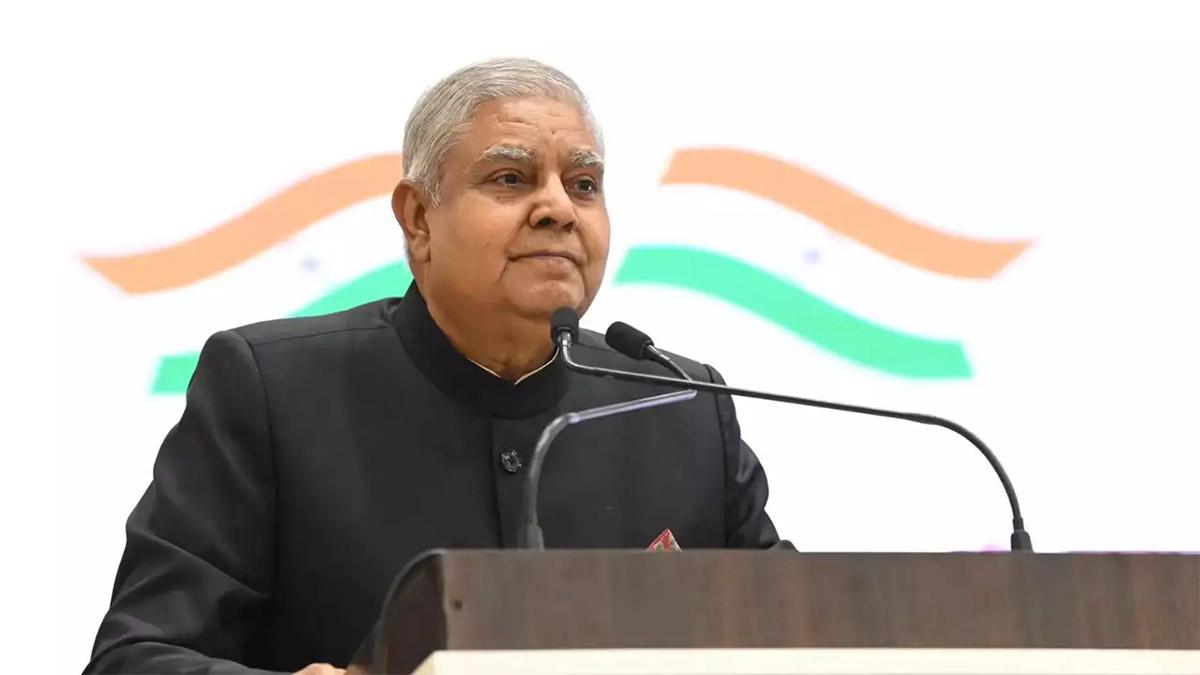
It comes after the sudden resignation earlier this week of Jagdeep Dhankhar, citing health reasons. Dhankhar's initial term was due to expire on August 10, 2027.
In a formal statement, the EC has asserted that the process of constituting the electoral college, made up of members of both the Lok Sabha and the Rajya Sabha, was in progress, as well as the finalization of returning officers. "On completion of the preparatory activities, the announcement of the election schedule to the office of the Vice President of India will follow as soon as possible," the commission stated.
According to Article 68(2) of the Constitution, a new election to complete the vacancy in the office of vice president should take place "as soon as possible" after the position becomes vacant. The winner of the election will have a full five-year term from the date of the assumption of office, irrespective of the length of the remaining term of his or her predecessor.
The vice president is elected by an electoral college consisting of members of both houses of Parliament, along with nominated members of the Rajya Sabha. The election is by secret ballot and based on the single transferable vote system of proportional representation.
Dhankhar, who had quit on Monday night halfway through his term, forwarded his resignation to President Droupadi Murmu with effect from today, setting in motion the process for a new election.
The NDA is now firmly placed in terms of the electoral college with a clear lead. With 542 members in the Lok Sabha (one vacant seat in Basirhat, West Bengal) and 240 valid Rajya Sabha members (including five vacant seats—four from Jammu and Kashmir and one from Punjab due to Sanjeev Arora's resignation), the valid voters number 786.
The NDA, which is BJP-led, possesses major strength with 293 MPs in the Lok Sabha and 129 in the Rajya Sabha, making a total of 422 members—well over the 394 votes necessary to win the vice presidential election.
As prescribed under Article 66(1) of the Constitution, the election is by proportional representation by means of the single transferable vote and MPs vote by a secret ballot, marking preferences against the candidates' names.
The vice president is India's second-highest constitutional official and ex-officio Chairperson of the Rajya Sabha.
Read also| Jagdeep Dhankhar’s Mid‑Term Resignation Marks Rare Constitutional Shift