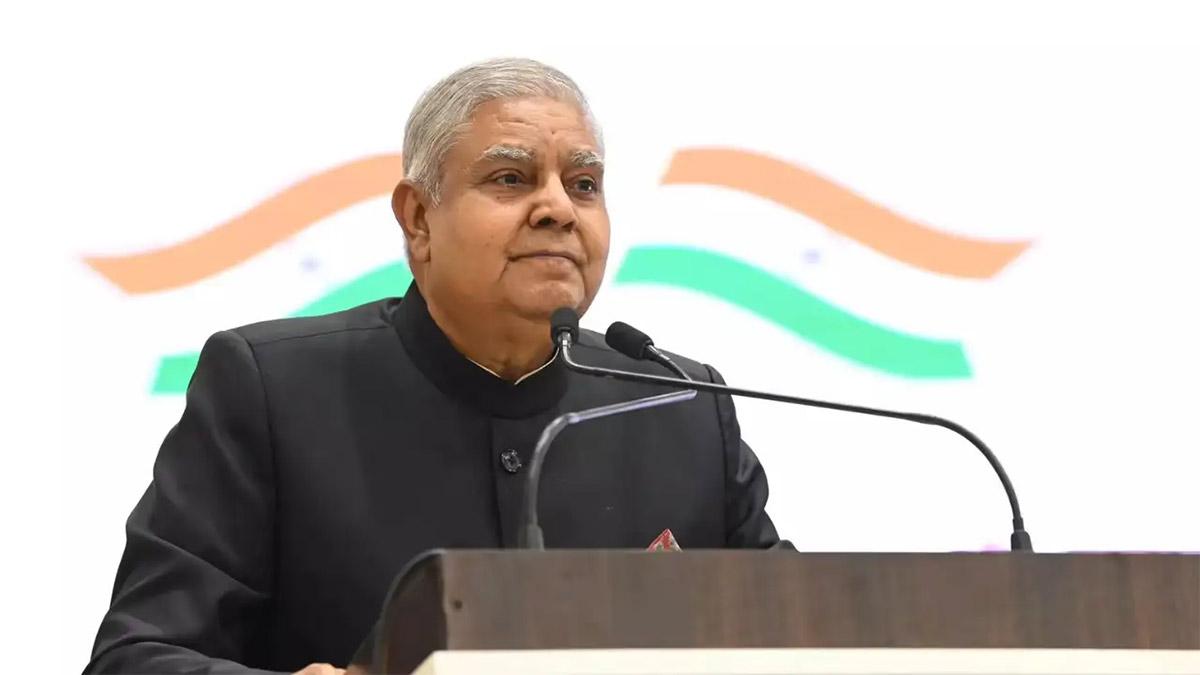


Jagdeep Dhankhar's surprise resignation from the Vice President's office puts him into a rare constitutional category—being only the third person to quit the post short of his complete term.
Although formally attributed to health-related concerns, the timing of his resignation on the first day of the Monsoon Session has created speculation, particularly considering his aggressive and sometimes combative role in Indian parliamentary politics.
Unlike Vice Presidents VV Giri and R. Venkataraman, who had stepped down to contest and eventually take over the presidency, Dhankhar's resignation does not seem to be a stepping stone to a greater office. Rather, his resignation appears definitive, an ending and not a beginning for public life. Such a distinction brings another twist of complexity to the chronicle of vice-presidential changes in the constitutional scenario in India.
Though the Vice President's position does not entail direct legislative or executive power, it carries significant procedural and symbolic significance. As ex-officio Chairman of the Rajya Sabha, Dhankhar was at the center of guiding debates—turf where prickly exchanges and procedural toughness often reflected the government's aggressive parliamentary stance. His unexpected resignation creates a leadership deficit in the Upper House at a time when government-Opposition relationships are growing increasingly tense.
In the meantime, the Deputy Chairman will have the responsibility of conducting the proceedings of the Rajya Sabha. Still, the lack of a full-term Vice President would have an impact on both the rhythm and balance of the chamber's proceedings over the next few months.
Politically, Dhankhar's departure calls for a restart. The Election Commission will begin proceedings to elect a fresh Vice President serving a full five-year term. This election is not only administratively significant but also symbolic in nature as it will determine the tenor of parliamentary debate before the 2026 general elections.
Far from being a run-of-the-mill bureaucratic change, Dhankhar's exit is a watershed in the country's democratic experience—and one that necessitates greater scrutiny of institutional continuity, constitutional conventions, and the changing dynamics between personality and political role at the very top of the country.
Read also| VP Jagdeep Dhankhar Resigns Citing Health Reasons as Monsoon Session Begins