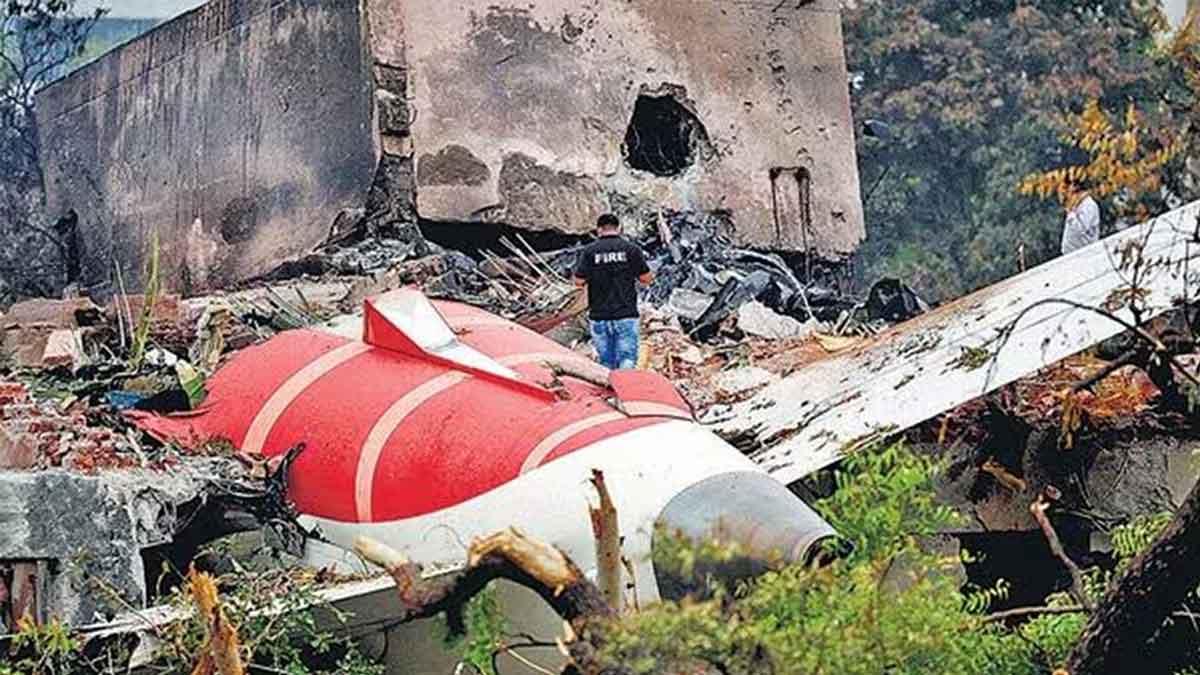


A latest report by The Wall Street Journal has caused severe controversy after showing that cockpit voice recordings of the Air India flight that crashed last month in Ahmedabad indicate the Captain possibly disconnected fuel supply manually to the engines soon after takeoff.
As the publication reports, the Boeing 787 Dreamliner, piloted by Captain Sumeet Sabharwal and First Officer Clive Kunder, had an emergency just seconds after takeoff.
WSJ says that according to initial information from the Aircraft Accident Investigation Bureau (AIIB), both fuel cutoff switches were set to the "cutoff" position in near-simultaneous manner—within the span of a single second—resulting in an engine loss of power.
The report says that the first officer inquired why the captain had switched the fuel switches, and soon thereafter was in a state of panic, whereas the captain seemed calm. The crash, which happened just 32 seconds after takeoff, claimed the lives of 260 people, 241 of whom were passengers and crew, and 19 of whom were on the ground. Just one passenger survived.
Quoting unnamed specialists and people close to the investigation, the report suggests that it was the captain who might have switched off the fuel controls, although it makes it clear that whether this was done inadvertently or deliberately is not known.
Civil Aviation Minister Kinjarapu Ram Mohan Naidu reacted to the reports in the media with restraint, urging that no conclusion should be reached until the formal investigation report is out.
"I don't think we should rush to any conclusions on this. I think that we have the best wonderful team of pilots and crew in the entire world. So let us not rush into any conclusions at this point of time and wait for the final report," he said.
He went on to mention that aviation accidents have several technical complexities involved, and initial findings shouldn't be the basis for public judgment.
The Federation of Indian Pilots (FIP) strongly rejected in a scathing denouncement the Wall Street Journal's report as "baseless" and inaccurate. The Federation of Indian Pilots President CS Randhawa maintained that the AIIB's initial report does not directly pinpoint the pilot's fault for the fuel cutoff.
"Nowhere in the report, it has been said that the fuel control switch was switched off because of the pilot's error. I denounce the article. We will act against them in the FIP," he said to ANI, and added that the media houses should avoid making unsubstantiated assumptions.
The FIP also appealed to the public and the media to wait for the comprehensive investigation report, and condemned the propagation of unsubstantiated views.
In the meantime, Air India confirmed that it had carried out precautionary inspections of the Fuel Control Switch (FCS) systems of all its Boeing 787-8 aircraft, as directed by the Directorate General of Civil Aviation (DGCA).
"The checks have been done, and nothing was detected," the airline stated to its crew.
Also, the airline informed that all the aircraft in the fleet have already received Throttle Control Module (TCM) replacements as per Boeing's regular maintenance schedules, since the FCS is part of the TCM system.
Read also| Indian Army Set to Bolster Firepower with Induction of US Apache Helicopters Next Week