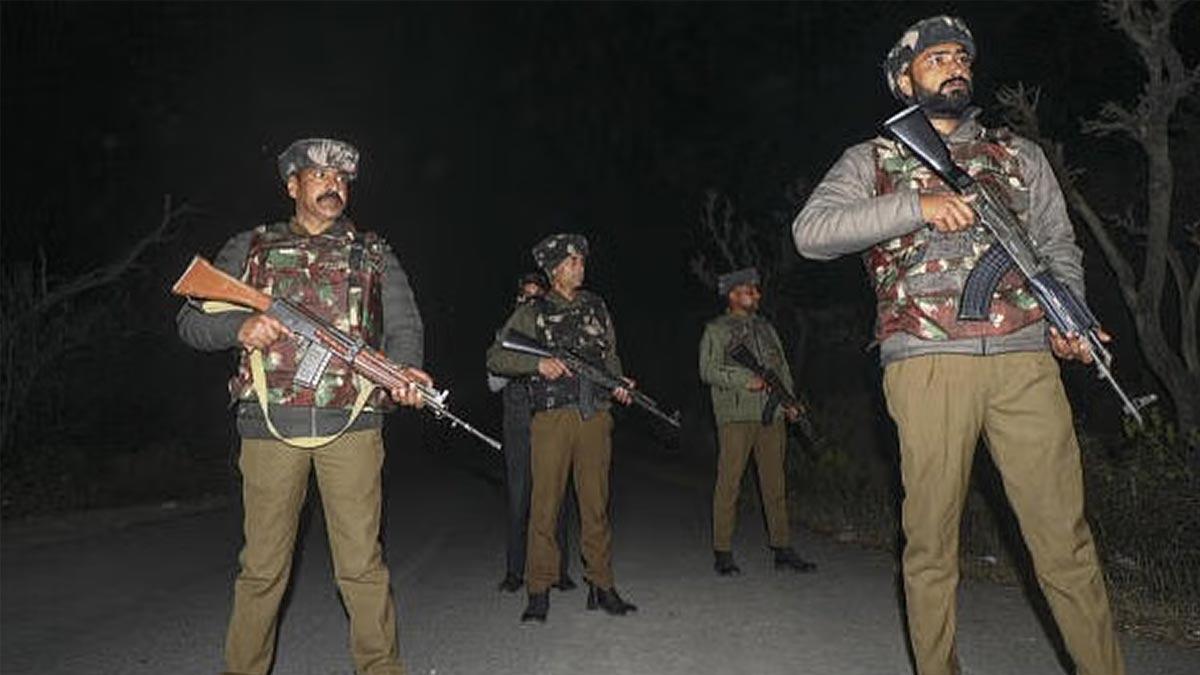


The Indian Army foiled an infiltration bid along the Line of Control (LoC) in Poonch district of Jammu and Kashmir on Wednesday, eliminating two terrorists attempting to infiltrate.
The Nagrota-based White Knight Corps of the Army made the announcement on social media site X: "Operation Shivshakti, During a successful anti-infiltration operation, vigilant soldiers of the #IndianArmy neutralized two terrorists who were trying to infiltrate from across the Line of Control. Quick action and pinpoint firepower foiled the sinister plans."
During the operation, three weapons were recovered from the killed infiltrators.
White Knight Corps attributed the success to synergy efforts between Army intelligence units and the Jammu and Kashmir Police (JKP), saying:
"Synergistic and synchronised intelligence inputs from own intelligence units and #JKP resulted in successful operation. Operation in progress."
Army personnel earlier in the day had reported having sighted two suspicious men near the LoC border fence in Poonch, leading to a shootout in the region.
This attempted penetration is only 48 hours after security personnel killed three terrorists behind the fatal April 22 Pahalgam attack in a joint operation in Srinagar codenamed Operation Mahadev.
During that operation, three senior Pakistani terrorists—Suleman Shah, a senior Lashkar-e-Taiba (LeT) commander, and his colleagues Abu Hamza and Jibran Bhai—were killed in the Dachigam National Park area, which is under the Mahadev Mountain Peak in Harwan, Srinagar. The joint operation was launched by the Indian Army, the Central Reserve Police Force (CRPF), and the Jammu and Kashmir Police.
Union Home Minister Amit Shah, speaking in Parliament on Tuesday, asserted that the trio had masterminded the Pahalgam attack, which left 26 civilians dead, 25 of them tourists and one local resident.
He further said that intelligence monitoring and eyewitness evidence categorically proved the role played by these three terrorists in the horrific episode that had rocked the country and triggered widespread outrage.
In turn, Prime Minister Narendra Modi gave the security forces the green light to act firmly. Later, the military carried out targeted attacks on terrorist infrastructure at nine key places along the border. These were Muridke close to Lahore, Bahawalpur, and strategic locations in Kotli and Muzaffarabad in Pakistan-occupied Kashmir (PoK).
Pakistan retaliated by resorting to heavy mortar shelling of civilian targets across the Poonch, Rajouri, Baramulla, Bandipora, and Kupwara districts.
In the midst of rising tensions, the Indian Armed Forces retaliated, leveling 11 Pakistani military establishments. In spite of Pakistan's appeal for a ceasefire after the exchange, India refused to suspend Operation Sindoor, keeping the pressure on militant groups and their cross-border facilitators.
Read also| Operation Sindoor Strikes Sent Clear Message to Pakistan, says Army chief Upendra Dwivedi
Read also| With Operation Sindoor Underway, CDS Stresses Need for Heightened Military Readiness