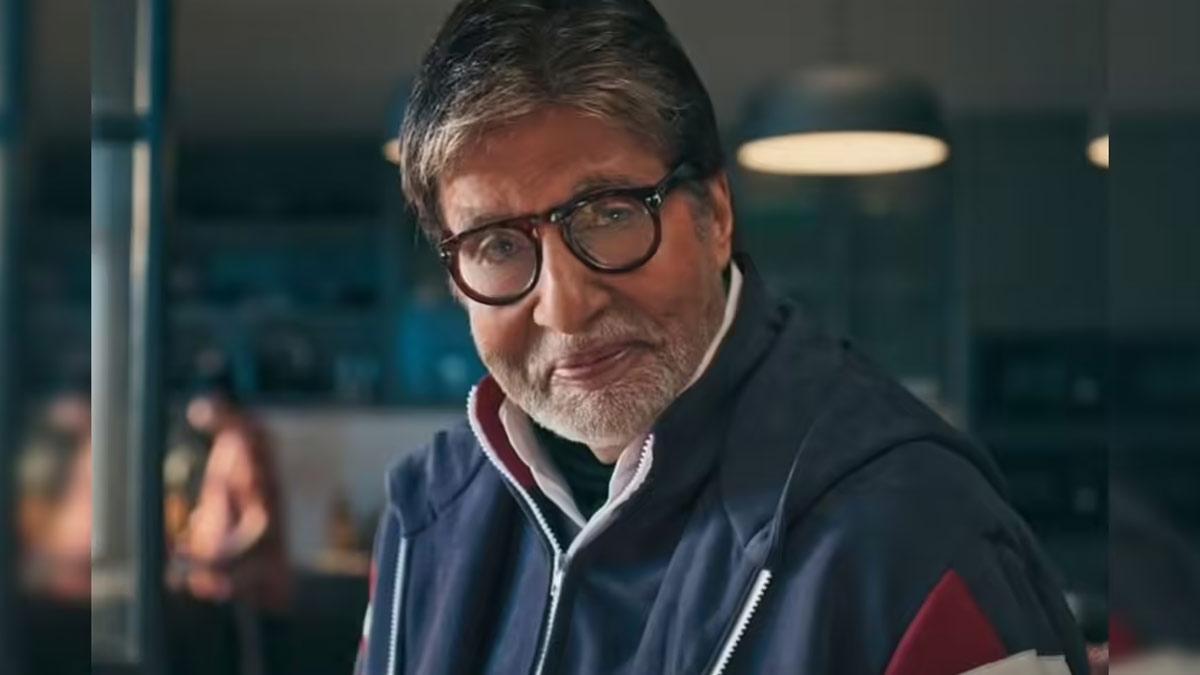


In a candid reflection shared on his personal blog, megastar Amitabh Bachchan revisited the early phase of his career, offering insight into the relentless workload he once managed and the mindset that shaped those years in Hindi cinema.
The veteran actor recalled that during the initial decades of his career, he frequently worked across multiple films simultaneously, often shooting two to three shifts a day. He explained that the intensity of that schedule was driven largely by uncertainty about sustained employment in the industry.
In his blog post, Bachchan also contrasted today’s filmmaking culture with that of his era, noting how preparatory work for roles has evolved significantly over time. He wrote, “.. the prep was word or an explanation unknown to my generation and beyond .. now ‘its’ a common vocabulary, where one prepares for the work to be undertaken .. for me it was an unknown entity .. i see now the amount of labour and pain, creative artists put in to get into the character, in looks and style and comprehensive character analysis .. a most valid and thought full act, and my admiration to those that are able to give this aspect the more than required serious consideration and be in preparation for the work, undertaken ..”
He further described the practical realities of working in multiple productions at once, highlighting how little scope there was for structured preparation when schedules overlapped. He wrote, “Good and impressive .. But in the good ol’ days when we all worked in 10 to 15 films at the same time – many two or three the same day, it would have been impossible to prep for one and then un-prep for the other… ON THE SAME DAY!!
MOST OF THE TIME IT WAS THE DIRECTOR OR THE ACCLAIMED ASSISTANT THAT EXPLAINED THE SCENE, WHEN YOU REACHED THE STUDIO OR LOCATION…
many ask how did you slip from one role to another in the course of a day for different films… (sic)”
The actor, famously known for redefining Hindi cinema with films such as Zanjeer, also explained in Hindi the motivation behind accepting such a heavy workload during those years. In translated form, his words conveyed: “Brother, if I hadn’t done it, there was always the fear of whether I would get work in the future or not. So I simply tried to mould myself according to whatever was asked of me. Then, months later, when the film was finally released, I would eagerly wait to see what I had done and how I had performed in it. There are many more stories like these… perhaps another time. Gratitude and love, pouring down like torrential rain.”
Bachchan’s career, which began with Saat Hindustani, initially struggled to gain traction at the box office. His breakthrough arrived with Zanjeer, which established him as the defining face of the “Angry Young Man” era in Hindi cinema.
Over subsequent decades, he featured in a string of landmark films including Deewaar, Sholay, Don, Amar Akbar Anthony, Muqaddar Ka Sikandar, Trishul, Namak Halaal, Sharaabi, Agneepath, Black, Paa, Piku and Pink, among many others, cementing his legacy as one of Indian cinema’s most influential performers.
His popularity was further amplified by real-life incidents, including the 1982 shooting of Coolie, during which he suffered a near-fatal injury. The episode prompted nationwide concern, with fans across India praying and holding rituals for his recovery.
Even decades later, Bachchan remains a constant presence in Indian entertainment. He recently appeared in Kalki 2898 AD and continues to host the long-running quiz show Kaun Banega Crorepati, which he has anchored for nearly 25 years.
At 83, the actor continues to command a vast following. Every Sunday, crowds gather outside his Mumbai residence, Jalsa, as part of a tradition that has continued for more than four decades, where he greets admirers and acknowledges their affection from his gate.
Also Read | WATCH | Nick Jonas turns hairdresser for wife Priyanka Chopra