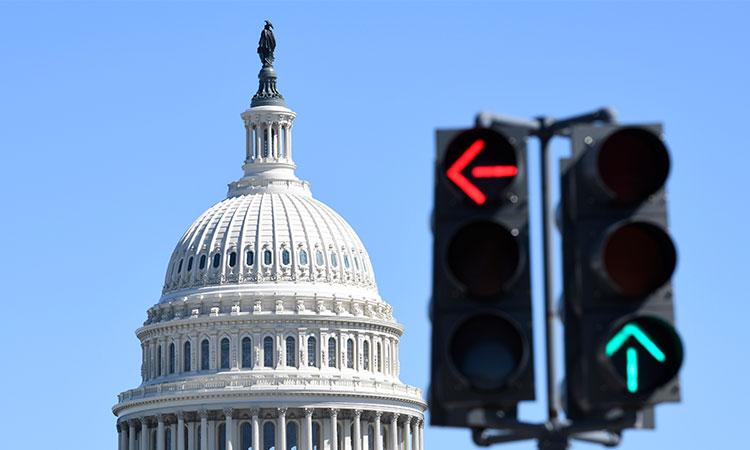


The US House of Representatives temporarily adjourned after members failed to elect a new Speaker with no end in sight to the political stalemate.
The House voted to adjourn until early Wednesday night for closed-door negotiations after US Congressman Kevin McCarthy, a Republican from California, failed to secure enough votes another three times due to intra-party division.
House members voted three times on Tuesday, the opening day of the divided 118th Congress, but McCarthy fell short of the necessary 218 votes to be the next speaker.
It was the first time a House Speaker -- who maintains order, manages its proceedings, and governs the administration of its business on the lower chamber's floor -- hadn't been elected on the first ballot in 100 years.
Also read | US proposes massive hike in H-1B, other visas' fees
The 435-seat House will have to vote on and on until a Speaker is elected with a majority of votes. Before that, members cannot be sworn in and committees cannot be formed with the rest of the business stalled.
US President Joe Biden, a Democrat, reacted to the political drama surrounding the House speakership vote on Wednesday morning, saying that "it's embarrassing the way it's taking so long".
"How do you think this looks to the rest of the world?" Biden told reporters at the White House before leaving for Hebron, Kentucky. "It's not a good look. It's not a good thing."
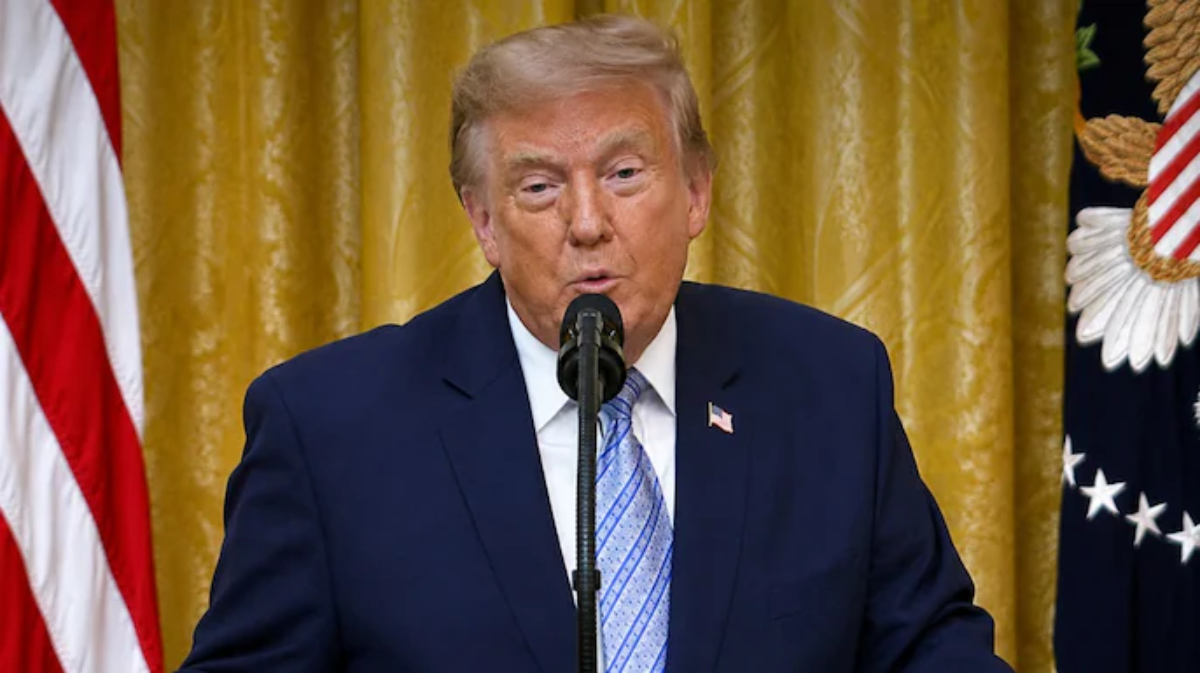
McCarthy has the support of most House Republicans and former US President Donald Trump, but a handful of hardliners have opposed his bid to lead the conference by arguing that he is insufficiently conservative while refusing to decentralise the Speaker's power.
Trump reaffirmed his support for McCarthy in a social media post on Wednesday morning, urging Republican House members to elect him and not to "turn a great triumph into a giant & embarrassing defeat".
US Congressman Matt Gaetz, a longtime Trump supporter and one of the House Republicans seeking to doom McCarthy's quest to take the gavel, responded in a statement that the former Republican President's suggestion "changes neither my view of McCarthy nor Trump nor my vote."
McCarthy told reporters that "I think we'll get to 218", as he appeared on Capitol Hill on Wednesday morning despite no clear path yet to break the historic deadlock.
Also read | EU to require travellers from China to take pre-departure Covid tests
The House has elected a speaker 127 times since 1789. There have been 14 instances of speaker elections requiring multiple ballots.
Thirteen of 14 multiple-ballot elections occurred before the Civil War, when party divisions were more nebulous, according to congressional historians. The last time a Speaker election required two or more votes on the floor happened in 1923.
This time, all House Democrats have voted for Congressman Hakeem Jeffries, a New York Democrat, to be Speaker.
Though it's unlikely for Jeffries to attain the position, he is set to become the first African American lawmaker to lead a party in either chamber of the US Congress.
Republicans flipped the House in the 2022 midterm elections while Democrats held onto their majority in the Senate.
The divided Congress convened for the first time on Tuesday, with US Vice President Kamala Harris presiding over the opening of the 100-people upper chamber in which Democrats control 51 seats versus 49 for Republicans.
Chuck Schumer from New York and Mitch McConnell from Kentucky remain the Senate majority leader and minority leader, respectively.
McCarthy loses fourth ballot for US House Speaker; GOP nominates alternate candidate
The US Congress was in utter disarray as the now Republican controlled House of Representatives failed to elect favourite Kevin McCarthy as Speaker as he split votes with Democrat Hakeem Jefferies in the fourth round of ballot and GOP was left with no other option but to nominate an alternate candidate to break the gridlock.
McCarthy has failed to get the 218 votes required to become the Speaker in the 4th round of voting on Wednesday. The House Freedom Caucus nominated Rep. Byron Donald's, an African American R-Fla., for House Speaker during Wednesday's votes to end the ongoing stalemate, media reports said.
"Now, here we are. And for the first time in history, there have been two black Americans placed into the nomination for Speaker of the House," Rep. Chip Roy, R-Texas said, sending the GOP members into loud cheers and standing ovations for Roy's nomination. Some Democrats also joined in the standing ovation as two African Americans are for the first time in the history of the Congress pitted against each other for the coveted speakers post.
Incoming House Democratic Leader Hakeem Jeffries, D-N.Y., was nominated by the Democrats to the Speaker's position with whom McCarthy split votes in the fourth round of balloting to lose. McCarthy had been nominated to the Speaker's post by Rep. Mike Gallagher, R-Wisconsin. .
Gallagher drew a standing ovation from both sides of the aisle when he said the members were lucky to be living in the greatest country in the world. His reference was obviously to two black Americans fighting for the speaker's post, considered the most powerful in the Congress and 3rd in line for the presidency after the Vice President.
Also read | 'Invisible' Rishi Sunak surfaces with New Year Resolutions
As the House got gridlocked after the fourth round of balloting, the legislators were told they could expect a vote on a Republican motion to adjourn the House. This could have stalled the fourth vote on the election of the Speaker, but the GOP move did not materialise as the numbers just weren't there and McCarthy allies simply balked, reports said.
McCarthy consistently failed to get the 218 votes required as 20 Republicans went rebel saying they did not want McCarthy as he had not done enough for their constituencies in the Deep South red states. Even former President Donald Trump's appeal to far right Reps to vote for McCarthy did not cut ice with the rebels who were in no mood to compromise.
20 conservative, anti-establishment lawmakers repeatedly blocked McCarthy all through the four rounds of balloting for the Speaker's post saying the California Republican hasn't done enough to win their votes.
In fact, the spat between the conservatives and rebels turned ugly with both sides attacking each other personally on the floor of the House. All efforts by McCarthy, a longtime member of House leadership, in his crucial meetings with allies to break the impasse and placate the rebels failed as the Democrats remained united and did not yield any ground to approaches by some Republicans to vote across the aisle.
What do these 20 rebels want actually? The 20 Republicans opposing McCarthy, are members of the House Freedom Caucus, an offshoot of the Tea Party, which has a long history of feuding with GOP leaders. Their ire against McCarthy was that he never listened to their demands to put it on the agenda of the House.
Some of McCarthy's most vocal opponents, including Representatives Scott Perry of Pennsylvania, Matt Gaetz of Florida and Lauren Boebert of Colorado, claimed McCarthy never made any serious efforts to give conservative voices enough of a platform in the House, media reports said.
The rebels have been constantly shifting stands and moving their goalposts. McCarthy tried a patch up to no avail with a proposal that would allow any five House Republicans to call for the speaker's removal and allow for more ideological diversity on House panels. But this didn't find the support he needed.
But some conservatives amended it to say that any single Republican should be able to move a call to oust the Speaker. They are demanding that specific members be placed on prime committees, including Ways and Means, which controls tax, trade and health policy, and Appropriations, which allocates federal spending.
If that request had been conceded then some conservative members would get priority over very senior rank-and-file Republicans leading to more infighting and plunging the GOP into much deeper fissures.