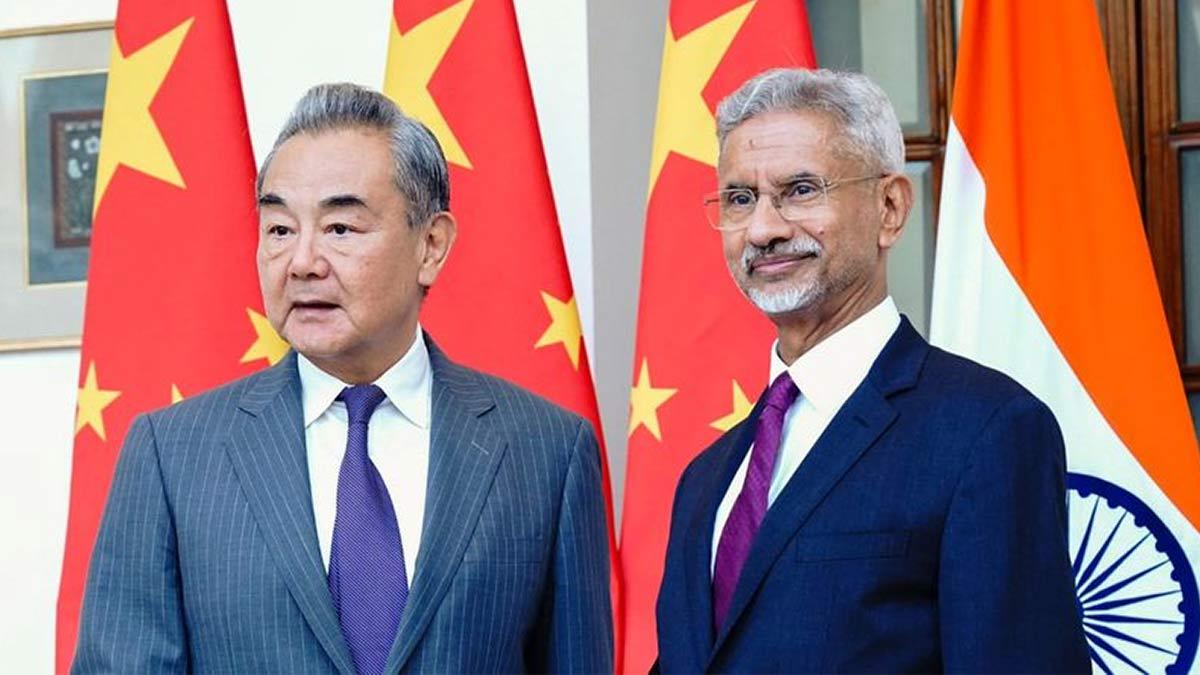


Five years after the two sides faced off in a spectacular confrontation at Galwan, India and China are taking steps to thaw relations - even as the US Trump administration escalates its tariff conflict with New Delhi.
Chinese foreign minister Wang Yi, is visiting India, where (he) met with external affairs minister Dr. S. Jaishankar yesterday.
For both Asian countries, this visit signifies the new and changing of ties fostered by the uprisings to disrupt the world with escalating tariff measures by Trump.
At the meeting, Dr Jaishankar said Wang's visit provides an opportunity to review bilateral ties. "Having seen a difficult period in our relationship, Excellency, our two nations now seek to move ahead. This requires a candid and constructive approach from both sides," he said during the meeting.
"In that endeavour, we must be guided by the three mutuals - mutual respect, mutual sensitivity and mutual interest. Differences must not become disputes, nor competition conflict," the seasoned diplomat added.
Dr. Jaishankar said that the talks between the two countries would cover many issues, including economic and trade issues, religion-based pilgrimages, people-to-people ties, river data sharing, border trade, connectivity projects and other bilateral interactions.
Wang will be discussing border issues with National Security Adviser Ajit Doval today. "This is very important because the basis for any positive momentum in our ties is the ability to jointly maintain peace and tranquility in the border areas. It is also essential that the de-escalation process move forward," Dr Jaishankar said yesterday.
Overall, it is our expectation that our discussions would contribute to building a stable, cooperative and forward-looking relationship between India and China, one that serves both our interests and addresses our concerns," Dr Jaishankar said.
Based on reports, China has signaled willingness to remedy three significant Indian concerns - fertilizers, rare earth, and tunnel boring machines. Rare earth elements among the three concerns are key since they are necessary to produce "high-tech" items like smart phones and sophisticated military tools, and they are heavily concentrated in China, thus they are strategically vital for the global technology eco-system.
A Chinese statement following the meeting said Wang Yi told Dr Jaishankar that the world is undergoing a "once-in-a-century transformation at an accelerating pace". In an apparent reference to Washington, DC's pressure, he said "unilateral bullying is rampant" and free trade and the international order face severe challenges.
"As the two largest developing countries with a combined population of over 2.8 billion, China and India should demonstrate a sense of global concern and responsibility as major countries, set an example for the vast majority of developing countries to unite and strengthen themselves, and contribute to promoting a multipolar world and the democratization of international relations," he said.
The meeting between Prime Minister Narendra Modi and Chinese President Xi Jinping in Kazan last year has led to a "restart in China-India relations".
"Both sides have earnestly implemented the consensus reached by their leaders, exchanges and dialogue at all levels have gradually resumed, peace and tranquility have been maintained in the border areas, and Indian pilgrims have resumed pilgrimages to the sacred mountains and lakes of Tibet, demonstrating a positive trend in China-India relations returning to the main path of cooperation," he said.
"China and India should strengthen their confidence, meet each other halfway, eliminate interference, expand cooperation, and consolidate the momentum of improvement in China-India relations," he added.
The improved situation of India-China relations is occurring while the US continues its tariff pressures on New Delhi over their growing Russian oil imports. The US has slapped 50% tariffs on India's exports across multiple sectors. India says they are buying Russian oil for market reasons and that the purchases are to secure energy for 1.4 billion citizens.
While the US is punishing India for buying Russian oil, it has not imposed similar secondary sanctions against China. US Secretary of State Marco Rubio explained that the lion's share of Russian oil that China buys is refined and sold back into the world market.
"If you put secondary sanctions on a country - let's say you were to go after the oil sales of Russian oil to China - well, China just refines that oil. That oil is then sold into the global marketplace, and anyone who's buying that oil would be paying more for it or, if it doesn't exist, would have to find an alternative source for it," he has said.
Read also| Trump Aide Criticizes India’s Russian Oil Purchases, Urges Strategic Alignment with US
Read also| ‘A Very Good Step’: Trump Plans Putin-Zelenskyy Talks, Trilateral Summit to Follow