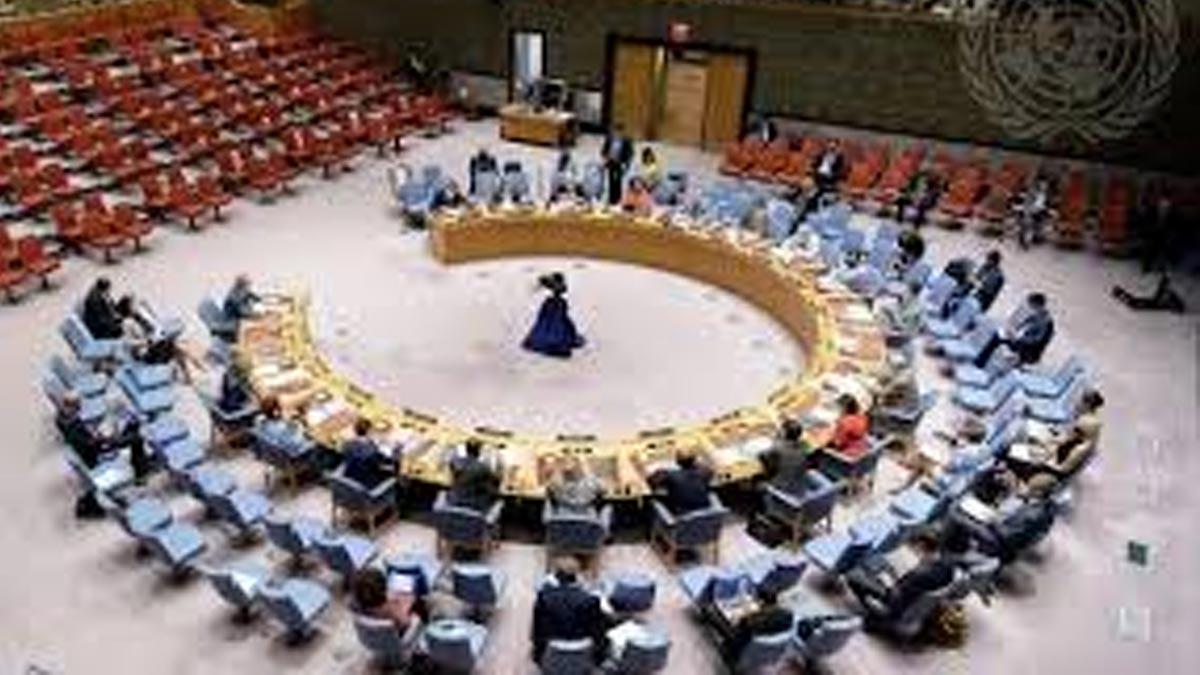


For the 17th time, the United Nations General Assembly has delayed debate on Security Council reforms, unable again to come to consensus on a text to determine the agenda for negotiations.
The Assembly, in a unanimous resolution, on Tuesday adopted a resolution to end the ongoing session's debate on reforming the Council and expanding it with new permanent members, transferring the issue to the next session, which opens next month.
Representing India, Brazil, Germany, and Japan—the G4 block—Japan's Minister in its UN Mission Iriya Takayuki said the repeated failure of the Assembly to achieve consensus undermines confidence in the UN as well as its ability to maintain international order.
"Once again, the failure to act on Security Council reform is a matter extending far beyond the Council itself," Iriya stated.
"With the reality that trust in the United Nations, at the heart of multilateralism, has been eroded and the international order is under strain, the Council needs to be reformed not just to make the UN as a whole more effective, but also to sustain the whole international order," he further added.
Emphasizing the seriousness of the matter, Iriya added, "The G4 would, therefore, like to stress that this is an urgent matter which concerns all member states deeply, not merely a selected few."
The G4 countries promote increasing the number of permanent seats in the Security Council and support one another for these seats.
"Given the ongoing and grave threats to international peace and security and the pivotal role of the Security Council in their resolution, the Council needs to be reformed urgently and must be pushed forward without hesitation," Iriya explained.
He noted a slight glimmer of hope in the Inter-Governmental Negotiations (IGN)—the process of reform—quoting an updated "Elements Paper" by the co-chairs of the IGN, which presents the positions of various member states and groups.
But he panned the report for failing to represent the majority opinion of UN members, who favor increasing both permanent and non-permanent seats on the Council.
Since the IGN started in 2009, negotiations have been held back by a bloc called Uniting for Consensus (UfC), headed by Italy and comprising Pakistan. The bloc is opposed to going ahead without consensus, essentially stopping text-based negotiations that the G4 and most member states insist on.
General Assembly President Philomena Yang's press secretary, Sharon Birch, noted that the IGN process had been advanced during the session. She pointed to the "Pact of the Future," endorsed at a high-level gathering of global leaders last September to serve as a guide for the UN as it begins its 80th year, which she explained "really established a solid foundation for Security Council reform."
"The reform talks have been energized, and the member states have been genuinely more active than ever before in the talks," Birch added.
Today's permanent membership structure is a carryover from post-World War II geopolitics, when the initial winners secured a monopoly on the seats. The Council was last reformed 57 years ago, when four additional non-permanent seats were created, raising the number of non-permanent members to ten. New permanent members were not added.
Then there were 113 members of the UN; now it is 193, but the Council still has only 15 members, of which five are permanent members: Britain, China, France, Russia (which replaced Soviet Union), and the United States.
Read also| US Says It Remains Committed to Collaborate with India in Energy Sector
Read also| India Expects SCO Summit to Strongly Condemn Cross-Border Terror: MEA