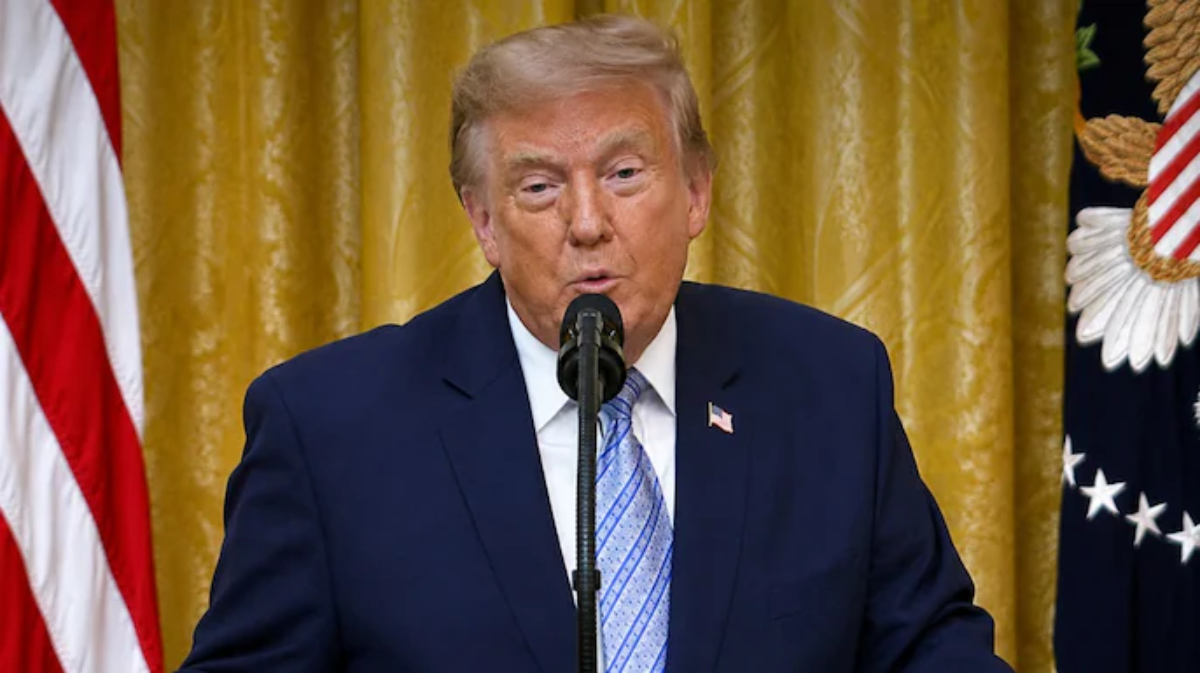
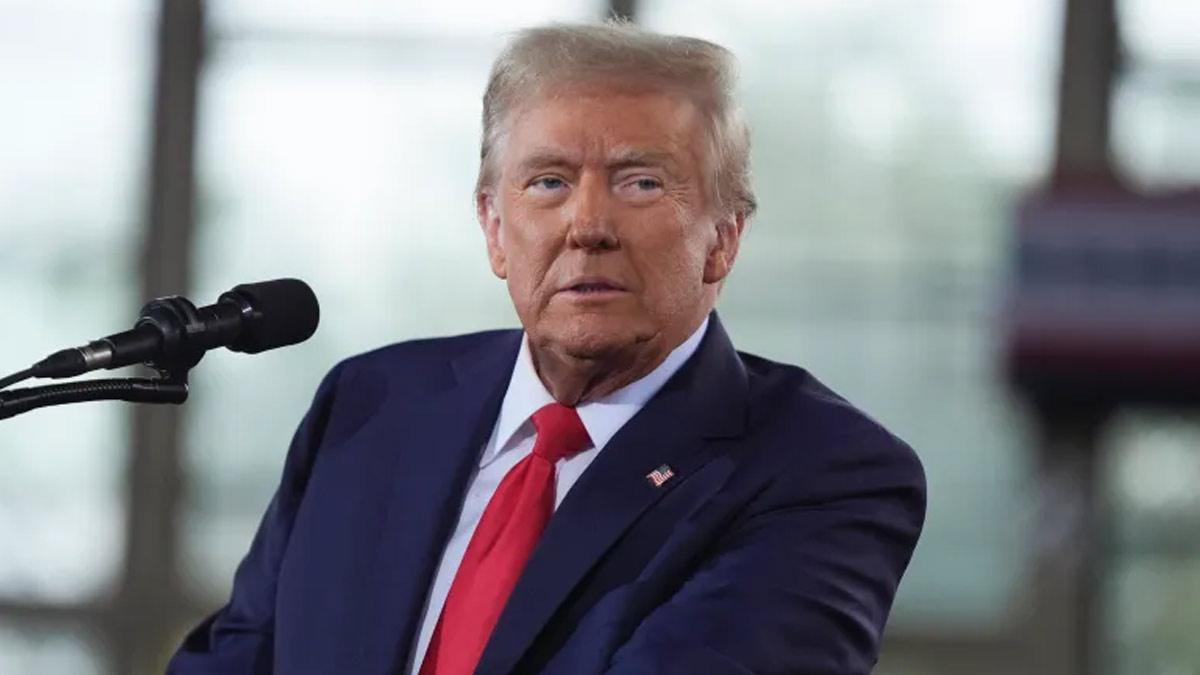


As US President Donald Trump appears obsessed with a warpath over a Nobel nomination and trade, Washington's defence and diplomatic hierarchies are quietly toiling to guard the nation's geostrategic interests, with India at the forefront.
Even as Trump ranted against India on Tuesday, Indian and US troops were immersed in Exercise Yudh Abhyas in the Alaskan wilderness, an 21-year-old tradition.
One week ago, the USS Frank Cable stopped over in Chennai to conduct submarine repair exercises with INS Sindhuvijay.
Deputy Assistant Defence Secretary Andrew Byers visited India last month to call on Joint Secretary Dinesh Kumar, who is responsible for maritime and defence procurements, a move that most likely will allow India to acquire US defence hardware—a decision which may also assist in resolving Trump's grievance regarding the trade deficit.
As Prime Minister Narendra Modi returned from China on Monday after holding talks with Presidents Vladimir Putin and Xi Jinping, the US Embassy in New Delhi held a firefighting drill.
It tweeted on X: "The relationship between the United States and India continues to soar to new heights -- a defining 21st-century relationship."
Secretary of State Marco Rubio, who was in attendance at the exercise, had earlier said on India's Independence Day: "Our two nations are bound together by our mutual vision for a more secure, prosperous, and peaceful Indo-Pacific region.
The Indo-Pacific, in which China is a top challenge to the US and to the international order, is one of the main drivers influencing the geostrategic interests that have bound the two democracies. Rubio had characterized the relationship as "consequential and far-reaching" and able to address current challenges.
Senior foreign and defence ministry officials of India and the US had their annual mid-year review, asserting their "eagerness to continue enhancing the breadth and depth of the bilateral relationship."
The officials spoke about "advanced bilateral initiatives, discussed regional security developments, and exchanged perspectives on a number of shared strategic priorities," according to reports from both nations.
The US Embassy’s X post added: “This month, we’re spotlighting the people, progress, and possibilities driving us forward. From innovation and entrepreneurship to defence and bilateral ties, it’s the enduring friendship between our two peoples that fuels this journey.”
US diplomats in India have since been actively highlighting cooperation across diverse areas, including crime-fighting, defence, space, and startups.
Trump himself seems torn between these dynamics. "We get along with India very well," he said Tuesday, before launching into one of his customary rants about India's tariffs and Washington "foolishly" not charging duties.
On Wednesday, in a moment of candor, he disclosed his real motivation behind the retaliatory 25 percent tariff on India for purchasing Russian oil: to produce the illusion of punishing Moscow and divert attention away from accusations that he was going easy on Russia.
When challenged by a Polish journalist over being easy on Russia, he snapped:
"How do you know there's no action? Would you say that imposing secondary sanctions on India, the biggest buyer outside of China, they're virtually even, would you say there was no action? That cost hundreds of billions of dollars to Russia.
While admitting that China is the "largest purchaser," Trump was unable to place equal tariffs on Beijing because US reliance on Chinese imports, such as rare earths, magnets, and other critical items, would cause inflation and boomerang politically.
He also has to walk softly with Putin, as he continues to aspire to get Russian support to stop the Ukraine conflict—a matter of utmost importance to his standing—and thus cannot add further sanctions on Moscow.
A two-week ultimatum given from August 21 for a peace accord, or else risk going in for a "different tack," lapsed on Thursday without any action.
This has placed India in the convenient position of being an easy target to appear to stand strong against Putin.
Trump's top trade adviser, Peter Navarro, preceded the targeting of India by deflecting attention away from Trump's softness towards Russia and China.
A tug-of-war between the realists with an eye on geostrategy and the trade-fixated, ego-struck wing is ultimately in motion. Treasury Secretary Scott Bessent seemed to join the realists: "I do believe India's the world's largest democracy [and] the US is the world's largest economy. I believe ultimately we will come together," he said, on the same day as Navarro's rant last week.