

Former U.S. President Donald Trump has continued to double down on his 'America First' agenda of his first term by threatening to bring high tariffs once again and bring manufacturing back to the U.S. if he's re-elected, which could have an intense impact on India.
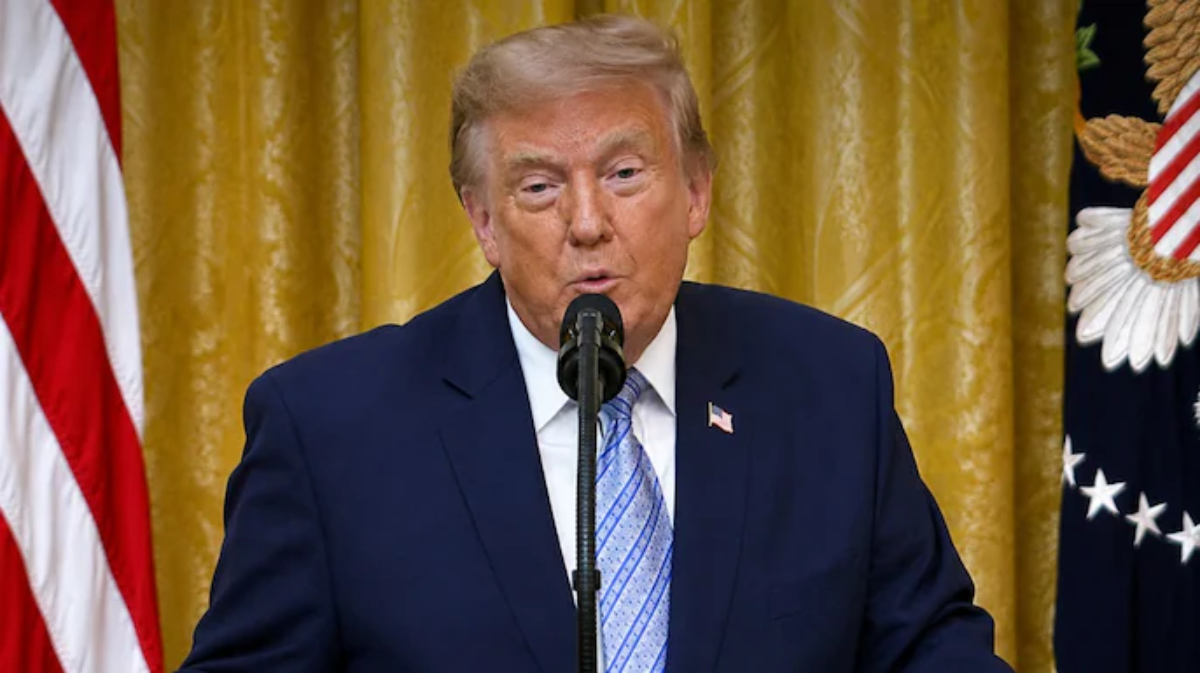
One such sector to be hit may be the nascent collaborative defense manufacturing in India. Trump said the country needs a fully domestic industrial base to meet 100 percent of the U.S. defense needs for national security. "You can call it economic nationalism, I call it common sense," Trump said in New York to business leaders at the Economic Club of New York. "I call it America First."
He cited the current manufacturing strategy for the F-35 stealth fighter jets, which have parts made in a variety of countries, as an example of the risks to U.S. defense. If Trump were to enforce this policy, projects like the co-production of F-414 jet engines-which involve the transfer of up to 80% of the technology-could fall through, among other defense collaborations.
One of the issues, however, is that there are a number of hindrances toward implementing such policy. In addition, his proposed tariffs on tariffs would also hit companies such as Apple, which have been ramping up manufacturing in India due to rising tensions with China.
Though Trump did not specifically refer to India or the effect on employment in software and back-office services, he kept his focus squarely on China and the manufacturing sector.
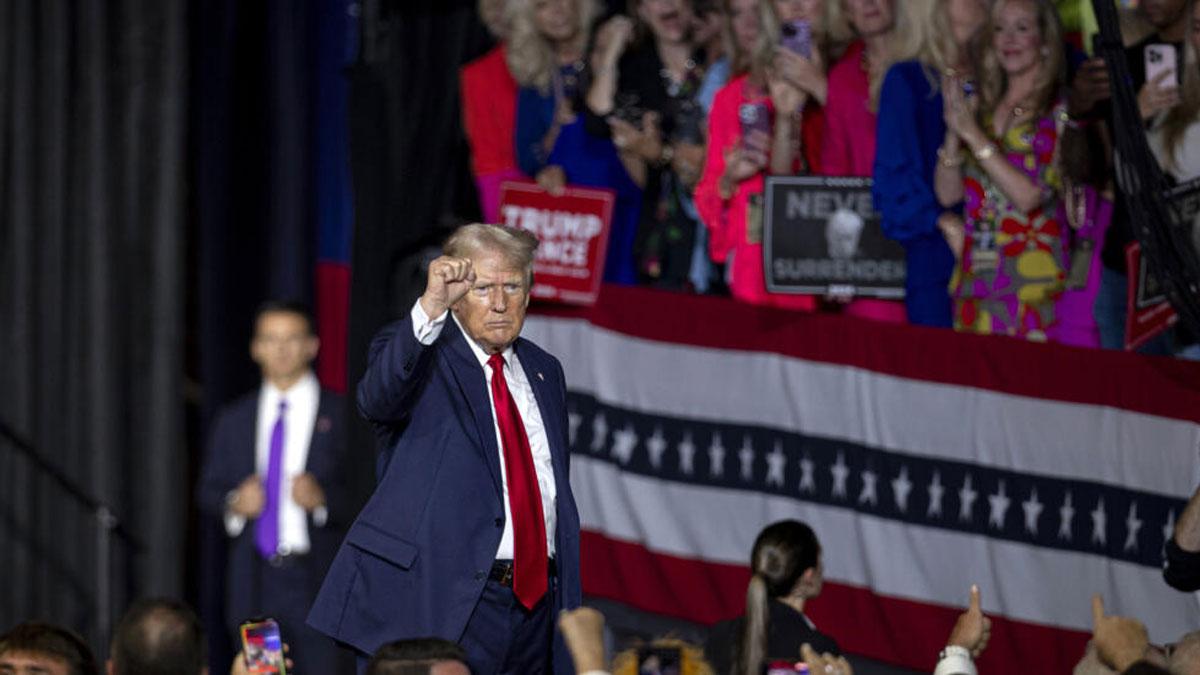
During the rally, Trump laid out some of his economic proposals for a second term in the White House. Among them, he vowed to name Tesla and SpaceX Chief Executive Elon Musk to spearhead a government efficiency commission to audit the operations of the federal government and suggest significant reforms to reduce costs—a plan that got him applause. Ironically, despite having Musk on his wish list, Trump also said he would eliminate the mandates on electric vehicles—a sector where Musk has a huge stake.
The other cornerstone of Trump's economic plan is deregulating the government to promote business freedom. He vowed to make the U.S. a "manufacturing superpower" and put the country at the center of cryptocurrency and Bitcoin.
Much of his economic vision has entailed uprooting the current administration's policies, which he said are led by Vice President Kamala Harris, his Democratic opponent.
Trump denied the existence of climate change and vowed to eliminate mandates for green energy, while easing restrictions on fossil fuels, as he contended that energy production would be one of the drivers for economic resurgence. Producing more fossil fuel, he said, would help the U.S. fight inflation, bring down the cost of basic essentials like food and electricity.
To accomplish this, he promised to declare an energy emergency that would ramp up the country's energy production. Trump also continued to tout his tariffs plan as a panacea for the country's economic problems, insisting that it could balance out tax cuts and an increase in government spending. Economists, though, have countered higher tariffs will keep inflation worse and hurt the economy.
These are the tariffs from which he imagines a sovereign wealth fund-a kind of superstate investment fund similar to those in places like Singapore that would make targeted investments in infrastructure and industry, pay returns, and help retire the national debt.
While Trump continuously blamed China, his tone toward President Xi Jinping was mixed. He described Xi as a "dear friend" and as a "fierce" leader who was sad that the strong relationship between the U.S. and China broke up after the COVID-19 pandemic. At the same time, he spoke optimistically about the possibility of good relations restored with China and other nations while pointing to the need for diplomacy around the world in light of nuclear threats.
It's all so quintessentially Trump: the personal attacks on Vice President Harris as "Communist" and "Marxist," while at the same time charging her with trying to steal his policies.
Much of what Trump was proposing-especially his threats to cut defense manufacturing abroad and apply broad tariff hikes-looks difficult to achieve due to international alliances, trade relationships, and the arcana of international supply chains.
In his early term, Trump had often clashed with India on tariffs, even making an issue about duties on Harley-Davidson motorcycles. He increased tariffs on imports of steel and aluminum and removed the Generalized System of Preferences on a set of Indian products. India retaliated by increasing tariffs on U.S. farm products like apples and almonds.
Read also| Putin Compares Ukrainian Leaders to 'Aliens,' Commends India and Others for Peace Efforts
Read also| US Sanctions Russian Journalists for Influence Campaign, Files Charges Against Two