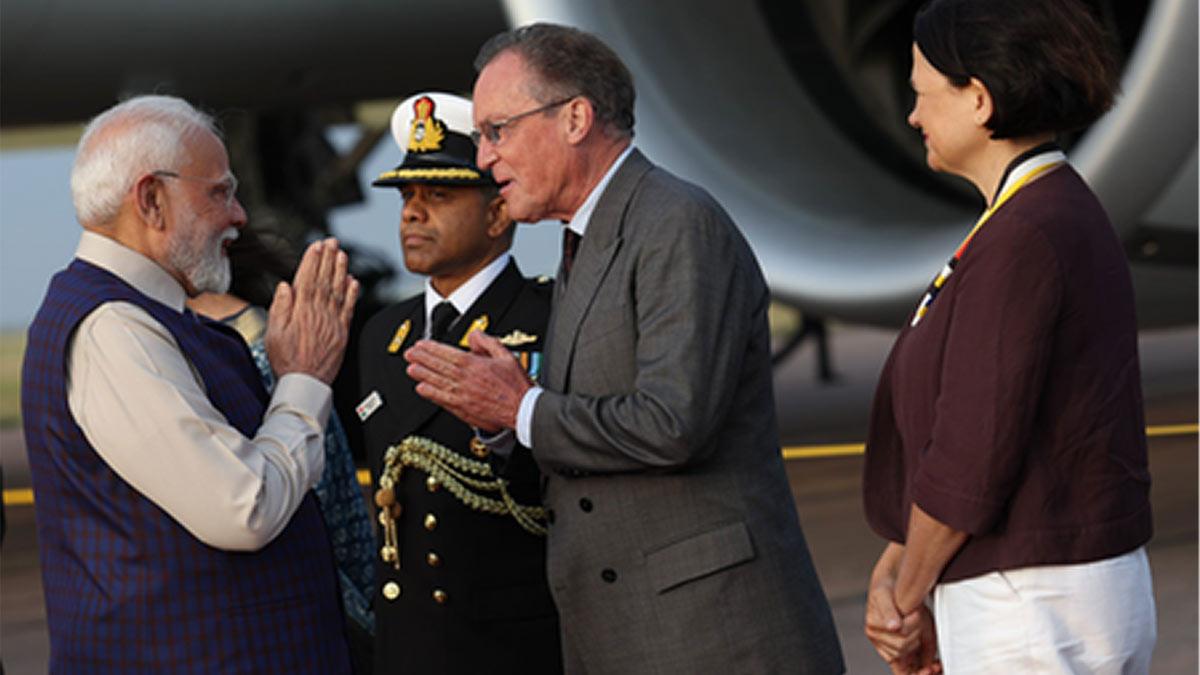


British Prime Minister Keir Starmer has welcomed the impending Free Trade Agreement (FTA) with India as a life-altering decision for the UK economy, describing it as a "major win." This comes as Indian Prime Minister Narendra Modi visited London on a two-day state visit.
PM Modi was received at the airport by senior diplomatic personalities, such as Catherine West, the UK Foreign Office Minister for the Indo-Pacific, Indian High Commissioner to the UK Vikram Doraiswami, and Lindy Cameron, British High Commissioner to India.
As Modi arrived, a warm welcome was in store for him just outside London, where local community leaders, students, and some Members of Parliament had arrived to receive him.
On his visit, PM Modi will hold extensive talks with Prime Minister Starmer and also interact with King Charles III. Starmer will host the Indian leader at Chequers, which is the official country house of the British Prime Minister.
Boosting India-UK Trade Relations
The planned FTA will remove trade hurdles between the two countries, with far-reaching implications for industries as well as consumers in both the nations. In the view of Starmer, the deal will assist in shaving tariffs, making it cheaper for UK consumers to buy necessities like clothes and food. Indian companies will be able to expand more easily in Britain, while British companies will have easier access to India's expanding markets. Large players such as Airbus and Rolls-Royce are also going to gain, with aircraft deliveries to India now incorporating Rolls-Royce engines in over half of the fleet.
"Our historic trade agreement with India is a huge success for Britain. It will support thousands of British jobs right across the country, open up new prospects for businesses and increase growth in every region of the country, delivering on our Plan for Change.". We’re putting more money in the pockets of hardworking Brits and helping families with the cost of living, and we’re determined to go further and faster to grow the economy and raise living standards across the UK,” said Starmer.
Under the UK Department for Business and Trade (DBT), the deal includes significant tariff cuts on UK exports to India. For example, tariffs on UK products will decrease from 15% to only 3%, enhancing British-made products' competitive advantage. The whisky sector, in particular, will stand to gain significantly, with existing tariffs of 150% set to reduce initially to 75% and then to 40%, improving competitiveness against international competitors.
Recent trade statistics indicate that the UK imports approximately GBP 11 billion worth of products from India every year. Under the FTA, lower tariffs will have a tendency to decrease operating costs for UK companies, particularly in industries such as advanced manufacturing and consumer goods.
The DBT estimates UK trade with India could grow by nearly 60% with exports to India possibly adding GBP 15.7 billion to bilateral trade, which is expected to rise by around 39% in the long term. Clean energy is another priority area for cooperation, with the agreement providing unprecedented access to India's public procurement market during its transition to renewable energy. The FTA also offers British financial and professional service providers access to secured entry into the Indian market, providing an assured platform for expansion.
Apart from economics, the two countries have committed to intensifying cooperation in anti-corruption, serious and organized crime, fraud prevention, and irregular migration. This will be complemented by a strengthened sharing of intelligence and coordinated operations between law enforcement agencies.
Read also| Chinese‑Made F‑7 BGI Jet Crashes into Dhaka School, Killing Over 19