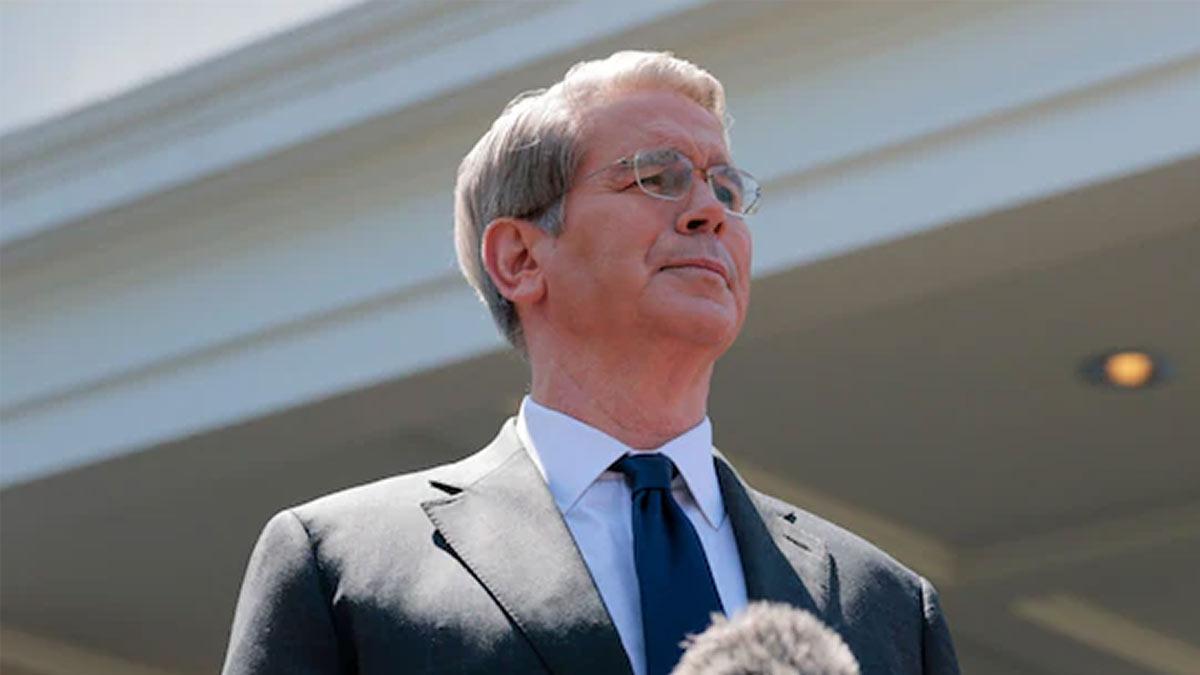


US Treasury Secretary Scott Bessent has emphasized the Trump administration's focus on achieving strong trade agreements, rather than the rapid pace of doing so. The comments are made as Washington negotiates with a number of allied countries in the face of an impending tariff deadline.
Speaking to CNBC, Bessent indicated that the administration is being methodical. "The Trump administration cares less about the timing of trade agreements than about their quality. We're not going to rush to do deals," he said, ahead of the impending August 1 tariff deadline for US trading partners.
While negotiations are making progress, Bessent highlighted the administration's push for results that achieve high standards. "Negotiations are going forward," he said, but cautioned that backing away on the tariff side would have implications. "If we boomerang on August 1 tariffs, higher tariffs would put more pressure on countries," he stated.
To talks with the European Union and Japan, Bessent referred to higher momentum from both sides. "They've gotten more involved," he said of the EU, adding, "I think they would want to bargain at a quicker pace." When it comes to talking with Japan, he emphasized that local politics won't get in the way of the administration's goals. "Our priorities are not domestic government but best deals for U.S.," Bessent clarified.
In spite of deadlines that were time-sensitive, Bessent had a positive opinion about the existing trade dynamics. "Trade is in a good place," he stated, demonstrating optimism regarding the direction of negotiations.
In the matter of Russia, Bessent admitted that tariffs have applications outside of economics. "Tariffs can be a means to political ends," he stated, referring to on-going discussions on imposing sanctions on Moscow.
He also intimated possible coordination with European allies if the US proceeds with secondary tariffs. "Would encourage Europe to follow us if we impose secondary tariffs," he said, although details on industries or timing were not given.
As far as China was concerned, Bessent intimated that official talks could begin anew in the near future, albeit with a contentious agenda that is wide-reaching. One of the most prominent issues, he added, is Beijing's overcapacity in industry. "The elephant in the room with China is overcapacity," he observed, implying that steel and solar industries may be potential areas of attention.
He also highlighted other areas that would potentially emerge during future talks—namely, China's trade with Russia and the Iranian oil matter. "Could start discussing Iranian oil," said Bessent, who went on to say that US officials "could discuss [China's] trade with Russia" as part of the overall diplomatic framework.
Read also| Trump Says 10% Tariff Threat Deterred BRICS — Yet Their Summit Went On
Read also| Trump Calls for Release of ‘Credible’ Epstein Documents to the Public