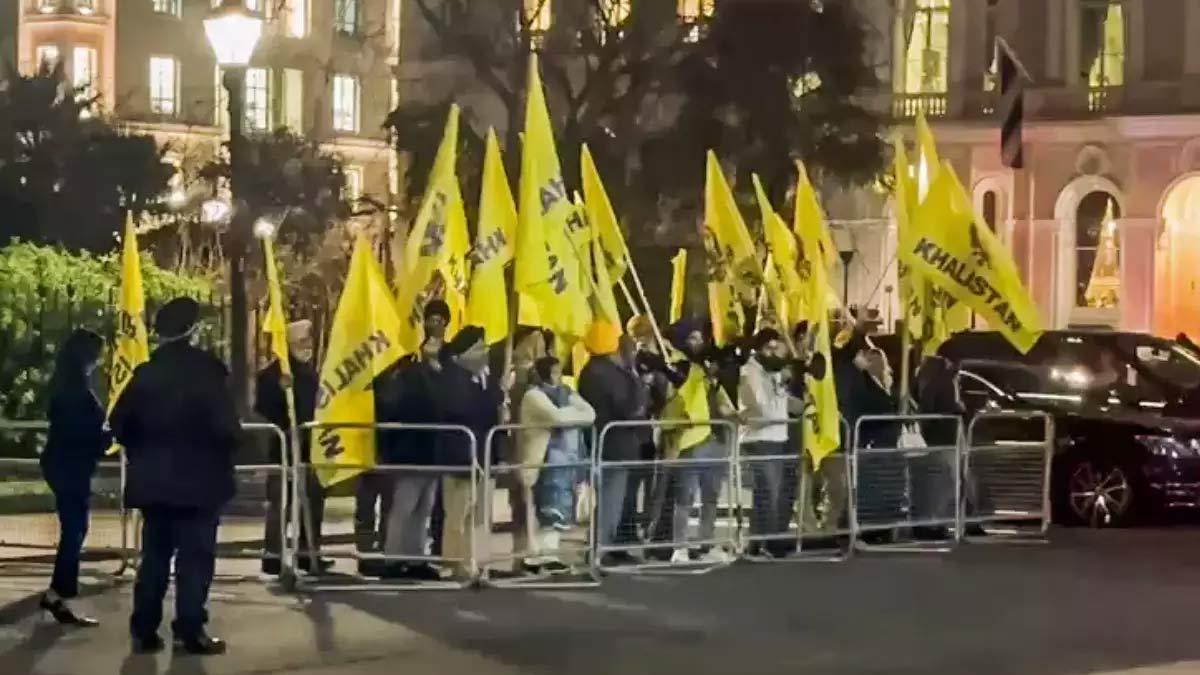


The latest wave of Khalistan-related protests in Ontario highlights Canada's need to reevaluate the balance between free speech and public order, a report emphasized yesterday.
In a report by Khalsa Vox, widely shared social media clips depicted a Canadian trucker, who was holding a poster of the "Human Bomb Dilawar Singh," the suicide bomber who had assassinated Punjab Chief Minister Beant Singh and 17 others in 1995, as a martyr instead of a terrorist. The report commented that these representations practically glamorize terrorism in the country.
New Delhi has consistently complained to Ottawa about Canada-based pro-Khalistan activities, especially when they involve direct threats against Indian diplomats.
The report observed that at the Khalsa Nagar Kirtan in Ontario's Malton—held under the umbrella of the proscribed terror outfit Sikhs for Justice (SFJ)—violent imagery and language were used on posters targeting newly-appointed Indian High Commissioner to Canada, Dinesh Patnaik. Although proscribed in India on charges of extremism, SFJ has been functioning in Canada since long as a hub for propaganda, referendums, and intimidation of Indian authorities.
"The Vienna Convention on Diplomatic Relations obligates host countries to protect foreign envoys from any attack on their person, freedom, or dignity. When posters at a public parade depict a sitting High Commissioner as a target, and the authorities fail to act, it is not merely a lapse in law enforcement — it is a diplomatic breach," the report asserted.
"Authorities must make clear that celebrating terrorists or targetting diplomats with violent imagery is beyond the pale. Law enforcement should investigate such incidents as potential violations, not shrug them off as 'community matters'. Politicians must resist the temptation to pander to fringe voices at the expense of public safety and Canada's international reputation," it added.
The report emphasized that continued public veneration of suicide bombers such as Dilawar Singh makes political violence the norm. Public targeting of diplomats, it asserted, constitutes a contravention of Canada's obligations under international law. Indifference from Canadian authorities, it cautioned, threatens to send the message to groups around the world who are extremist that Canada provides a permissive climate for pursuing their agendas.
"The choice is not between free speech and public safety — it is about ensuring both. Canada can, and must, protect the right to peaceful advocacy while decisively confronting those who would use its freedoms to promote hate and violence. The events in Malton and the glorification of suicide bombers are a test of that resolve," the report noted.
"When imagery and rhetoric cross into glorifying murderers or directly threatening individuals, they cease to be mere political speech. They become incitement — a category that Canada's legal system, like many democracies, has provisions to address. Yet enforcement appears hesitant, inconsistent, or politically compromised," it detailed.
Read also| Nepal PM KP Oli steps down following violent anti-corruption protests: Report
Read also| Nepal Faces Escalating Turmoil Following PM Oli's Resignation