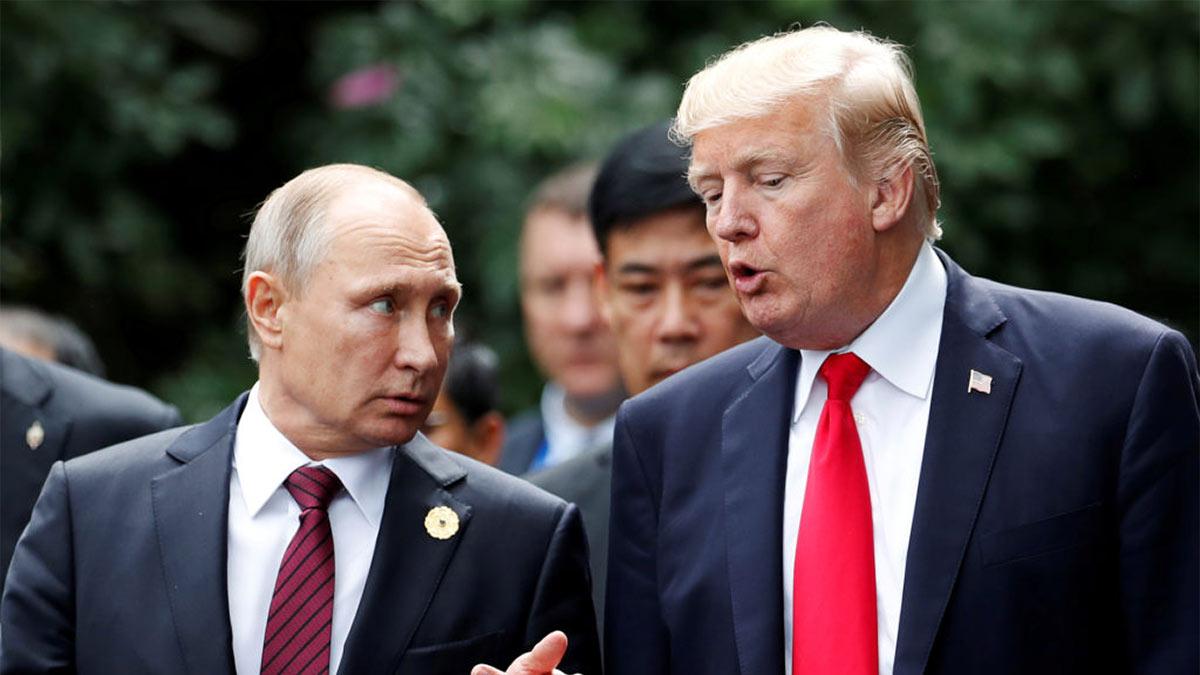


Russian President Vladimir Putin told reporters on Friday he agreed with US President Donald Trump's opinion that the security of Ukraine "must be ensured," but tied that assurance to working out what he described as Russia's "fundamental concerns" about security.
"I agree with President Trump that the security of Ukraine must be secured, and naturally, we are prepared to do this work," Putin said at a joint press conference in Anchorage, Alaska.
He was hopeful that an agreement negotiated with Trump—albeit vague to both parties—would "pave the way to peace in Ukraine."
Meanwhile, Putin claimed the war could only be ended if "all the main roots" of the war were addressed.
The case of Ukraine relates to the very threats to our security," he said. "To take into account all the legitimate interests of Russia and to restore a fair balance of security in Europe and in the world… of course, the security of Ukraine should be ensured too.
While Putin did not spell out what eliminating those “roots” might mean, he has previously tied the phrase to demands that Kyiv and its allies have consistently rejected.
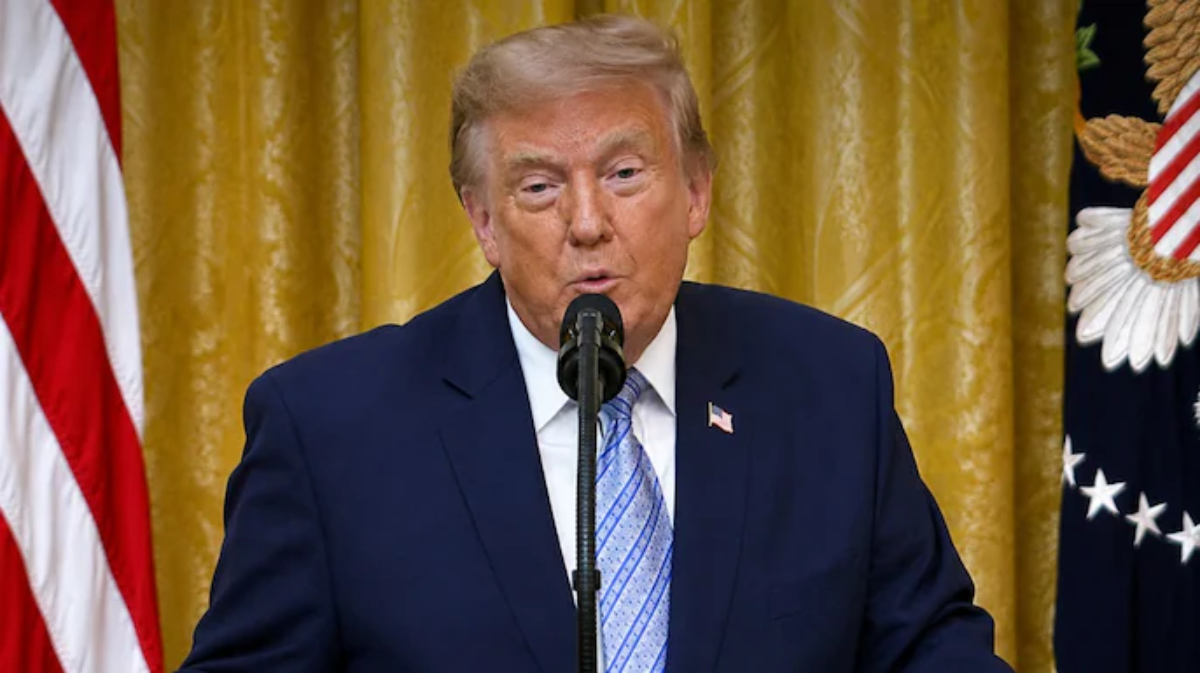
Trump, speaking afterward, said he intended to brief NATO leaders, Ukrainian President Volodymyr Zelensky, and “other appropriate officials” about the talks. “I’m going to start making a few phone calls and tell them what happened,” he said.
The summit itself lasted about three hours—far less than the six to seven hours Russian aides had indicated earlier. Both leaders said "progress," but made no announcement on a ceasefire, gave no firm details, or fielded questions from the media.
Putin subsequently thanked Trump for creating what he referred to as an "atmosphere of trust" when they met in Alaska. I would like to express my gratitude to Trump for collaborating and keeping a positive and confidence-generating environment in the negotiations. The main thing is that both sides were resolute in finding the results," he stated, as reported by Russian state media TASS.
The Russian leader further described the negotiations as "positive and constructive." Our discussions were conducted in a respectful and constructive environment. They were very specific and helpful," Putin said to reporters.
He expressed the hope that agreements made in Anchorage would be a "point of reference" for resolving the crisis in Ukraine and mending broken US-Russia relations. Admitting that relations had weakened in recent years, Putin added that he "welcomed" Trump "as a neighbor" and had built "very good direct contacts" with him.
On Ukraine, he reiterated Russia's age-old position, declaring the nation's people are still "brotherly."
"All of the underlying reasons for the crisis need to be removed. The security of Ukraine should, naturally, be guaranteed, and we are prepared to do that," Putin emphasized.
Russia's ambassador to the US, Alexander Darchiev, also characterized the talks as generally positive, state media reported.
The combined appearance was significant, as it was the first in seven years that Putin appeared next to a US president to answer media questions. The previous such instance had been in Helsinki in 2018, during the embattled press conference when Trump seemed to side with Russia against US intelligence officials on election interference.
By contrast, when Joe Biden met Putin in Geneva in 2021, he avoided a shared press event, preferring to speak to reporters alone to limit Moscow’s ability to dominate the narrative.
Behind closed doors in Anchorage, Trump and Putin held a three-on-three meeting with top advisers. Prior to the summit, Trump had said on Fox News that he would not be content without securing a ceasefire.
"I wouldn't be happy if I don't get it," he told reporters during his flight to Alaska. "We'll see. I won't be happy if we go home without some sort of a ceasefire."
Putin did not indicate where he stood. Smiling and waving with an expression as if he couldn't hear, he left later in the day when asked if he would "stop killing civilians."
Trump formally welcomed Putin at Joint Base Elmendorf-Richardson, where the two leaders clasped hands on a red carpet as F-22 jets and B-2 stealth bombers flew overhead. The planes—produced in the late Cold War period—acted as a symbolic reminder of U.S. military power as the two leaders stood ready to condemn Russia's war in Ukraine.
Read also| Trump Hints at New Tariffs on Chips and Steel, Semiconductor Duties Could Soar to 300%
Read also| Trump Returns to Washington Following Unresolved Talks with Putin