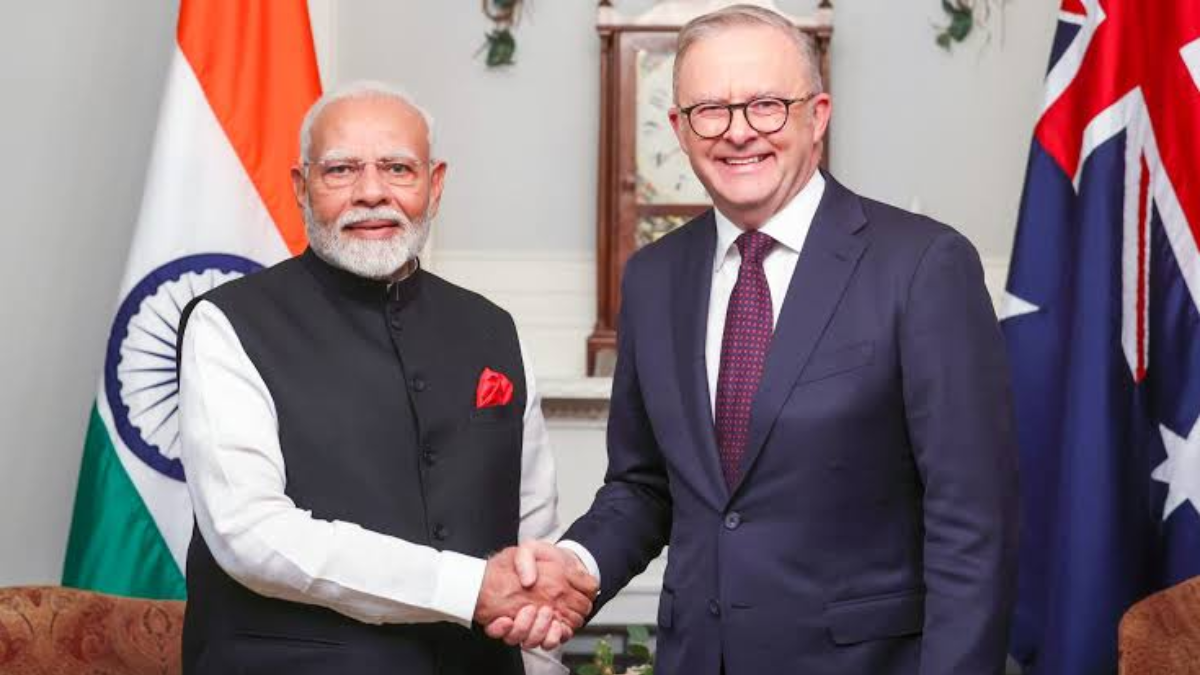


China’s recent submarine-launched ballistic missile test in the Pacific Ocean featured prominently in discussions between Prime Minister Narendra Modi and Australian Prime Minister Anthony Albanese during their bilateral meeting in Melbourne on Thursday, with both leaders voicing concern over Beijing’s expanding strategic activities.
The matter was brought up by Albanese during the high-level talks. In response, Modi reiterated India’s position that the Indo-Pacific must remain a region defined by peace, security and stability.
Speaking after the closed-door meeting, Foreign Secretary Vikram Misri confirmed that the missile launch had been discussed. “Regarding the question about the ICBM (intercontinental ballistic missile) launch, yes, this was raised by the Australian premier, and there was a certain amount of concern expressed about this development."
Misri said the two countries shared common objectives on the issue. “Australia and India have shared interests and shared objectives in this regard and will continue to not only exchange perspectives on this but also intensify cooperation in various areas to ensure that peace, security, and stability in the Indo-Pacific area continue to be met," he added.
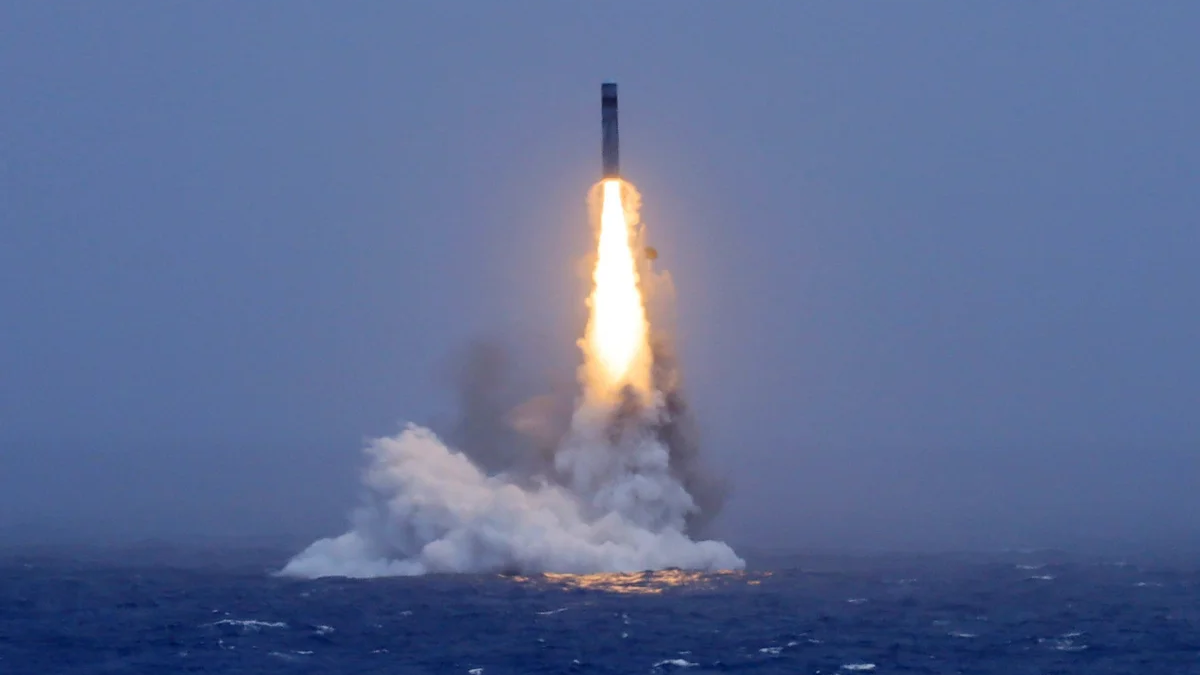
On Monday, a Chinese nuclear-powered submarine launched a strategic long-range ballistic missile carrying an inert dummy warhead into international waters in the Pacific Ocean.
Although Beijing has disclosed only limited technical information, Taiwan’s defence authorities identified the missile as a JL-2 submarine-launched ballistic missile (SLBM). Observers noted that the weapon was launched after the submarine surfaced rather than while submerged.
The missile was fired from a strategic nuclear submarine and followed a simulated flight path of about 7,300 kilometres (4,350 miles), with the dummy payload reportedly landing in the South Pacific near the Solomon Islands.
The launch represents a notable step in China’s evolving maritime defence posture. It comes two years after Beijing carried out its first long-range land-based intercontinental ballistic missile (ICBM) launch over international Pacific waters in more than four decades, when a missile was fired near French Polynesia. A Pentagon report submitted to the US Congress states that China currently operates six nuclear-powered ballistic missile submarines, each designed to carry as many as 12 strategic missiles.
The unannounced launch and its long-range capability prompted swift criticism from Australia, New Zealand, Japan and the United States.
According to defence analysts, the test underscores China’s growing ability to strike the continental United States from well-protected naval bastions located within its own waters. The development comes even as US President Donald Trump pursues a parallel diplomatic effort aimed at improving relations.
Australian Foreign Minister Penny Wong condemned the missile test, calling the unannounced launch highly “destabilising to the region." Japan, which said it received only a few hours' advance notice before the launch, also expressed “serious concerns" about China’s increasingly opaque and expanding military activities in the region.
Analysts say the missile’s trajectory reflects a shift toward a stronger sea-based nuclear deterrent. Lyle Morris, a senior fellow at the Asia Society Policy Institute, observed: “A test of this length is a major development and would indicate that China is moving toward a significantly more survivable and longer-range sea-based nuclear deterrent capability."
Emma Chanlett-Avery, director for political-security affairs at the Asia Society Policy Institute, said the launch was intended as a demonstration of military power. “It is a signal to the United States, as well as to other regional powers, of China’s military might," Chanlett-Avery stated. “I think it targets the whole idea of US-led alliances in the region, consolidating their power at a time when our alliances are under some degree of strain."
Also Read | Watch I US bombs India-backed Chabahar port in Iran
Also Read | US Official Says Iran Truce Has 'At Least Temporarily Ceased' Amid Fresh Strikes: Report