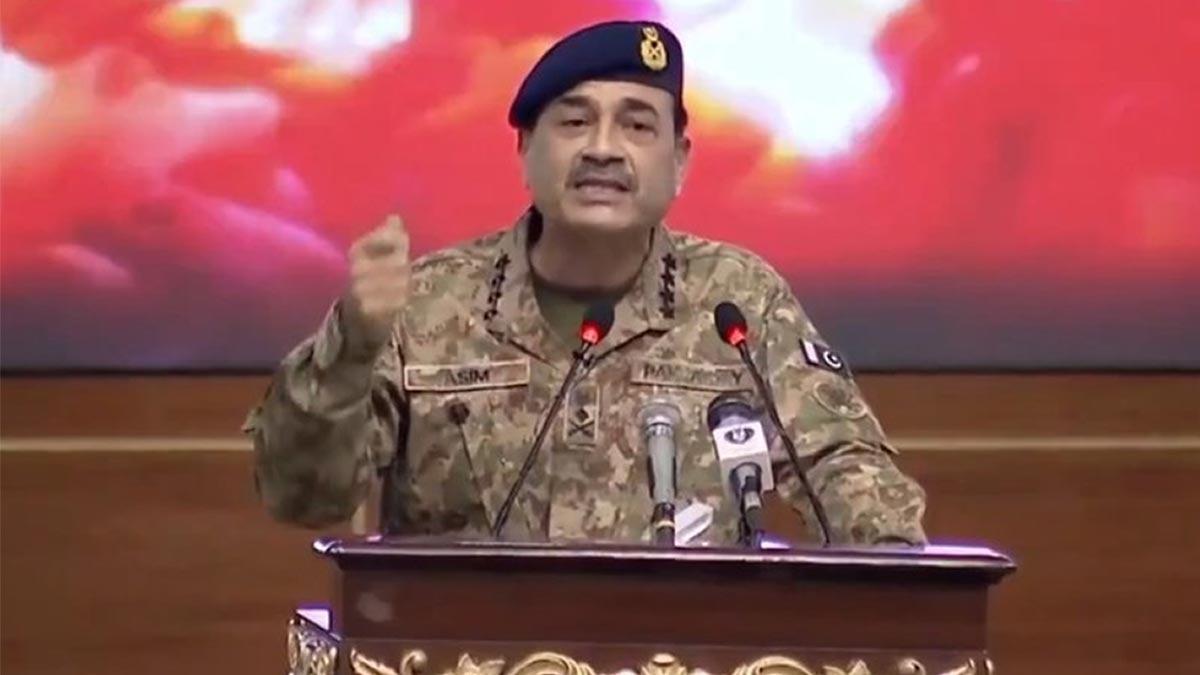


The Pakistani military has used a "false victory narrative" after the May skirmish with India to quash opposition, undermine civilian institutions, and divert focus from the country's institutional collapse, based on a report quoted on Wednesday.
The report added that in the face of mounting crises—security threats, economic turmoil, human rights abuses, and environmental devastation—the Pakistani Army has been basking in a fabricated sense of victory.
“Pakistan’s attempt to project strength after the May 2025 conflict with India is dangerously misleading. The military has significantly consolidated power, basking in adulation and parades, but the underlying crises of security, economy, governance, human rights, and environment have only worsened. Far from strengthening the nation, the war has emboldened the army to tighten its grip on power while ordinary Pakistanis bear the brunt of inflation, violence, repression, and natural calamities,” a report in leading Sri Lankan newspaper ‘Daily Mirror’ detailed.
The report also noted that Pakistan's economy has continued to worsen since May, with the military conflict deepening an already weak situation, jolting investors, and raising defense outlays.
Earlier this year, Pakistan only narrowly staved off default with emergency loans from China, Saudi Arabia, and the IMF. While Islamabad recently indicated that its foreign reserves now stand at around $20 billion, the report underscored that these are based on borrowed money and short-term rollovers more than sound economic growth.
“On the political side, Pakistan has slid deeper into authoritarianism. Since May, the army has capitalized on its popular standing to further marginalize democratic institutions. Opposition politicians, journalists, and activists have been relentlessly targeted. In July, authorities ordered YouTube to block more than two dozen opposition and journalist-run channels, branding them ‘anti-state’,” the report highlighted.
“The security situation has grown particularly dire. Militant groups have intensified attacks in Khyber Pakhtunkhwa and Balochistan, inflicting heavy casualties on Pakistani security forces. The Tehreek-e-Taliban Pakistan (TTP) and Islamic State offshoots have increased their presence in the border areas of Khyber Pakhtunkhwa province despite the military’s claims of winning the war on terrorism,” it added.
The report again highlighted that human rights groups have cautioned against an increase in abuse by Pakistani security forces, including enforced disappearances, torture, and extrajudicial killings, which threaten to embolden alienation and enhance separatist narratives instead of undermining them.
In August, US Senator Chris Van Hollen denounced increasing human rights abuses by Pakistan, warning that arbitrary detentions and enforced disappearances would strain US-Pakistan relations. The European Union's Ambassador to Islamabad also spoke about raising alarm regarding the "clear degradation" of rights, warning that trade perks could be suspended unless matters improved.
The criticisms underscore how Pakistan's drift into authoritarianism, sped up since the war, is harming both its local political culture and its global standing," the report concluded.
Read also| Democratic Lawmakers Criticize Trump’s India Policy Amid Resumption of Trade Talks
Read also| "Loot, Attack In Movement's Name": Nepal Army Issues Warning to Crowd Amid Curfew