


India has given Pakistan details of heavy weather and possible heavy flooding as some of the cross-border rivers are in spate, said an official informed about the development, who spoke on condition of anonymity on Monday. The information was made public in the interest of "public safety.
The source noted that the bilateral Indus Waters Treaty, which India had suspended following the deadly Pahalgam terror attack on April 22, remains in “abeyance,” and no hydrological data is being exchanged through any mechanism of the treaty, including the Indus Commission.
Reports of possible flooding and ongoing rains in India bordering provinces were relayed by the Indian mission in Islamabad on Sunday, "strictly on humanitarian grounds," the source said. The Jal Shakti (water) ministry could not be reached immediately for comment.
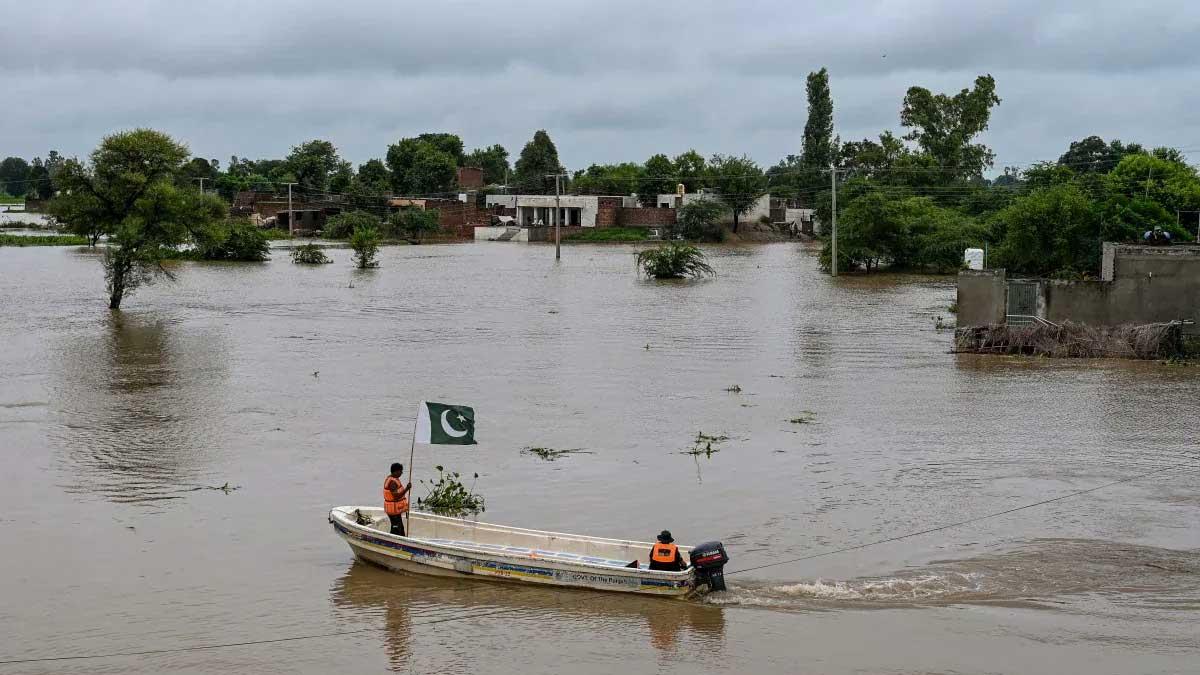
Monsoon-induced flooding has already killed about 800 people in Pakistan since June, reported a BBC report on Monday. The UN Office for the Coordination of Humanitarian Affairs had issued a warning on August 21 that severe weather conditions will "continue into early September," raising the chances of more disasters hitting Pakistan.
India has also suffered enormous losses from landslides and heavy rain, especially in Jammu and Kashmir and Uttarakhand. Flash floods in Jammu's Kishtawar on August 15 killed at least 65 people, left over 100 injured, and 32 missing.
Dam and hydropower authorities in Jammu and Kashmir, such as the Baglihar and Salal schemes on the Chenab River, have opened gates to let out surplus water. India Meteorological Department persists in issuing an "orange alert," indicating dangerous rainfall across all districts of J&K.
Another official of the Union Territory's flood control department said that India "warned Islamabad" about possible flooding in Pakistan as a result of continuous heavy rains in Jammu. "Due to heavy rain, we have opened the spill gates. Under heavy rain, when the water flow rates exceed 3000 cumec (cubic metre per second), the gates need to be opened," a second official of the 900 MW Baglihar project said.
Yet another official of the Salal hydroelectric project verified that gates there too had been opened because of the torrential rains in the area.
"All the principal rivers, like the Chenab, Tawi, Basanter, Ujh, Devika, Sahar, and Tarnah in the Jammu region, which have their courses into Pakistan, are overflowing," he said. The alerts that were passed on to Pakistan also included warnings of potential flooding in the Tawi, which is already running at a perilous level, a third official said. Mazhar Hussain, who is an official in charge of disaster management in Punjab, Pakistan, said that India's updates also included warnings of an impending rise in the Tawi.
Read also| US Issues Notice for Additional 25% Tariffs on India, PM Modi vows resilence