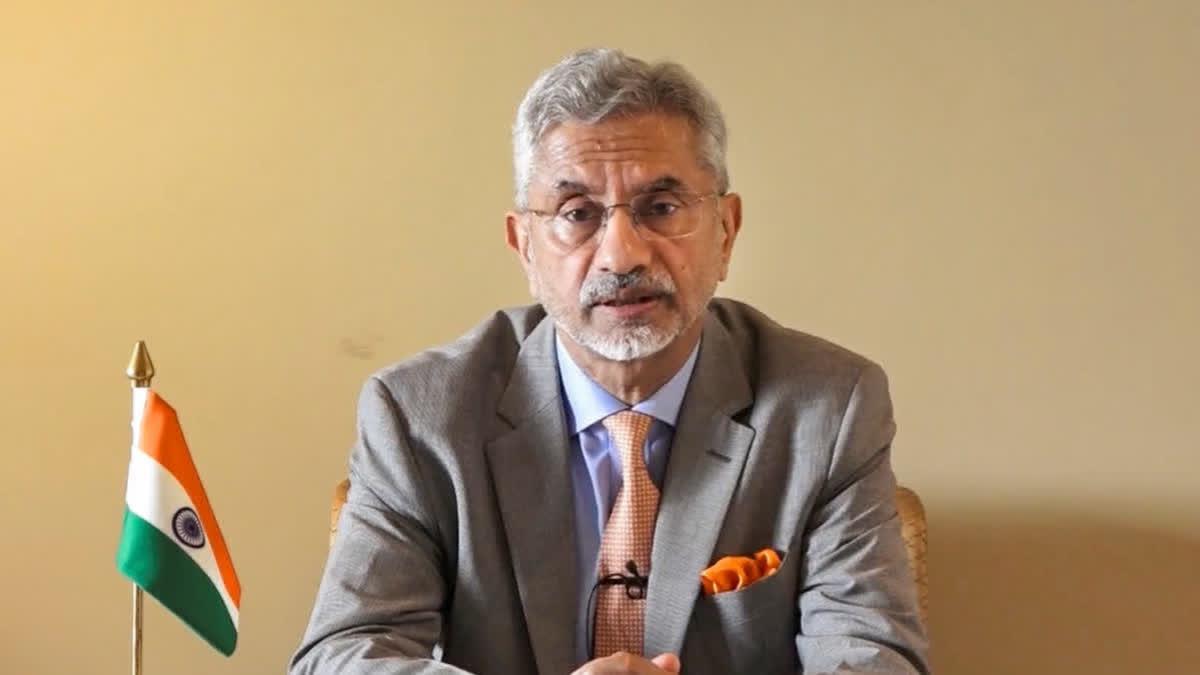


External Affairs Minister S. Jaishankar said on Monday that India and China must adopt a “candid and constructive” approach rooted thoroughly in mutual respect and mutual sensitivity to take their relationship forward following a difficult time together. He restated New Delhi's proposition for continuity in de-escalation along the Line of Actual Control (LAC).
Jaishankar discussed economic and trade issues, sharing data on rivers, border trade, connectivity, and other exchanges with Wang Yi, the visiting Chinese Foreign Minister with whom he exchanged dialogue with on the range mentioned above. He also raised some “particular concerns” that were raised in July arrive at his previous meeting with Wang Yi in Beijing.
Wang Yi is on a two-day visit to India that includes a meeting with National Security Adviser Ajit Doval on Tuesday under the Special Representatives mechanism, and he is the first Chinese minister to visit India after both sides worked out an understanding in October to end the military standoff on the LAC that had begun in April and May of 2020. The military standoff between the two countries and the violent clash in Galwan Valley in June that year had taken their bilateral relationship to its lowest point in sixty years.
“Having seen a difficult period in our relationship… our two nations now seek to move ahead. This requires a candid and constructive approach on both sides. In that endeavour, we must be guided by the three mutuals – mutual respect, mutual sensitivity, and mutual interest,” Jaishankar said at the start of his meeting with Wang.
Noting that Wang will discuss border issues with Doval on Tuesday, Jaishankar said: “This is very important because the basis for any positive momentum in our ties is the ability to jointly maintain peace and tranquillity in the border areas. It is also essential that the de-escalation process move forward.”
Doval and Wang are the appointed Special Representatives for the issue of the border, the highest-level mechanism to deal with the long-standing India-China border dispute. Even as the understanding to resolve the LAC standoff was reached, Prime Minister Narendra Modi and President Xi Jinping met in Kazan, Russia, deciding to resume several mechanisms for normalizing bilateral relations and settling the border dispute.
Jaishankar underlined that differences between India and China "should not turn into disputes" and rivalry may not turn into conflict. In his talks with Wang, he touched upon economic and trade issues, river data sharing, border trade, connectivity, bilateral relations, pilgrimages, and people-to-people interactions, and also pursued "specific concerns" he had brought up while visiting China in July.
During the July gathering, Jaishankar had emphasized not taking "restrictive trade measures and roadblocks" against economic cooperation, citing China's restrictions on the export of rare earth minerals—vital for smartphones, electric cars, and other technologies in which Beijing enjoys a virtual monopoly—as well as fertilizers. These restrictions have impacted Indian electric vehicle makers.
Jaishankar also emphasized India's commitment to addressing all types of terrorism and stated that talks would result in a "stable, cooperative and forward-looking relationship" which is in the interests of both countries and addresses the concerns of both. He added that India and China share a vision for an equitable, balanced, and multipolar world order, including a multipolar Asia, and emphasized the need for "reformed multilateralism" and economic stability worldwide.
Wang said that the "common confidence" between the two parties has decreased interference, widened cooperation, and enhanced the momentum of enhancing China-India relations. He stressed that the two nations could reciprocally support each other's success and inject "certainty and stability" to Asia and the world.
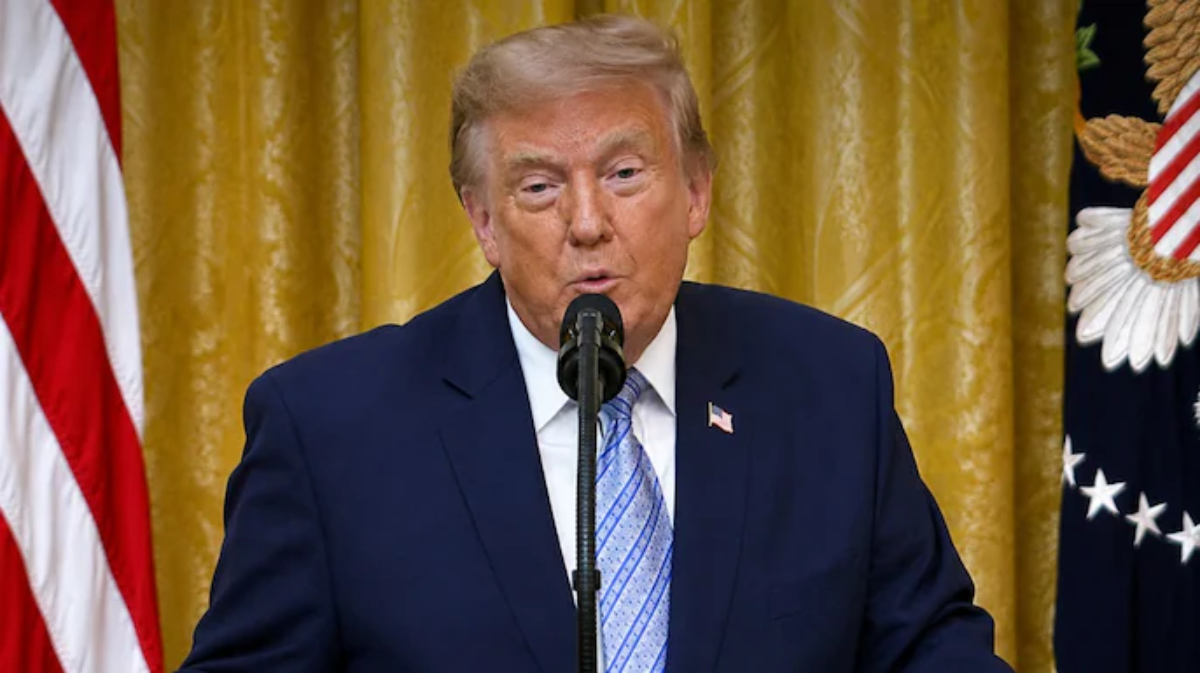
Referring to worldwide geopolitical and economic changes caused by policies of the Trump administration, Wang cautioned that "unilateralism is running rampant" and that "free trade and the international order are confronted with grave challenges." He further said that India and China, being the two biggest developing nations with a combined population of more than 2.8 billion, have a responsibility to spread "strength and dignity" for the developing world and help achieve a multipolar world. Exchanges and communication at every level, he added, have ensured peace along the border.
After the meeting, Jaishankar characterized the talks as fruitful, tweeting: "Confident that our discussions today would contribute to building a stable, cooperative and forward-looking relationship between India and China."
The enhanced bilateral ties have already resulted in the restart of the Kailash Mansarovar Yatra after a gap of five years. India has also reinitiated tourist visas for Chinese nationals for the first time after 2020, and there are negotiations for restarting direct flights and border trade.
Following the talks between the Special Representatives on Tuesday, Wang will then meet with Prime Minister Modi. The meeting is significant as Modi is all set to visit China for the first time after the LAC standoff to attend the Shanghai Cooperation Organisation (SCO) Summit in Tianjin on August 31 and September 1, and during which he is also likely to have a bilateral meeting with Xi Jinping.
Read also| Trump Aide Criticizes India’s Russian Oil Purchases, Urges Strategic Alignment with US
Read also| ‘A Very Good Step’: Trump Plans Putin-Zelenskyy Talks, Trilateral Summit to Follow