

At least 19 individuals, including a 12-year-old boy, were killed and over 300 others injured in ferocious clashes in Nepal's capital, Kathmandu, following Gen-Z protesters taking to the streets in outrage against corruption as well as the government blocking several social media platforms.
The violence intensified so much so that troops were deployed after protesters defied the curfew, and breached sealed areas close to Parliament.
Sources say Home Minister Ramesh Lekhak resigned from his position in an emergency cabinet meeting held at the PM's official residence on Monday evening. The government, which is under increasing pressure, is also contemplating the removal of the ban placed on social media applications, sources said.
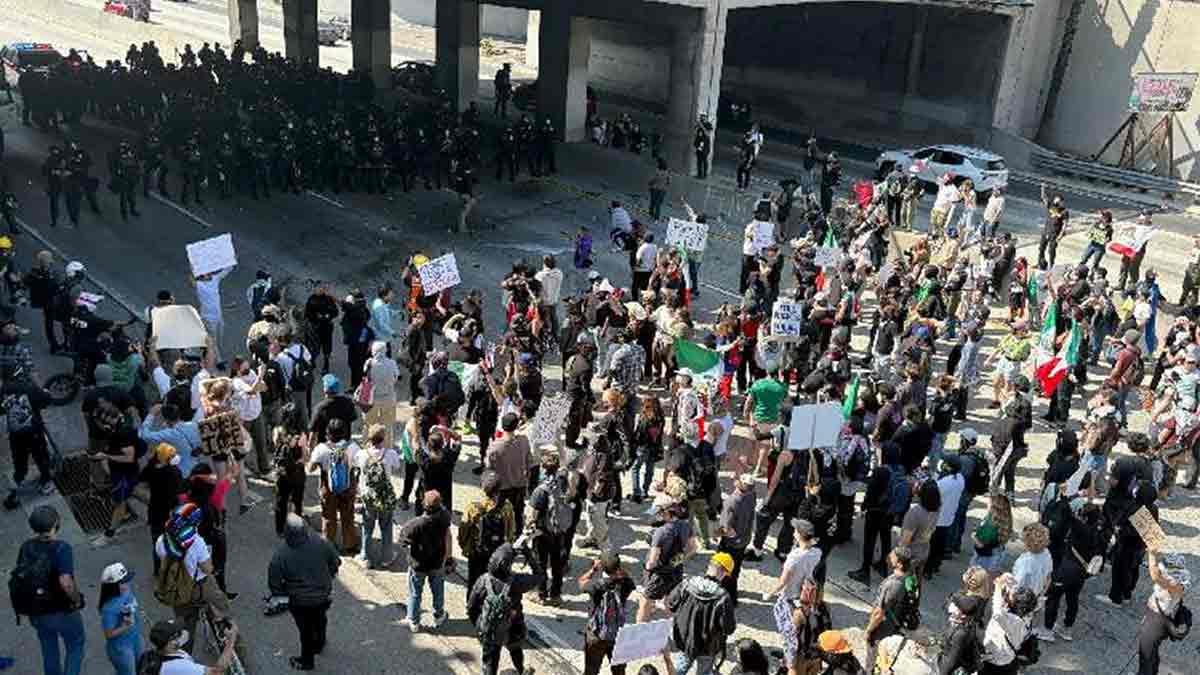
Police resorted to using water cannons, teargas, and rubber bullets to drive away protesters who threw water bottles and tree branches and chanted anti-government slogans. Protesters even entered the Parliament compound, further heightening the standoff, The Kathmandu Post reported.
The Kathmandu District Administration Office widened curfew orders that originally were confined to Baneshwar, giving them to several high-security zones, such as the homes of the President and Vice-President, Maharajgunj, all around Singha Durbar, the Prime Minister's home in Baluwatar, and surrounding areas.
Chief District Officer Chhabilal Rijal confirmed that the curfew would be in place from 12:30 PM to 10:00 PM (local time). The curfew prohibits any kind of public movement, protest, gathering, and encirclement actions in these areas.
Two people were reported injured after police fired rubber bullets. In Kathmandu, Kantipur Television journalist Shyam Shrestha sustained injuries while covering the protests in Baneshwar and is being treated at Civil Hospital. Another person was injured during violent demonstrations in Damak, Prime Minister KP Sharma Oli’s hometown.
The protest wave has also been extended outside Kathmandu. In Pokhara, curfew orders were imposed by local authorities after the Chief Minister's office was vandalized by protesters. Following the countrywide unrest, Prime Minister Oli has summoned an emergency cabinet meeting.
Since Friday, big social media platforms like Facebook, YouTube, and X have been blocked in Nepal, along with 26 other unregistered platforms, causing widespread outrage. Popular applications like Instagram and Snapchat, which millions of Nepalis use for business, communication, and entertainment, have also been hit.
The action provoked outrage from young citizens who claim the government is attempting to stifle free speech while turning a blind eye to entrenched corruption. Thousands of Gen-Z protesters occupied Kathmandu's streets on Monday calling for the ban to be lifted and accountability to be guaranteed.
"We were provoked by the social media ban, but that's not the only reason we're here today," said 24-year-old student Yujan Rajbhandari to AFP.
"We are demonstrating against corruption that has been institutionalized in Nepal."
Another student, Ikshama Tumrok, aged 20, expressed her outrage at what she called the government's "authoritarian attitude."
"We wish to see change. Others have suffered this, but it must stop with our generation," she said to AFP.
On the still-accessible TikTok, videos that showcase the difference between the hardships of everyday Nepalis and politicians' children living in luxury have become viral, further angering the public.
"There have been protests overseas against corruption, and they (the government) are scared that could happen here too," said protester Bhumika Bharati.
The government had last month given seven days to affected firms to register locally, appoint a grievance officer, and establish a compliance mechanism under a September order of the Supreme Court.
In a statement released Sunday, officials said the administration respected freedom of thought and expression and was committed to "creating an environment for their protection and unfettered use.
Nepal has already blocked digital platforms. In July, the government blocked Telegram on grounds of online fraud and money laundering. TikTok was banned for nine months and later restored in August last year when the company agreed to abide by local laws.
Read also| 'It's blood money': Navarro Doubles Down on India Criticism, Lambasts X’s Fact-Check