

US President Donald Trump has released a photograph and video showing a fresh American strike on an airbase in Iranshahr, a city in southeastern Iran, as US forces carried out attacks against Iran for the second consecutive day. The airbase had been partially used by the Islamic Revolutionary Guard Corps (IRGC). At the same time, Trump escalated his rhetoric, declaring that the US military would respond to any Iranian action against shipping in the Strait of Hormuz with force "20 times harder" than Tehran's attacks.
According to Iranian state media, explosions were reported at several locations along the country's southern coastline. Among the affected areas were Bushehr, which houses Iran's nuclear power plant complex, as well as the port cities of Chabahar, Konarak, Bandar Abbas and Sirik. Reports also confirmed that the Iranshahr airbase was struck by the US military.
The latest American offensive prompted Iranian retaliatory attacks aimed at Bahrain, Kuwait and Qatar, intensifying the conflict and putting an interim agreement intended to help end the war in the Persian Gulf under renewed strain. The Associated Press reported that Thursday's Iranian strikes appeared larger in scale than previous attacks. Follow Live Updates
There were no immediate reports of damage in Bahrain, Kuwait or Qatar. Kuwait's military stated that it was actively intercepting incoming drones and missiles.
Trump also maintained that Tehran was eager to reach an agreement with Washington despite his declaration a day earlier that the interim memorandum of understanding between the two countries was "over."
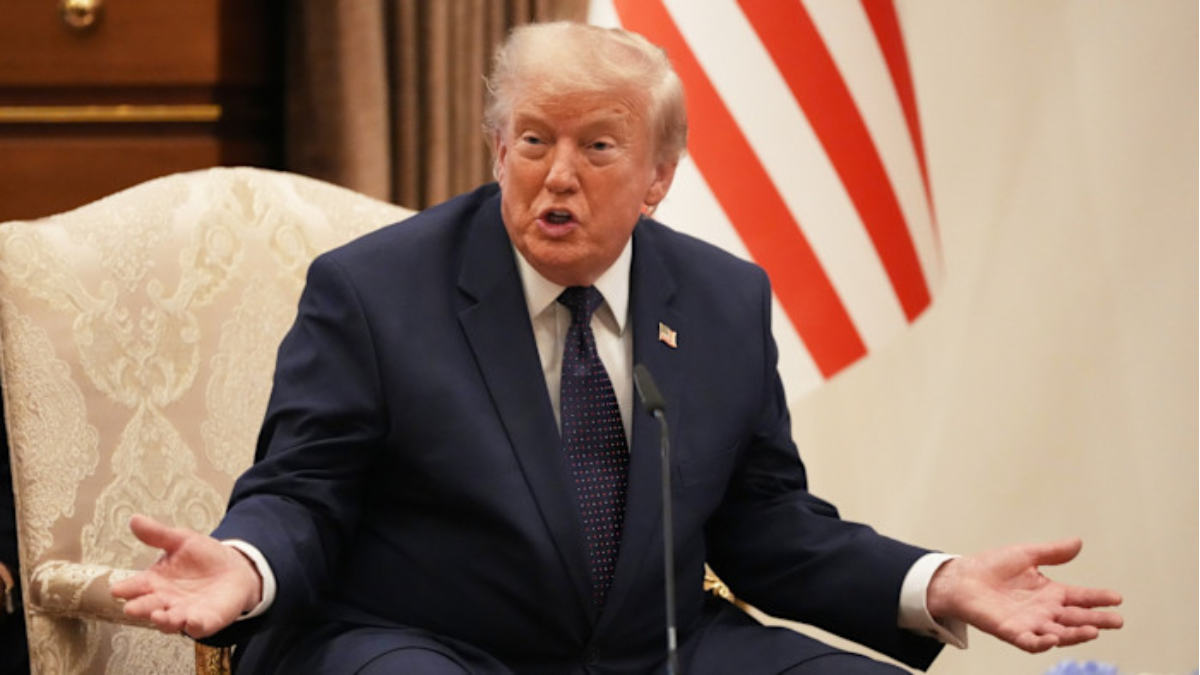
"Iran called a while ago. They want to make a deal so badly. I just don't know if they are worthy. I don't know if they are going to honour the deal. That's the problem," he told reporters onboard the Air Force One.
The US president offered no additional information about the reported conversation, including the identity of the Iranian representative involved, but questioned whether any agreement would hold, describing the Iranians as "sort of crazy."
He also repeated earlier warnings that the United States could target Iran's civilian infrastructure, including electric plants and desalinisation plants, while threatening to seize the oil-production hub of Kharg Island.
"Anything that happens is going to happen very fast," Trump said, though he also suggested the US military might "just finish the job."
Following Tuesday's attacks on three tankers, the United States launched military strikes on Iran. Trump subsequently declared that "for him", the interim deal between Washington and Tehran was "over". Even so, he indicated that negotiations would still be permitted to continue.
Iran, meanwhile, has maintained that the interim ceasefire agreement gives it the authority to regulate maritime traffic through the Strait of Hormuz. Parliament Speaker Mohammad Bagher Qalibaf, who is among the principal negotiators working toward a permanent settlement to the conflict, reaffirmed Tehran's position in a post on X after the exchange of strikes between Iran and the United States.
"The United States still has not learned that bullying and breaking its promises no longer come without consequences," Mohammad Bagher Ghalibaf said on X. "Let me be clear: If you strike, you will be struck."
Iran's Deputy Foreign Minister Kazem Gharibabadi also criticised Trump's latest warnings, arguing that they reflected the failure of long-standing US policies rather than strength.
"Trump's statements today, from insulting the Iranian nation to threatening further attacks, are not a sign of strength, but rather an admission of the failure of a policy built on brute force, sanctions, and threats for years, which could not bring the Iranian nation to its knees. With the criminal and murderous Trump, one must speak in his own language; apparently, he understands the language of force better," he wrote in a post on X.
Foreign Minister Seyed Abbas Araghchi likewise condemned Trump's remarks, saying Iran's national character could not be diminished by hostile language.
"Iranians are known for their civility, culture, and strong moral values. We do not answer vulgarity with vulgarity, but with action: fearlessly and with great valour," he wrote on X.
Mohsen Rezaei, a military adviser to Iran's supreme leader, also warned of consequences, saying, "The aggressor enemy and its accomplices will be severely punished."
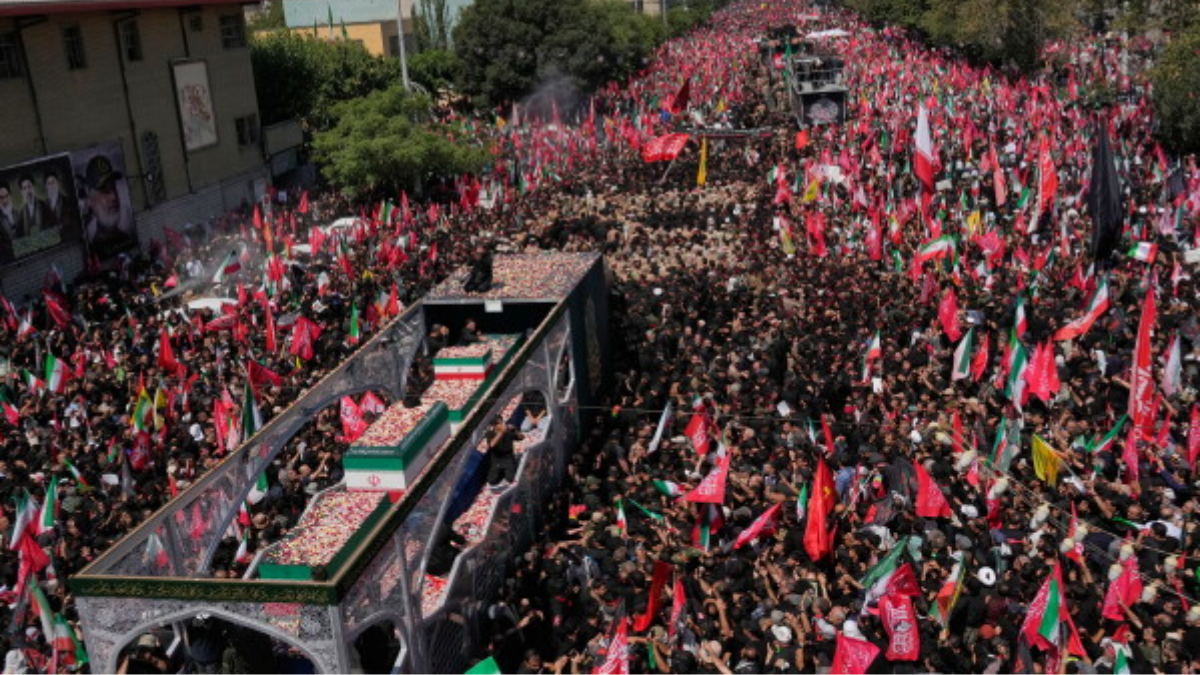
The renewed military action comes shortly before Thursday's burial of Ali Khamenei, Iran's former supreme leader, who was killed at the start of the war on February 28.
Since hostilities began, Tehran has insisted that it will control access through the Strait of Hormuz, announcing plans to charge transit fees and warning that vessels departing from authorised routes could be targeted. Iranian forces have struck at least three ships in recent days, leading to extensive US attacks on Iranian positions on Tuesday and subsequent Iranian retaliation against Gulf nations.
"We're gonna hit 'em hard tonight," Trump said at a NATO summit in Ankara. "They violate the agreement every day."
He later added, however, that "anything that happens is going to be over very quickly."
Oil prices climbed eight per cent following Trump's earlier remarks that the ceasefire was "over."
Also Read | Khamenei will be remembered as second Imam Hussain in 100 years, says Iran