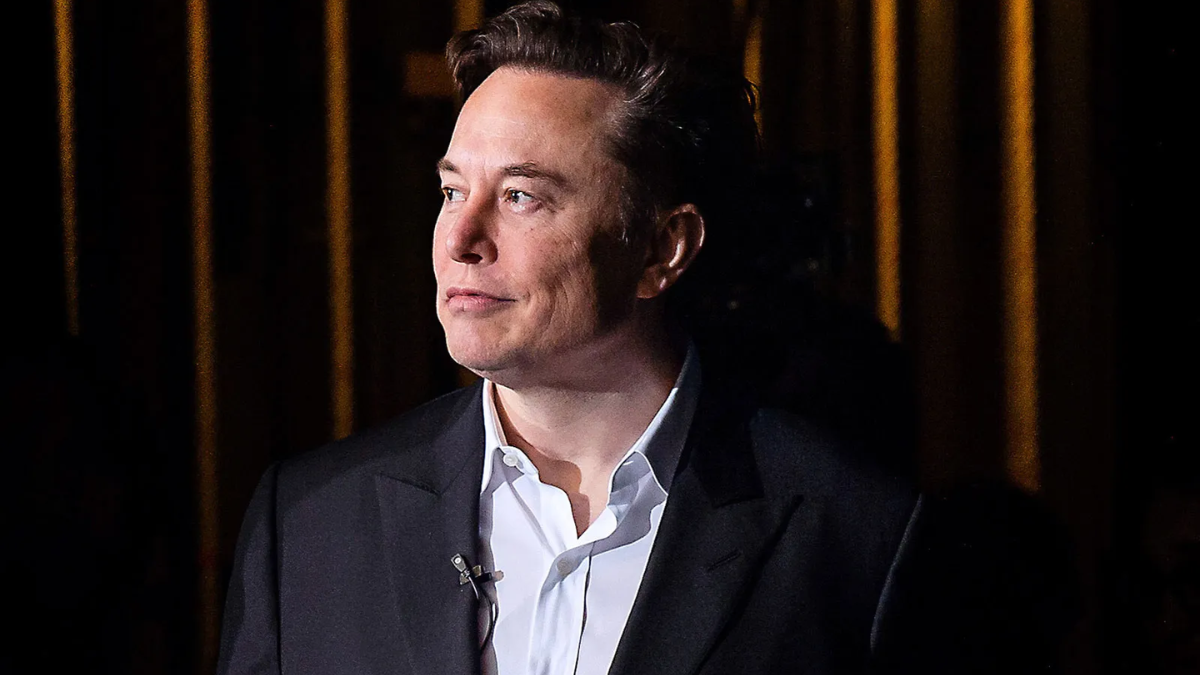


Elon Musk's brief stint as the world's first trillionaire has come to an end after a sharp pullback in SpaceX shares wiped hundreds of billions of dollars off the company's market value, pushing his personal fortune back below the 13-digit threshold.
When SpaceX debuted on Nasdaq on June 12, investor enthusiasm sent the stock soaring. The shares were priced at $135, opened at $150 and continued to rally in the sessions that followed. At its peak, the company commanded a market capitalisation of nearly $2.8 trillion, briefly surpassing Amazon, while Musk's wealth crossed $1.4 trillion to set a new financial milestone. The frenzy also reached India, where retail investors purchased exposure to the stock through tokenisation.
The rally, however, proved short-lived.
By early July, SpaceX shares had retreated by more than 30 per cent from their high, erasing hundreds of billions of dollars in value. As the stock declined, Musk's net worth also slipped, hovering between $992 billion and $997 billion, depending on the wealth tracker. He remains the world's richest person despite falling below the trillion-dollar mark.
The decline has not been driven by any meaningful deterioration in SpaceX's business, analysts say.
The company continues to expand its Starlink satellite internet service, adding millions of subscribers, while also accelerating its artificial intelligence ambitions through the announcement of a $60-billion all-stock acquisition of AI coding startup Cursor. Analysts continue to project strong long-term growth across launch services, satellite broadband and AI infrastructure.
“The correction isn't about SpaceX suddenly becoming a weaker company,” says Viram Shah, Founder and CEO of Vested Finance.
According to Shah, the sell-off reflects valuations that had raced ahead of business fundamentals.
“When companies list at extremely rich valuations, even strong businesses can see sharp corrections. Investors often confuse a great company with a great stock. They're not always the same thing.”
One of the biggest drivers of the volatility has been the structure of the IPO itself.
SpaceX completed the largest public offering on record, raising roughly $75 billion and entering the market with a valuation close to $1.8 trillion. Demand from investors was exceptionally strong, with the issue reportedly being oversubscribed several times.
Even so, only a small proportion of the company's total shares were available for public trading.
That limited free float meant relatively modest trading volumes were enough to produce sharp swings in the stock price.
“It's important for investors to understand market structure,” Shah explains.
“When the freely traded share count is limited, volatility naturally becomes amplified. It doesn't necessarily reflect changes in business quality.”
Another factor influencing investor sentiment was SpaceX's announcement, just four days after listing, that it would acquire Cursor in a $60-billion all-stock deal.
While the acquisition strengthens the company's long-term AI strategy, it also prompted concerns about shareholder dilution and whether management was capitalising on the elevated share price.
Although many analysts viewed the transaction as strategically sound, they also noted that it increased pressure on an already expensive valuation.
Shah believes investors should distinguish between long-term business strategy and short-term market reactions.
“Large strategic acquisitions often make sense over a five- or ten-year horizon. But public markets tend to price immediate uncertainty first.”
Market participants had also assigned SpaceX a valuation that extended well beyond the traditional aerospace sector.
The company's share price reflected expectations of future leadership in satellite broadband, reusable rockets, artificial intelligence infrastructure and next-generation computing.
Such optimism, analysts say, leaves little room for setbacks.
“When valuations become stretched, even minor concerns can trigger outsized corrections,” Shah says.
“Markets eventually ask whether future growth can justify today's price. That's a healthy process.”
The fluctuations have had an especially pronounced effect on Musk because the bulk of his fortune is tied to his SpaceX stake.
The same surge in the company's valuation that briefly made him the world's first trillionaire also caused his wealth to fall below that level within weeks as the stock corrected.
Analysts note that changes in paper wealth can occur far more rapidly than changes in a company's underlying operating performance.
Volatility could persist in the coming weeks.
Most insider-owned shares remain subject to lock-up restrictions, with phased releases expected after SpaceX reports its August earnings. Until then, the stock's limited public float could continue to magnify price movements.
Despite the recent decline, Wall Street remains broadly positive about the company's long-term outlook. Several analysts have maintained bullish price targets, arguing that the correction represents a reset in valuation rather than a weakening of SpaceX's business fundamentals.
For investors, Shah says the episode carries a broader lesson.
“Extraordinary companies can create extraordinary wealth over time. But investors shouldn't mistake short-term excitement for sustainable value creation. Discipline matters most when optimism is at its highest.”
Also Read | IT Ministry issues notices to Telegram and Signal over username feature after WhatsApp
Also Read | 5 Ways Technology Is Changing Short-Term Financial Decisions