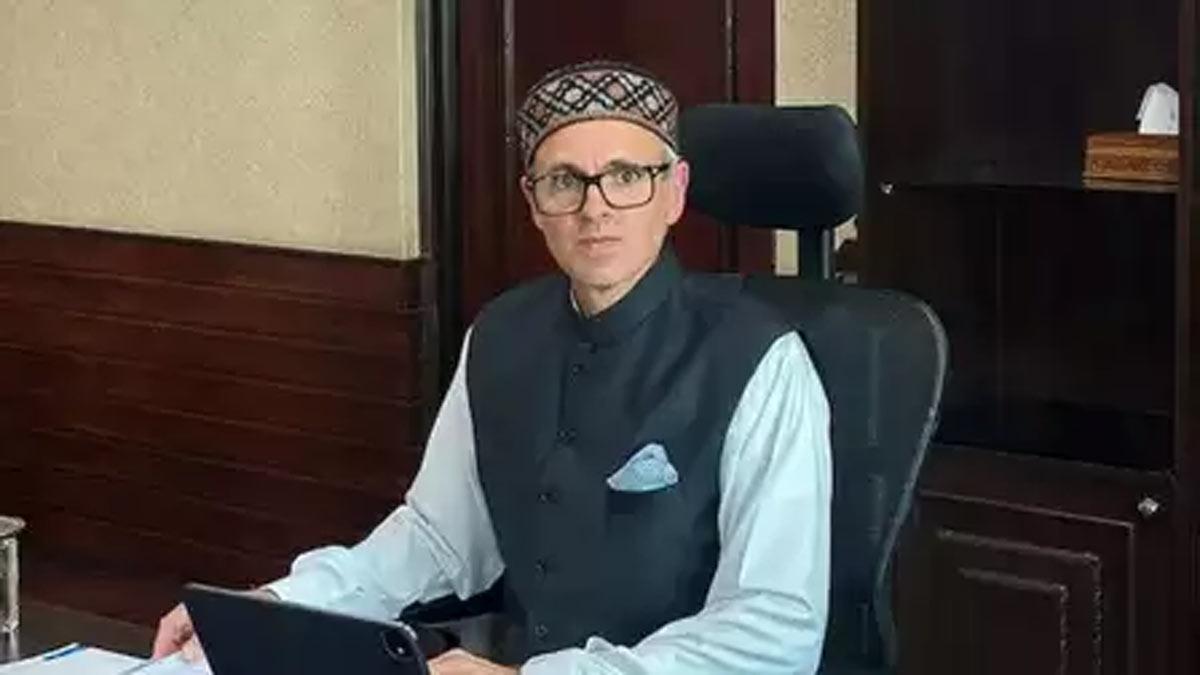


Jammu and Kashmir's previous Chief Minister Omar Abdullah said he was put under house arrest soon after he came back from Delhi late on Sunday evening.
Posting pictures on X (formerly Twitter), he depicted police officers and an armoured car parked outside his home, terming it a stark reflection of the state of undemocratic rule in the region.
Calling the event an exercise in "tyranny by the unelected," Abdullah penned, "To quote the late Arun Jaitley - Democracy in J&K is a tyranny of the unelected. To say it in terms which you will all appreciate today, the unelected nominees of New Delhi imprisoned the elected representatives of the people of J&K."
Though he did not refer to the administration of the Lieutenant Governor by name, Abdullah singled out the latter directly for undermining the elected leadership. "The unelected government imprisoned the elected government," he tweeted in a subsequent message on X.
The arrests were pre-emptive on the eve of Kashmir Martyrs' Day, traditionally marked on July 13 in memory of the killing of 22 protesters by Dogra regime forces in 1931. Key opposition and ruling party political leaders were put under house arrest or detained to disallow any public demonstrations at the Martyrs' Graveyard in Srinagar.
The administration of the Lieutenant Governor had refused permission to conduct the traditional commemorative march. Apart from that, various areas of Srinagar witnessed increased restrictions, with the government issuing a warning of stern action against any effort to march towards the memorial site.
Among those affected was senior political figure and former Chief Minister Farooq Abdullah, who also faced movement restrictions. Omar Abdullah condemned the government’s stance, equating the 1931 killings to the infamous Jallianwala Bagh massacre.
"13th July massacre is our Jallianwala Bagh. The citizens who sacrificed their lives did so against the British. Kashmir was administered under the British Paramountcy. What a shame that real heroes who struggled against British rule in all its manifestations are today painted as villains merely because they happened to be Muslims," Abdullah wrote on X.
We can be deprived today of visiting their graves, but we will not forget their sacrifice," he said.
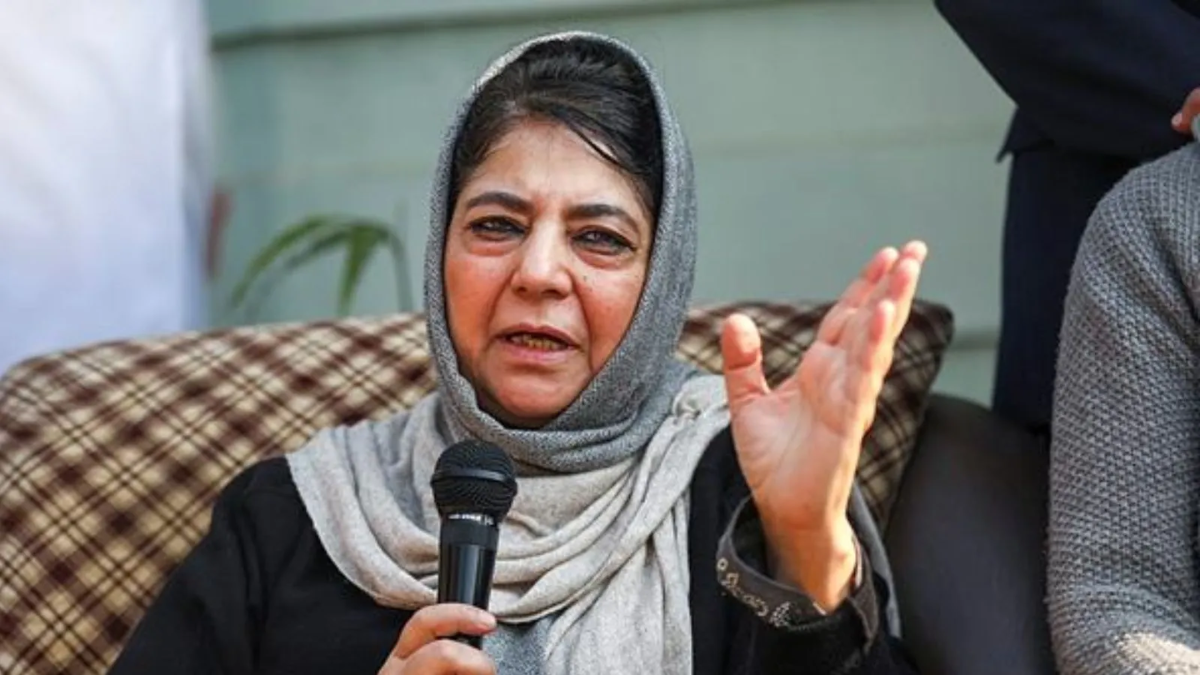
Former Chief Minister and PDP chief Mehbooba Mufti also expressed her discontent, posting on X: "The day you claim our heroes as your own just like Kashmiris have claimed yours, from Mahatma Gandhi to Bhagat Singh, that day, as Prime Minister Modi once remarked, the 'dil ki doori' (distance of hearts) will indeed become nil."
She went on to say, "When you besiege the Martyrs' Graveyard, keep people under house arrest so they can't go to Mazar-e-Shuhada, it says a lot. July 13th is our day to remember our martyrs. They will never cease being our heroes."
Sajad Lone, the president of Jammu and Kashmir People's Conference, also claimed to have been housebound. "I don't know why the union government is so eager to redefine that which is holy for the people of Kashmir," he said. "The sacrifices made on July 13 are holy to all of us. Blood written histories do not disappear."
The National Conference had earlier approached the Lieutenant Governor's office seeking the restoration of July 13 as a national holiday but the request was turned down. Permission to hold memorial functions was also refused by the district administration.
July 13 is a day that has historic importance for Jammu and Kashmir for many. It was on this day in 1931 that demonstrators marched outside Srinagar Central Jail to protest against the arrest of revolutionary Abdul Qadeer, who was accused of spreading rebellion against the Dogra ruler Maharaja Hari Singh.
The protesters were greeted with violent force by troops of the Maharaja, who opened fire and killed 22. The movement set off widespread unrest and compelled both British authorities and Dogra monarchy to recognize the intensifying resentment among Kashmir's Muslim population. It was one of the outcomes that saw the beginning of legislative elections, the start of representative rule in the princely state.
Changing Traditions Since 2019
Until a couple of years ago, police officers used to pay homage at the Martyrs' Graveyard on July 13 by way of gun salutes and floral offerings. Political functionaries cutting across party lines would assemble to pay respects to the martyrs and conduct remembrance ceremonies.
But with the scrapping of Article 370 in August 2019, which repealed Jammu and Kashmir's special status and bifurcated the state into two Union Territories, such festivities have been banned by the government.
In a symbolic change, the Union Territory administration deleted July 13 and December 5 (Sheikh Abdullah's birth anniversary) from the official holiday list from 2020 onwards. Instead, September 23—the birthday of Maharaja Hari Singh—was announced to be a public holiday.
Read also| "Putin Talks Nice, Then Bombs Everybody", Says Donald Trump To Send Patriots To Ukraine