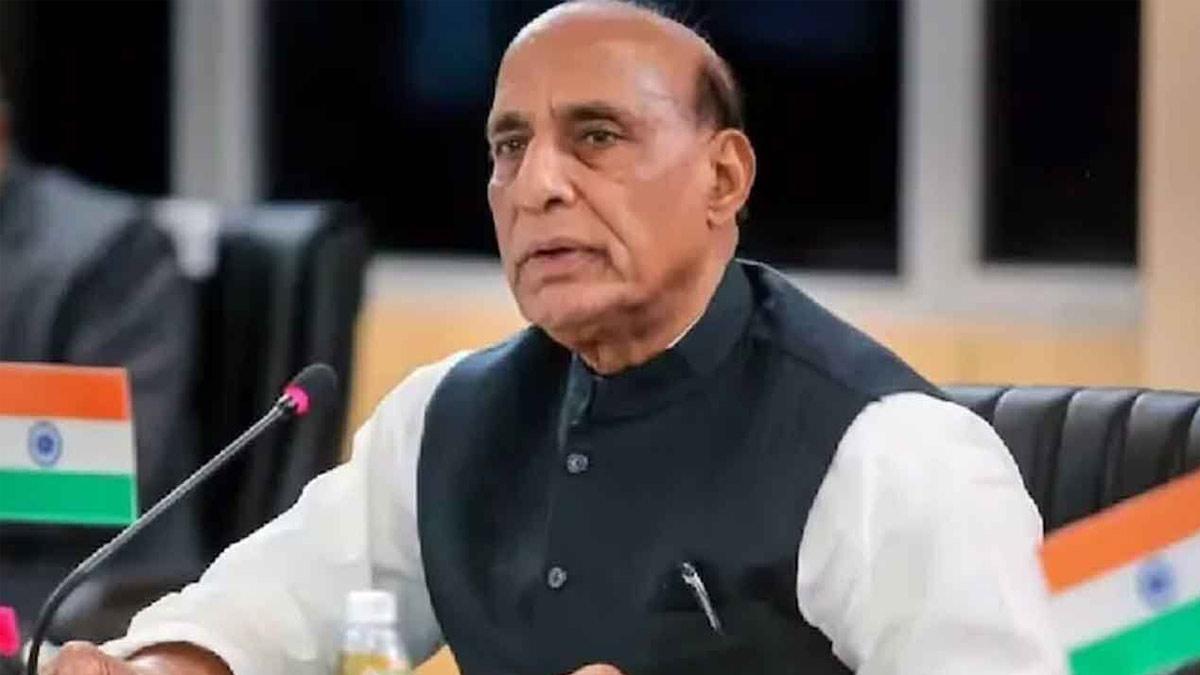


Defence Minister Rajnath Singh initiated a sharp attack on the Congress-led United Progressive Alliance (UPA) government on Monday, targeting its handling of the 26/11 Mumbai terror attacks and the controversial 2009 Sharm-el-Sheikh agreement.
In the Lok Sabha during the debate on Operation Sindoor, Singh blamed the earlier regime for diluting India's strategic stance and losing key diplomatic opportunities.
Referring to the joint statement issued on July 16, 2009, after a meeting between then Prime Minister Manmohan Singh and his Pakistani counterpart Syed Yusuf Raza Gilani during the NAM Summit in Egypt, Singh stated, "In 2009, the government of the time erred in the Sharm-el-Sheikh agreement."
He argued that the deal undermined India's strong stance on terror by seeming to unlink talks with Pakistan from its role in cross-border terror. "This watered down the conditions laid out that Pakistan will not be permitted to utilize its soil for terrorism," he told PTI, contrasting sharply with the BJP-led NDA government of Atal Bihari Vajpayee, which had asserted categorically that talks would not happen unless there was a promise from Pakistan that it will stop terrorism.
Singh further criticized the UPA government for what he called a failure to show strength in reaction to the 2008 Mumbai attacks, which claimed over 170 lives. He blamed the leadership for letting an opportunity to swing international opinion in India's favor fall by not taking firm action.
Referring to then External Affairs Minister and former President Pranab Mukherjee's memoir, The Coalition Years, Singh said: "Mukherjee had written that India had evidence the terrorists originated from Karachi port. The world did not buy Pakistan's justification of 'non-state actors'. He also said that though there were calls within the Cabinet for taking up military action, he turned it down."
Singh continued and told an anecdote from a senior Indian Foreign Service officer, remembering a post-attack meeting where Foreign Secretary Shivshankar Menon suggested a cruise missile attack on Lashkar-e-Taiba's Muridke headquarters in Pakistan. Singh described, "When they heard this suggestion, Mukherjee removed his glasses, wiped them, and just thanked everyone and closed the meeting."
The Defence Minister contended that restraint sent the wrong signal to Pakistan and encouraged its military-backed terror groups. He contrasted this with what had been done by the NDA government in response to the 2016 Uri attack and the 2019 Pulwama bombing, which were responded to with instant surgical and air strikes, respectively.
I think that if the government then had taken bold measures like in 2016 and 2019, it could have altered Pakistan's strategic thinking. Assertive and decisive action could have been an effective deterrent," Singh claimed.
He also criticized the absence of international diplomatic pressure on Pakistan after 26/11, highlighting that even the documents issued by BRICS summits after the attack made no mention of the attack. "This was a lost opportunity to isolate Pakistan internationally," Singh stated, pointing out what he feels was a major failure of Indian foreign policy during the UPA period.
Read also| TRF ban a diplomatic win; BRICS, China supported Sindoor, says S. Jaishankar in LS