

The Bharatiya Janata Party (BJP) continues to make unexpected moves across various states, from the selection of candidates for assembly polls to appointing Chief Ministers and allocating portfolios, consistently leaving many surprised.
In a recent instance, the BJP startled observers with its choice of Rajasthan's new Chief Minister and subsequent cabinet expansion. Notably, the allocation of the finance portfolio to a deputy CM has raised eyebrows.
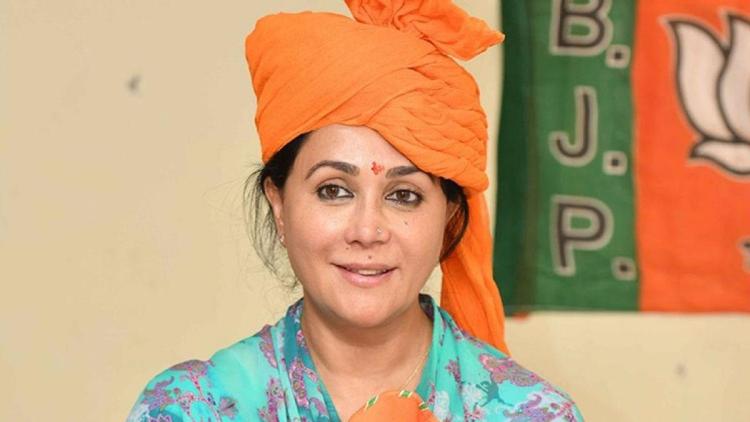
Diya Kumari, the Deputy CM of Rajasthan, has been appointed as the Finance Minister, marking a significant departure from the tradition of former CMs or alternate party leaders presenting the budget in the assembly. This move signals a new era after five terms, with Diya Kumari set to lead the budget reading.
Another surprising decision involves the division of major departments like UDH and Energy. Rather than assigning these to cabinet ministers, they have been placed under ministers of state with independent charge.
With this restructuring, Deputy CM Diya Kumari emerges as a pivotal figure, holding crucial portfolios such as Finance, PWD, Tourism, and Women and Child Development. Notably, she will present the budget as the Finance Minister, consolidating her influential position.
Party insiders revealed that Diya Kumari was initially in contention for the Chief Minister's role, but due to caste dynamics and strategic party considerations, she was appointed as the deputy CM instead.
Despite speculation about allocating the Home department to her, the party opted to retain it with the CM, following a similar model as in Uttar Pradesh. This decision firmly establishes Diya Kumari as a high-command-endorsed figure, backed by extensive deliberations at the highest party levels.
Following the portfolio distribution among Bhajanlal government ministers, a clear power balance has emerged. In line with the UP model, CM Bhajanlal Sharma retains key departments like Home and ACB, emphasizing the significance of maintaining control over crime and corruption-related portfolios.
The CM's decision to retain fewer portfolios compared to predecessors Vasundhara Raje and Ashok Gehlot underscores strategic allocation and centralized authority. Notably, new ministers like Jhabarsingh Kharra received crucial departments like UDH and Autonomous Government, showcasing the government's unexpected choices.
Moreover, Minister of State Hiralal Nagar's responsibility for Energy, Gautam Duk's charge of Cooperation, and Sanjay Sharma's appointment as Forest Minister further contribute to the reshaped ministry.
Presently, the CM oversees eight departments, including Personnel, Excise, Home, Planning, General Administration, Policy Making Cell in the Chief Minister's Secretariat, Information Public Relations, Anti-Corruption Bureau, and Mining.
Comparatively, Vasundhara Raje previously managed 26 portfolios, while Ashok Gehlot handled up to 10 portfolios after a series of reshuffles. The historic context of portfolio distribution across different governments highlights the evolving dynamics within the Rajasthan administration.
During Congress rule, Sachin Pilot held the PWD department as Deputy CM before his removal in 2020. This department later reverted to the CM's jurisdiction. The evolution of departmental allocations, such as Home and PWD, under various administrations, underscores the shifting political landscape and power dynamics within the state.
(With Agency Inputs)
ALSO READ | BJP MP Tejasvi Surya Asserts Unstoppable 'Tsunami' by PM Modi