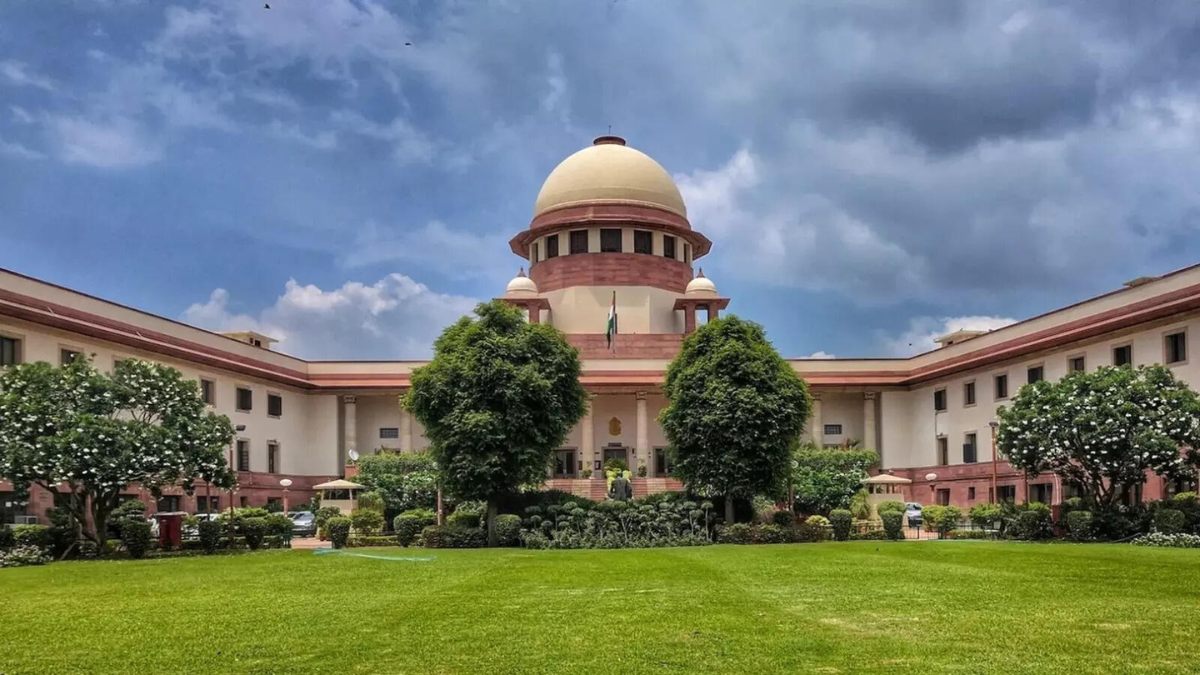
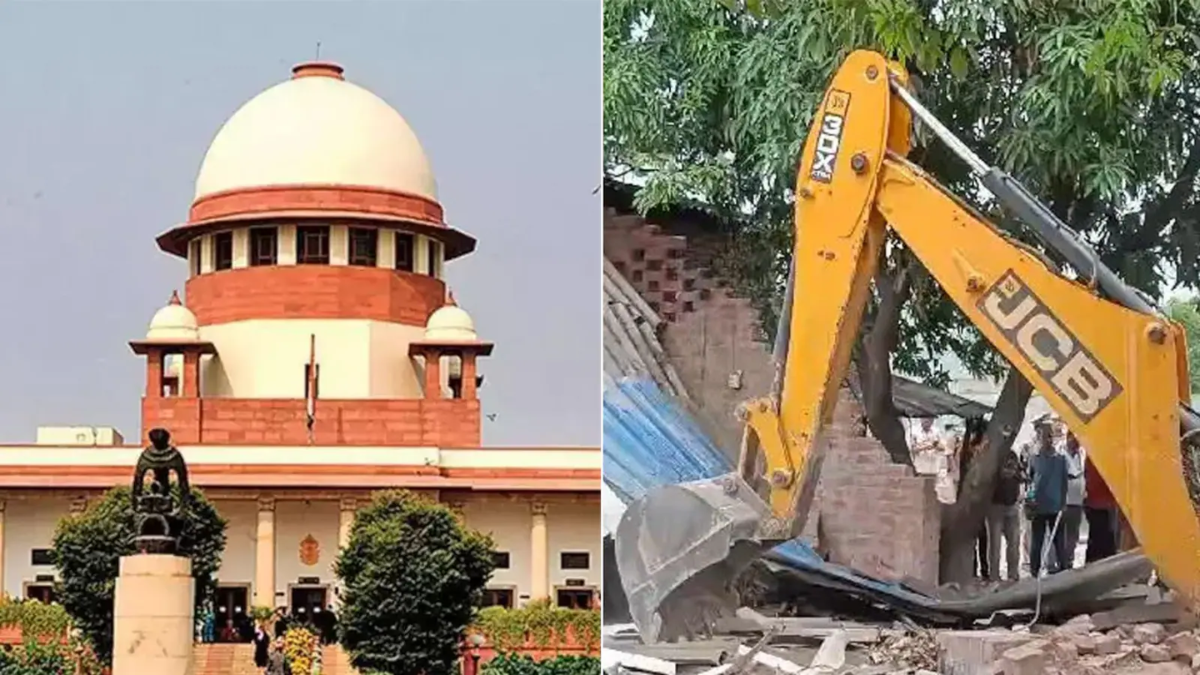


The Supreme Court on Thursday declined to entertain a batch of petitions alleging widespread contempt of its 2024 ruling against so-called "bulldozer justice", holding that the factual disputes raised in each case should first be examined by the respective High Courts. At the same time, the court observed that bulldozers may legitimately be used "when a comfortable corruption between municipal authorities and illegal encroachers thwarts the rule of law".
A three-judge Bench headed by Chief Justice of India Surya Kant, and comprising Justices Joymalya Bagchi and V Mohana, was hearing pleas seeking contempt proceedings against authorities in several states for allegedly violating the Supreme Court's November 13, 2024 judgment. That verdict had held that demolishing homes solely because their occupants were accused in criminal cases violated the rule of law.
During the hearing, the Bench noted that the petitions involved disputed questions of fact that would require detailed examination in each individual case.
Supporting the court's view, Additional Solicitor General Aishwarya Bhati submitted that the petitions originated from different parts of the country and each would require an independent factual inquiry.
The Chief Justice observed, “And the facts are bound to vary from case to case. The court might be required to summon the record and examine it.”
He added that while the Supreme Court had already laid down the governing legal principles in its earlier judgment, it was now the responsibility of the High Courts and subordinate courts to ensure those directions were implemented.
Senior Advocates Sanjay Hegde, C U Singh and Huzefa Ahmadi urged the Bench to directly adjudicate the alleged violations in light of the November 13 ruling instead of relegating the petitioners to the High Courts.
Responding to the submissions, Justice Bagchi said “the backdrop of the judgement” “in fact really shocked the conscience of this court, because there was an infraction, not of municipal laws, but the foundation of presumption of innocence, where there was pick and choose of certain individuals accused of crime by going against their properties…”
Clarifying the scope of the earlier ruling, Justice Bagchi said, “Yes, bulldozers need to be used when the rule of law is thwarted by a comfortable corruption between municipal authorities and illegal encroachers. But then we need also to protect that under the guise of implementing law, there should not be a terrorisation of individuals, or special treatment. It actually runs against one of the basic tenets that can a person claim negative equality…”
He further remarked, “No judgment can be looked at in isolation of the factual situation.”
Referring to one of the petitions, Hegde told the court that his client, Ganesh Gupta, had operated a fruit juice stall that was demolished using a bulldozer.
Justice Bagchi responded, “It can be used… Question is whether this person had an authorisation or the process of law was followed or not.”
Hegde further alleged that a television anchor had arrived at the site riding a bulldozer. The Chief Justice replied that such allegations would also require factual verification.
Appearing in another matter concerning the demolition of a mosque, Senior Advocate Huzefa Ahmadi argued that the authorities had committed a serious violation of the Supreme Court's directions.
“The High Court gave me protection and said you will give time to file reply etc and till then don’t pass a final order. Even before a final order was served upon me, they came and demolished and then I had to move for contempt before this court and your lordships gave me order of status quo.”
He further submitted, “So far as I am concerned, there was no action taken by authorities from 1999 to 2024. This action only got initiated on account of a letter which was issued by a local politician where he said how can you have Asia’s largest mosque in this particular state… So, therefore, this is not one of those standard cases, it is one of pick and choose… In my case, there was also no allegation of encroachment on public property…”
Senior Advocate C U Singh argued that the Supreme Court itself should enforce compliance with its own judgment.
Responding to the submission, the Chief Justice said, “Who said we will not? We will stand for our judgments. We will direct the HCs to ensure compliance with our judgment.”
Justice Bagchi concluded by emphasising that the November 13 verdict must be interpreted within the factual context in which it was delivered and not treated as a statutory provision. He also noted that the judgment expressly excluded unauthorised structures located on public spaces such as roads, streets, footpaths, areas adjoining railway lines, rivers and other water bodies from the protection of its directions.
Also Read | Karnataka Doctor Killed at Home, 8-Year-Old Son Stabbed; Wife Taken Into Custody