

The Union Cabinet on Wednesday gave its approval to two major elevated highway projects in Varanasi—the Ganga Corridor and the Varuna Corridor—with a combined estimated cost of nearly Rs 25,000 crore. The large-scale infrastructure initiative is expected to significantly ease traffic movement in Prime Minister Narendra Modi's parliamentary constituency while boosting tourism and urban development in one of the world's oldest continuously inhabited cities.
The flagship project, the 46-km six-lane Ganga Elevated Corridor, will link NH-19 to the Varanasi Ring Road through a riverfront route running alongside the Ganga. Planned by the National Highways Authority of India (NHAI), the corridor is intended to decongest existing city roads while minimising disruption to established residential areas.
After completion, vehicles are expected to travel at average speeds of nearly 100 km per hour, a substantial increase over current conditions. The journey along the route is projected to shrink from about an hour to roughly 20 minutes, providing quicker connectivity for commuters as well as tourists.
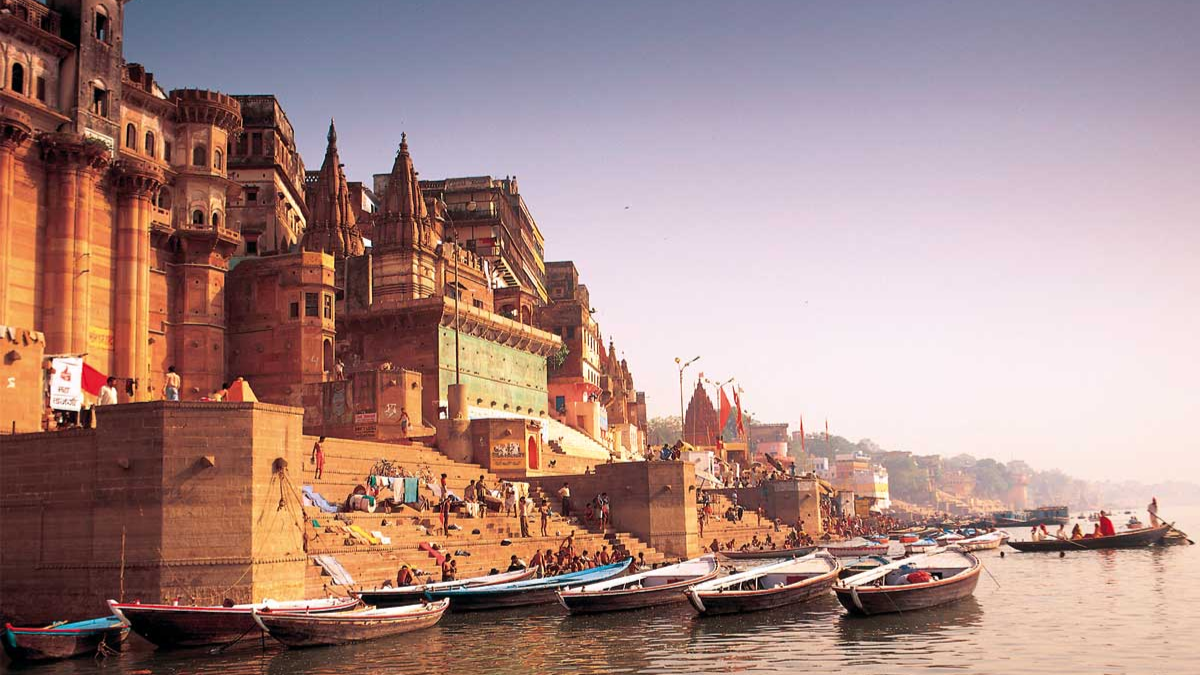
Beyond improving travel times, the project has also been conceived as a major riverfront and tourism initiative. Plans include the construction of a cable-stayed bridge expected to emerge as a new city landmark, along with dedicated viewing points and public spaces overlooking the Ganga and its famous ghats to enhance the visitor experience.
The Cabinet also approved the 43.2-km Varuna Corridor, an elevated route connecting NH-31 with the Varanasi Ring Road along the Varuna river. Estimated to cost around Rs 11,000 crore, the project will incorporate flyovers, ramps, loops and link roads aimed at improving traffic flow across the city.
A key feature of the proposal is a 21-km elevated section extending from near Harahua to the confluence of the Varuna and Ganga rivers near Namo Ghat. The four-lane corridor will enable travellers arriving from Lucknow, Jaunpur and Prayagraj to access Namo Ghat directly without passing through Varanasi's congested core. Pilgrims will then be able to travel by boat to the Kashi Vishwanath Temple, reducing traffic pressure in the city's central areas.
Part of the route will pass through nearly 2.56 acres of land belonging to the Cantonment Board, making approval from the Ministry of Defence necessary. The projects have been cleared at a time when Varanasi is witnessing an unprecedented rise in visitor numbers, with the city now drawing nearly 15 crore tourists and pilgrims annually, increasing the need for expanded transport infrastructure.
Industry experts believe the projects could deliver benefits extending beyond improved road connectivity.
Aman Gupta, Director of RPS Group, said the Ganga and Varuna Corridor projects represent a new model of integrated urban development rather than conventional transport projects.
"The Ganga and Varuna Corridor Projects are going to be excellent examples of integrated urban development. Unlike other religious infrastructure projects, these will create a synergy of connectivity, tourism, public infrastructure, and other sectors of economic activity," Gupta said.
He said better connectivity often serves as a catalyst for fresh investment, employment opportunities and real estate growth. According to Gupta, the government's sustained emphasis on large infrastructure projects signals that enhanced connectivity is becoming the cornerstone of future urban expansion.
Comparing the developments with the National Capital Region, Gupta said cities such as Faridabad could experience similar gains through projects including the Delhi-Mumbai Expressway, Metro expansion, Jewar International Airport and the proposed Faridabad-Noida-Ghaziabad Expressway. He said improved infrastructure generally drives residential demand, commercial investment and appreciation in land values.
Commenting on the economic significance of the projects, Manoj Kumar Garg, Chairman, NorthWind Estates, said, "The proposed Ganga and Varuna Corridors signify an important move towards the story of infrastructure-led growth in Uttar Pradesh and would further consolidate the global spiritual, cultural, and tourism destination of Varanasi. Urban infrastructure projects such as these generate a multiplier effect on the economy through tourism, hospitality, retail, commercial real estate development and job creation."
He added, "The Gross State Domestic Product (GSDP) of Uttar Pradesh currently stands at more than Rs 30 lakh crore, and the state has set itself a target of having a $1 trillion economy. Infrastructure development projects such as these, along with expressways, airports, and urban renewal schemes, would attract more private investment and improve ease of doing business."
Also Read | Karnataka Doctor Killed at Home, 8-Year-Old Son Stabbed; Wife Taken Into Custody