

India's private space ambitions are set to reach a new milestone with the debut of Vikram-1, the country's smallest orbital rocket, which is expected to lift off in the coming weeks.
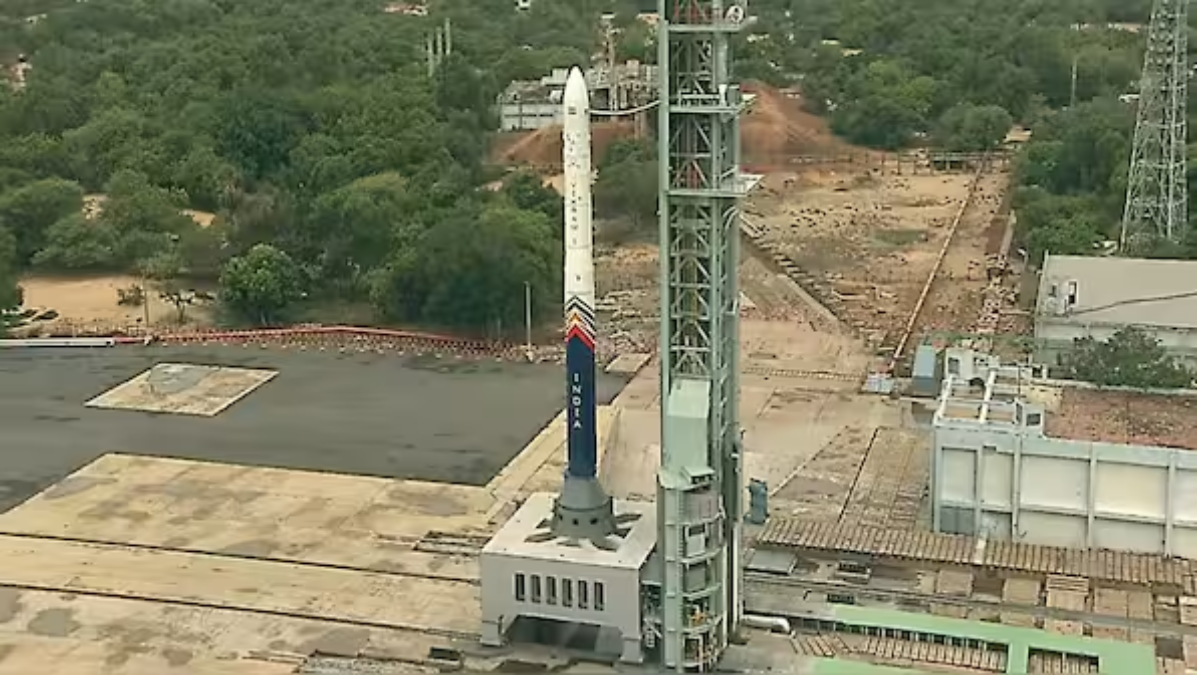
Skyroot Aerospace, India's first space-tech unicorn with a valuation exceeding $1.1 billion, has unveiled the fully integrated Vikram-1 launch vehicle at the Satish Dhawan Space Centre in Sriharikota. The rocket is the first privately developed orbital launch vehicle built in the country.
Named in honour of Dr Vikram Sarabhai, regarded as the father of India's space programme, the seven-storey-tall rocket reflects years of technological development and underscores the growing capabilities of India's private space industry. According to the company, the launch is planned during a window opening on July 12 and continuing until August 4, subject to final testing, weather conditions and regulatory approvals.
The mission has been named "Aagaman", a Sanskrit term meaning "arrival", signifying the arrival of India's private orbital launch capability on the global stage.
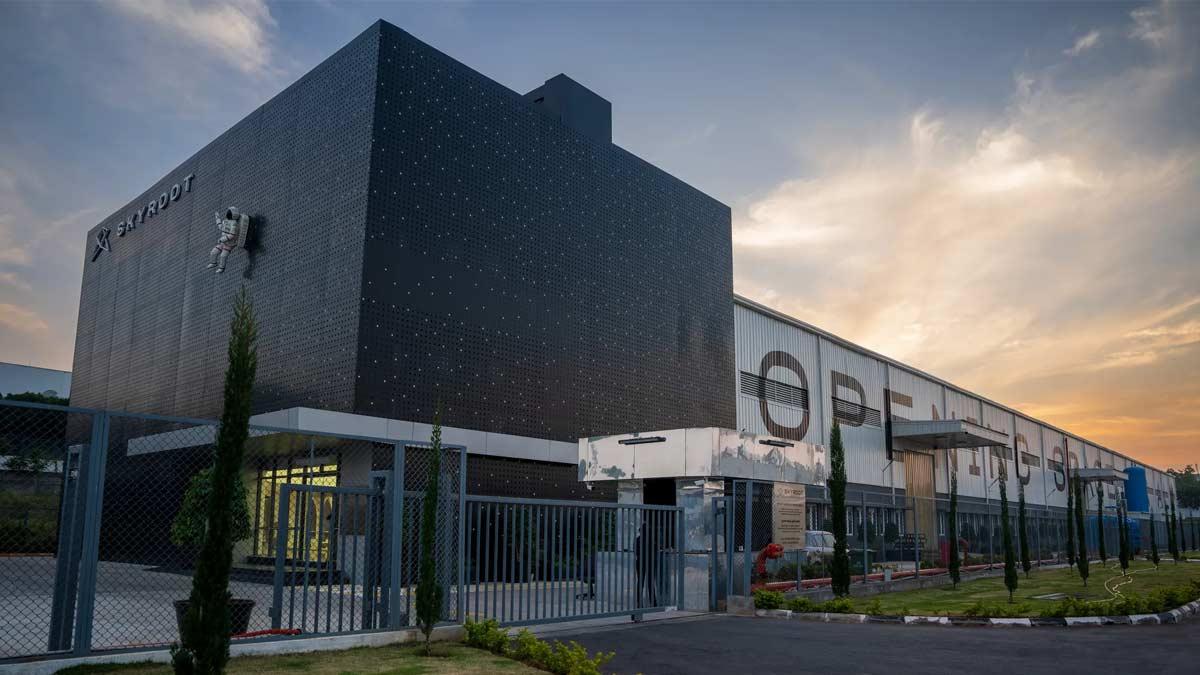
The launch marks a defining moment for Skyroot Aerospace, which was founded by former ISRO scientists Pawan Kumar Chandana and Naga Bharath Daka. Headquartered in Hyderabad, the company has emerged as one of the world's leading private space start-ups, mirroring the rapid evolution of India's space sector after policy reforms enabled greater private participation.
Skyroot has since become the country's first space technology unicorn and is widely regarded as one of the most prominent private space ventures on the global stage.
Despite its relatively compact size compared with several larger Indian launch vehicles, the fully assembled Vikram-1 has been designed to deliver satellites weighing up to 350 kilograms into Low Earth Orbit. During its maiden flight, the rocket is expected to target an orbit approximately 450 kilometres above Earth at an inclination of 60 degrees. Built with an all-carbon composite structure, the vehicle combines lightweight construction with the structural strength needed to endure the extreme conditions of launch.
A defining feature of Vikram-1 is its extensive reliance on next-generation manufacturing techniques. Skyroot has developed the rocket's advanced composite materials and propulsion systems entirely in-house. Among its most notable innovations are 3D-printed rocket engines, designed to accelerate production, provide greater design flexibility and reduce manufacturing costs.
Together with high-thrust solid rocket motors and advanced guidance systems, these technologies are intended to pave the way for more frequent and cost-effective access to space.
Pawan Kumar Chandana, Co-founder and Chief Executive Officer of Skyroot Aerospace, says the primary objective of Mission Aagaman is to gather critical flight data that can only be obtained in actual flight conditions.
"The single most important objective of Mission Aagaman is to capture the real in-flight performance data from every system on Vikram-1. We want to understand how the vehicle performs from lift-off through every phase of ascent. This data cannot be fully replicated through ground testing. It will help us validate our designs and inform subsequent vehicle development as we build a reliable, high-cadence commercial launch programme."
He believes that the launch will mark a turning point for the entire private space industry in India.
"The moment Vikram-1 lifts off, India's private space industry will cross a threshold it has never crossed before." But experts say the acid test will be when it successfully inserts the satellites and payloads into their intended orbit, as space technology affords little room for error.
Mission Aagaman follows the success of Vikram-S, which on November 18, 2022, became the first privately built rocket to reach space from Indian soil. That suborbital mission validated the company's core technologies and laid the groundwork for the significantly more complex orbital launch now approaching.
The upcoming flight will carry a combination of domestic and international customer payloads, giving the mission a partially commercial character. Even so, it will primarily serve as a technology demonstration, with engineers expected to analyse data from the propulsion systems, stage separation, guidance, navigation, control systems and the vehicle's overall performance throughout the mission. The findings will play a key role in refining future operational launches.
Beyond Skyroot itself, the mission is seen as a landmark for India's expanding private space ecosystem. For decades, orbital launches were almost exclusively the domain of government space agencies. The emergence of companies such as Skyroot and Agnikul Cosmos highlights the increasing role of India's private sector in launch services, satellite deployment and the broader commercial space industry.
As Vikram-1 awaits its historic launch from Sriharikota, the rocket stands as more than a technological achievement. It represents India's growing engineering expertise, entrepreneurial drive and expanding influence in the global space economy.
If Mission Aagaman lifts off successfully within the coming weeks, it could mark the beginning of an era in which private Indian companies routinely design, launch and operate missions beyond Earth.